
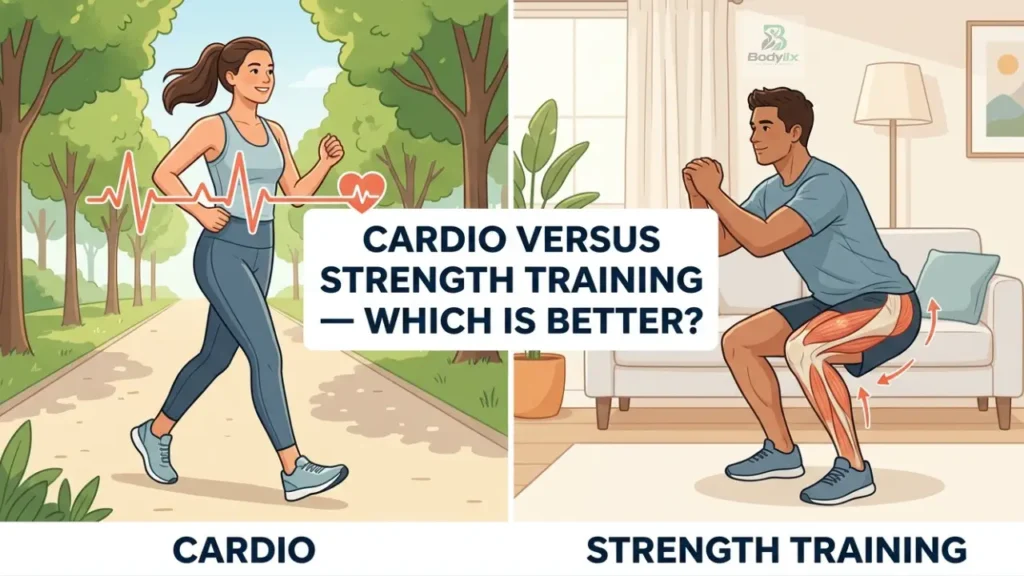
Confused about cardio versus strength training? Learn key differences, benefits for weight loss, muscle & heart health, and how to combine both effectively.
Table of Contents
Introduction: Why Cardio Versus Strength Training Matters
Have you ever stood at the gym entrance, or sat down to plan your week, and felt that familiar uncertainty? Should I put my time into walking, running, or cycling—or should I pick up weights? Which one actually burns more fat? Will lifting weights make me look bulky? Do I even need cardio if I build strength? And if I only have three days a week, how do I choose?
If these questions sound familiar, you are in excellent company. Almost everyone starting or restarting exercise faces the same confusion. The conversation around cardio versus strength training can feel loud, conflicting, and overwhelming—with one source declaring cardio the only path to weight loss, and another insisting strength training solves everything. Comparing aerobic exercise and resistance training is one of the most common debates in fitness. People constantly weigh calorie burning against long-term body composition.
The truth is simpler and far more encouraging: cardio and strength training are not rivals. They serve different roles in your health, support each other beautifully, and neither must be chosen exclusively. The “better” option depends entirely on what you want to achieve, your current fitness, your schedule, your preferences, and how your body responds. This guide will walk you through what each form of exercise does, where they shine, where they fall short, and how to weave them into a routine you can actually stick with.
You may also like : Walking vs. Running for Weight Loss: Which Actually Works Better? (Science + Real Results)
What Is Cardio Training — And How It Supports Fitness
Understanding where cardio fits in cardio versus strength training starts with clear definitions. Cardio—short for cardiovascular or aerobic exercise—is any sustained movement that raises your heart rate and breathing rate and keeps them elevated for a period of time. Its focus is your heart, lungs, and circulatory system. Over time, consistent cardio improves cardiovascular fitness and boosts your ability to sustain activity without fatigue.
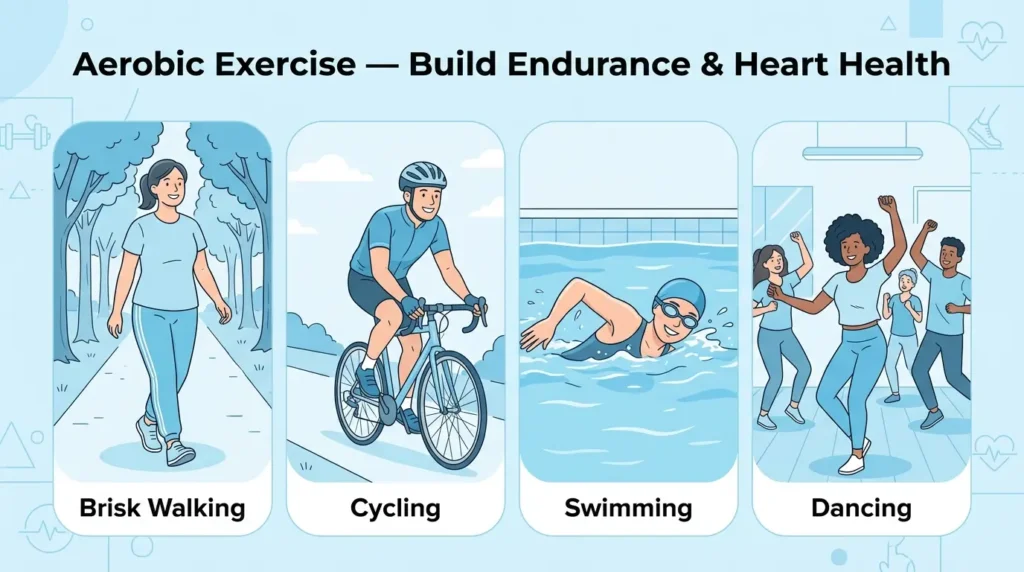
Common forms of cardio include:
- Brisk walking
- Jogging or running
- Cycling or stationary biking
- Swimming or water walking
- Dancing and dance-based workouts
- Hiking
- Rowing
- Stair climbing
- Elliptical and low-impact cardio machines
Cardio comes in different intensities, and you do not need to be out of breath to benefit. A simple way to judge intensity is the talk test:
- Easy intensity: You can speak comfortably in full sentences. Great for beginners and recovery days.
- Moderate intensity: You can speak in short sentences but would rather not hold a conversation. This is where most people see steady progress.
- Vigorous intensity: Speaking becomes difficult or broken into short phrases. Suitable once you have built a fitness foundation.
Cardio trains your endurance—the ability to keep moving without stopping. It supports stamina, energy levels, mood, and long-term heart health.
What Is Strength Training — And Why It Builds Resilience
In any discussion of cardio versus strength training, it helps to be clear on exactly what strength training is. Strength training—also called resistance training or weight training—works by creating controlled challenge for your muscles. By pushing, pulling, or moving against resistance, you encourage your muscles, connective tissue, and bones to adapt and become stronger. Resistance can come from weights, bands, machines, or your own body weight, making it perfect for home workout or gym settings.

Common strength exercises include:
- Squats and lunges
- Push-ups, knee push-ups, and wall push-ups
- Rows and pulling movements using bands, dumbbells, or machines
- Glute bridges and hip strengthening
- Deadlift variations
- Shoulder presses and overhead movements
- Resistance-band workouts
- Bodyweight training with progressive repetitions
A very common concern is: “Will lifting weights make me bulky?” The short answer is: not by accident. Noticeable muscle building happens slowly and requires consistent effort, sufficient nutrition, and specific training over a long period. For most people, strength training creates a firmer, more capable body without extreme size changes.
What strength training reliably does is build functional strength—the kind that makes carrying groceries, climbing stairs, playing with family, and moving through daily life feel easier. It also supports bone density, posture, and balance, which matters at every age.
Cardio Versus Strength Training: Key Differences Explained
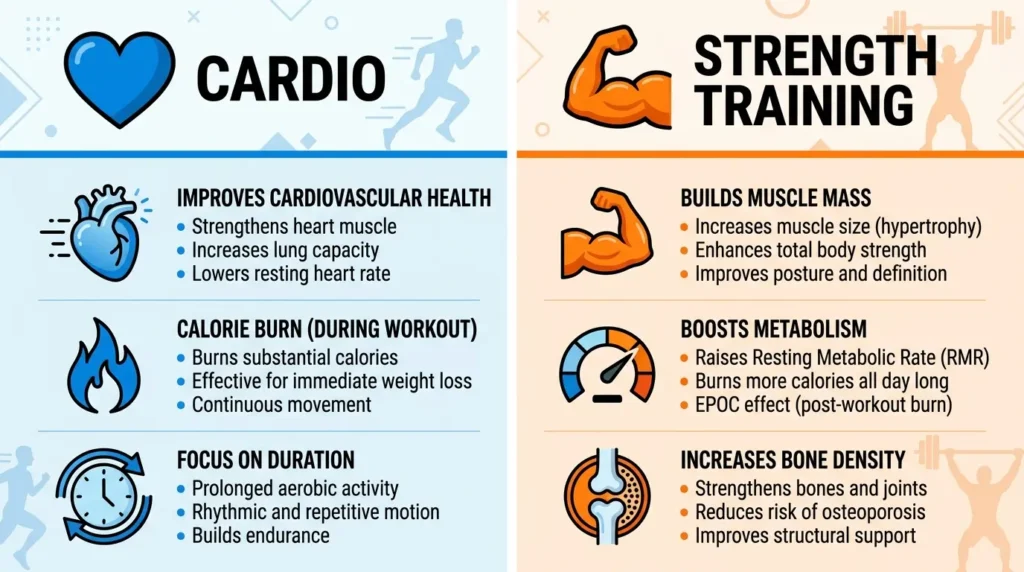
When examining cardio versus strength training, the clearest way forward is understanding exactly what each one does differently. Both forms of exercise improve health and fitness, but they train different systems and produce different results. While cardio builds endurance, strength training builds muscle and supports long-term metabolism.
Here is a clear side-by-side comparison:
Table
| Feature | Cardio Training | Strength Training |
|---|---|---|
| Primary purpose | Build heart and lung endurance | Build muscle strength, power, and size |
| Main systems trained | Cardiovascular and respiratory | Musculoskeletal and nervous systems |
| Typical exercises | Walking, running, cycling, swimming | Squats, push-ups, rows, presses, lunges |
| Fitness qualities developed | Stamina, aerobic capacity | Strength, power, muscle tone |
| Calorie use during exercise | Generally higher per minute | Moderate during workout; higher recovery burn |
| Muscle-building effect | Limited, especially in untrained people | Primary benefit; preserves or builds muscle |
| Effect on endurance | Greatly improves endurance | Improves muscular endurance; less impact on cardio |
| Equipment requirements | Minimal to none | None (bodyweight) to full gym equipment |
| Recovery needs | Moderate; daily or every-other-day suitable | 48 hours between sessions for same muscle groups |
| Best suited goals | Heart health, endurance, calorie burn during session | Strength, muscle tone, metabolism, functional fitness |
Cardio vs Strength Training for Weight Loss: What Actually Works
Cardio vs strength training for weight loss is the most searched question in fitness. The honest answer surprises many: there is no single winner. Each contributes in its own valuable way to fat loss and healthy body composition.
Cardio generally burns more calories while you are exercising. That makes it appealing if you are tracking energy use minute-by-minute. But strength training has a different, equally important advantage: it helps preserve or build lean muscle tissue while you lose weight. This muscle preservation protects your resting metabolism so you keep burning energy efficiently.
Perhaps the most important truth is this: exercise supports weight loss, but it cannot fully replace a balanced, sustainable way of eating. A workout creates a calorie deficit—but if you overeat afterward because you “earned it,” progress will slow or stop.
When weighing cardio vs strength training for weight loss, think of it this way: cardio helps with the numbers on the scale, while strength training helps with what the scale represents—less muscle loss, firmer shape, and a body that stays strong as it changes. Because scale weight alone does not tell the full story, watch other measures too: how your clothes fit, your energy levels, how much stronger you feel, and your waist measurements.
Cardio Versus Strength Training for Muscle Development
If muscle development or visible tone is your goal, cardio versus strength training has a clear practical answer. Progressive overload through resistance work is the primary tool for building muscle. Cardio supports general fitness but cannot replace a consistent strength workout routine.
Muscle grows through a principle called progressive overload: gradually making exercises slightly harder over time—more repetitions, more resistance, better form, or slower movement. Training all major muscle groups consistently, eating enough protein, and managing recovery matter far more than exactly which exercises you choose.
Cardio supports overall fitness and helps keep body fat balanced, but it is not designed to drive significant muscle growth. Think of it this way: strength training directly tells your muscles to become stronger; cardio trains them to keep going for longer. For visible tone, firmness, and muscle capacity, prioritize strength work and use cardio as your supporting partner.
Cardio vs Strength Training for Heart Health and Longevity
Cardio vs strength training conversations often overlook one powerful fact: both protect your heart. Cardio has long been the gold standard for heart health—and for good reason. It directly challenges your cardiovascular system, helping it become stronger and more efficient. Regular cardio supports blood pressure, circulation, and stamina.
But—and this is an important “but”—strength training also benefits heart health, independently of cardio. Research consistently shows that stronger people tend to have better long-term heart and metabolic outcomes. Strength training builds a body that moves efficiently, which in turn supports cardiovascular health and makes every cardio workout feel easier over time.
The most heart-healthy approach is rarely “either/or.” A balanced routine that includes both endurance and strength work offers the widest benefits. If you have existing heart concerns or symptoms, always check with your healthcare provider before starting or changing exercise intensity.
Combining Cardio and Strength Training for Best Results
You do not have to choose sides in cardio versus strength training. Combined training is often the smartest choice, and fitting both in is easier than you might think. You get the endurance benefits of cardio and the strength and metabolism benefits of resistance work—without overworking any single system.
Here are practical ways to fit both in:
- On separate days: Strength on Mondays, Wednesdays, Fridays; walking or cycling on other days. Recovery is clean, and you give each effort your full energy.
- Strength first, then cardio: If you train both in one session and strength is your priority, lift first while you are fresh, then do 10–20 minutes of cardio afterward.
- Cardio first, then strength: Suitable if endurance is your main goal. Be aware that your strength performance may be lower afterward.
- Strength on most days + daily walking: A very sustainable pattern. Two or three focused strength sessions weekly plus 20–30 minutes of walking on most other days.
For most people, order matters far less than consistency, rest and recovery, and total weekly effort.
How Much Cardio Versus Strength Training Do You Need Weekly
When planning your routine, clear guidelines help balance cardio versus strength training without overwhelming you. General health guidelines for adults suggest baseline amounts for both aerobic exercise and resistance work—but these are helpful targets, not strict rules.
- Aerobic activity: At least 150 minutes of moderate cardio or 75 minutes of vigorous cardio per week—or a mix spread across several days.
- Muscle strengthening: At least two days per week working all major muscle groups, at any intensity suitable for you.
Please treat these as helpful starting points, not pass-or-fail exams. If you are returning after a break or managing limited time or energy, do less. Even 10 minutes of movement counts. Something repeated is always better than something perfect done once. A realistic beginner fitness routine builds slowly and stays enjoyable.
Beginner Weekly Plans: Cardio and Strength Training Schedules
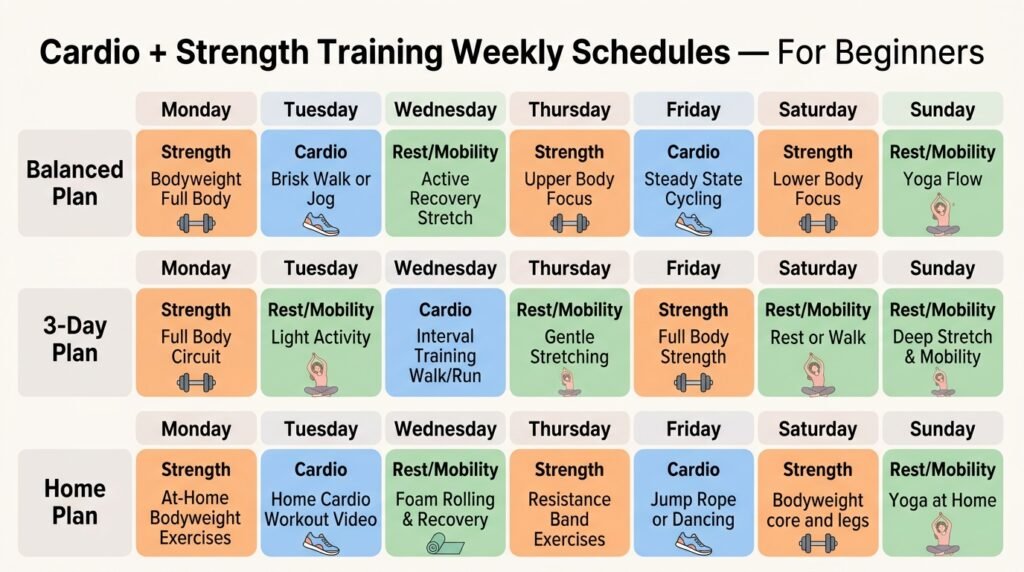
Applying cardio versus strength training advice works best with concrete examples. Here are three realistic schedules adaptable to gym or home workout settings.
Option A: Balanced Beginner Plan
- Monday: Full-body strength workout (bodyweight or light resistance)
- Tuesday: Easy walking or rest
- Wednesday: Moderate cardio (brisk walk, cycle, swim—20–30 minutes)
- Thursday: Rest or gentle stretching and mobility
- Friday: Full-body strength workout
- Saturday: Light activity—walking, dancing, gardening, or a hobby
- Sunday: Rest
Best for: People who want steady progress without exhaustion.
Option B: Three-Day Schedule
- Day 1: Full-body strength
- Day 2: Moderate cardio
- Day 3: Full-body strength
- Remaining days: Walk, stay lightly active, or rest
Best for: Busy schedules or those building up gradually.
Option C: Home-Based Plan
- Two or three short strength sessions using bodyweight or bands
- Two or three walking sessions
- At least one full rest day
Best for: Beginners, those without gym access, or those preferring privacy.
Matching Cardio Versus Strength Training to Your Goals
Once you know what you want, balancing cardio versus strength training becomes straightforward. Here is where to place your focus based on what matters most to you:
Table
| Your Primary Goal | Recommended Emphasis |
|---|---|
| Fat loss | Balanced mix; slightly more strength to preserve muscle |
| Muscle gain | Mostly strength; light cardio for health and recovery |
| General health | Equal mix of cardio and strength |
| Better endurance | Mostly cardio; twice-weekly strength |
| Improved strength | Mostly strength; short cardio as warm-up or finish |
| Beginners with little time | 2–3 strength sessions + walking; keep it simple |
| Returning to exercise | Start with walking + light strength; build slowly |
| Home exercisers | Bodyweight strength + walking or stair climbing |
Common Mistakes When Choosing Cardio or Strength Training
Even with good intentions, people stumble when navigating cardio versus strength training. Watch for these common traps and how to avoid them:
- Choosing the “highest calorie burn” workout instead of the one you enjoy. Consistency beats intensity every time.
- Doing intense cardio daily and skipping strength. You risk losing muscle, slowing metabolism, and burning out.
- Lifting too heavy, too soon, with poor form. Progress stalls, and injury risk rises. Start light and master movement first.
- Changing routines constantly. Adaptation takes time. Give any new plan at least 4–6 weeks.
- Believing sweat equals effectiveness. Sweat is your body’s cooling system—not a reliable measure of progress.
- Ignoring rest and recovery. Muscles adapt when you rest, not when you train.
- Comparing your progress to others. Your genetics, history, schedule, and health are unique. Measure yourself against you last month, not someone else today.
- Confusing soreness with a “good workout.” Discomfort is normal sometimes; sharp or lasting pain is not.
How to Pick: Cardio vs Strength Training for Your Lifestyle
Deciding cardio vs strength training ultimately comes down to honesty with yourself. Ask these questions to find your best starting point:
- What is my clearest main goal?
- What kind of movement do I actually enjoy?
- How many days can I realistically sustain?
- Do I have injuries, limitations, or health considerations?
- Can I keep this routine going for three months?
- Am I recovering well—or am I exhausted?
- Would a mix of both cardio and strength give me better balance?
Enjoyment and sustainability are not “nice-to-haves.” They are the strongest predictors of long-term success. A slightly “imperfect” routine you stick with will always beat the “perfect” one you abandon in two weeks.
Staying Consistent With Cardio and Strength Training
Exercise is as much mental as physical—and cardio versus strength training debates often overlook mindset. You may sometimes feel behind, embarrassed in a gym, impatient for results, or unmotivated—and that is completely normal. You might miss workouts, lose momentum, or feel like nothing is changing. Here is encouragement:
- A “bad” workout is still movement. A short workout still counts.
- Progress is rarely visible week-to-week. It accumulates quietly.
- Rest is not failure. Rest is part of training.
- You never need to “punish” your body with exercise. Exercise is care, not penance.
- After a break, restart gently—without guilt, without catching up.
Safety, Recovery, and Cardio + Strength Balance
Whatever side of cardio versus strength training you lean toward, safety and recovery keep you progressing long-term. Follow these responsible guidelines:
- Warm up before harder exercise—walking, arm circles, and gentle movements are enough.
- Increase effort slowly. Add a little before adding a lot.
- Drink water as needed—more in heat or during longer sessions.
- Sleep seven hours or more when possible. That is where progress happens.
- Modify exercises to suit your body. Knees instead of toes, lighter instead of heavier.
- If you feel severe, sharp, or worsening pain, stop and seek qualified guidance.
- If you have diagnosed conditions, concerns, or take medications affecting exercise, consult your healthcare provider before starting.
Frequently Asked Questions About Cardio Versus Strength Training
Readers exploring cardio versus strength training usually ask the same thoughtful questions. Here are clear answers:
1. Is cardio or strength training better for weight loss?
Cardio burns more calories during the session. Strength training preserves muscle, which supports metabolism long-term. A balanced approach usually works best.
2. Can I do cardio and strength training on the same day?
Yes. If strength is your priority, do it first while fresh. If endurance is your focus, cardio may come first. Most importantly, keep the session reasonable in length.
3. Should I do cardio before or after weights?
Strength first if muscle or strength gain is your goal. Cardio first if endurance is the priority. If time is short, do whichever one you are less likely to do later.
4. How many days per week should beginners exercise?
Start with three days of activity plus light movement on other days. Consistency matters more than frequency.
5. Can strength training improve fitness without cardio?
Yes. Strength training improves heart health, endurance, and metabolism. Adding cardio brings extra benefits, but you can build excellent fitness through strength alone.
6. Can I build muscle with home workouts?
Absolutely—using bodyweight, bands, or simple equipment. Progressive overload matters more than where you train.
7. Is walking enough cardio for beginners?
Walking is one of the safest, most accessible forms of cardio available. Brisk walking regularly meets the baseline activity needs of many adults.
8. Will strength training make women bulky?
It is extremely unlikely. Noticeable muscle growth requires high volume, heavy resistance, and specific nutrition over years. Most people become firmer and stronger—not bulky.
9. What should I do if I only have 20 minutes?
Do strength first. A short session of squats, pushes, and pulls maintains muscle and metabolism efficiently. Walk on other days for cardio.
10. In cardio versus strength training, how long does it take to see results?
Expect to feel changes in energy, mood, and strength within two to four weeks. Visible body changes typically take eight to twelve weeks of consistent effort.
Conclusion
There is no absolute winner in cardio versus strength training. Each offers what the other does not. Cardio builds heart and lung endurance, supports daily stamina, and burns energy efficiently during activity. Strength training builds muscle, protects metabolism, strengthens bones, and keeps you capable and resilient as the years pass.
You do not need to choose sides. Most people thrive best when they combine both—according to their goals, schedule, and preferences. The smartest routine is not the most intense one or the one seen online; it is the one you can honestly keep doing.
Be patient with yourself. Progress happens quietly, not overnight. Show up consistently, keep learning, and trust that steady, balanced effort yields lasting rewards.
Also Read: Workouts for Obese Beginners at Home: A Gentle, Safe Plan to Lose Belly Fat
At Bodylix, we create practical fitness guidance to help you move stronger, feel better, and stay active for life—without confusion, without pressure. Visit Bodylix.com for more beginner-friendly workouts, guides, and support.

Fitness Specialist & Former Tactical Trainer
Bal Krishna Poudel has spent more than 19 years in law enforcement organization, and fitness has been at the center of it all. He knows physical conditioning, dynamic strength training, and everyday wellness inside and out. For close to two decades, he taught at official police training centers, getting officers ready for the physical demands of the job—building their endurance and operational fitness. These days, he coaches people in his local community on strength and fitness. At 49, he doesn’t just talk about staying active—he lives it, showing up every day to train and move. He writes for Bodylix, where he shares workouts and nutrition advice that regular readers can actually use, backed by science and built around one goal: helping people stay strong and healthy for the long haul.

5 Responses