
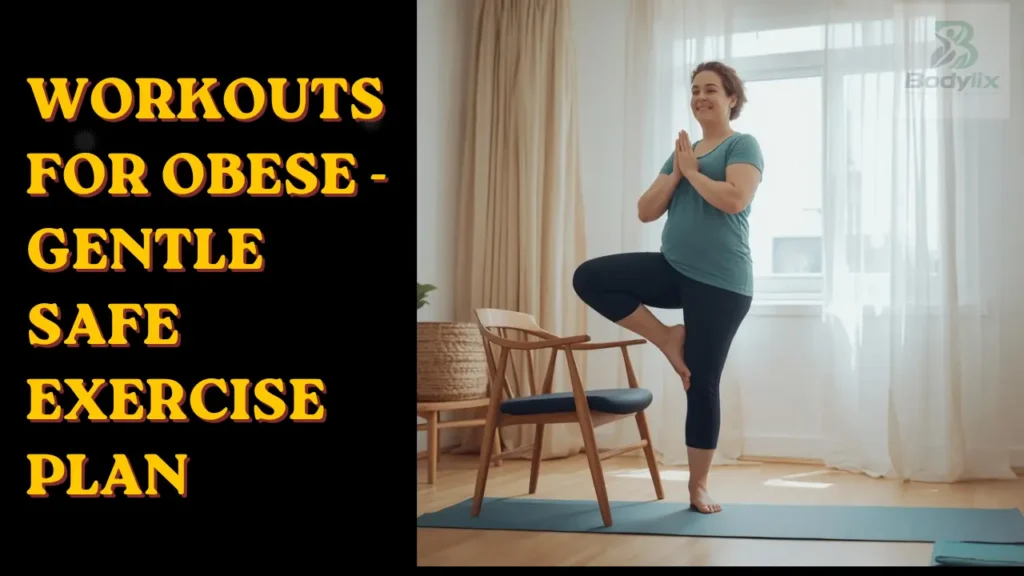
Nervous about starting? These workouts for obese beginners at home are gentle, safe, and doable — no gym, no shame, just a real plan that works.
Anita had bought three different pairs of workout shoes over the years. None of them got much use. Every time she tried to start, something got in the way — her knees ached after five minutes, she felt embarrassed doing jumping jacks in front of a YouTube video, or she’d try some extreme “30-day challenge” that left her exhausted and sore by day three. She’d quit, feel worse than before, and put the shoes back in the closet.
Then she found a different kind of workout — one built for where her body actually was, not where fitness influencers assumed it should be. No jumping. No shame. Just a chair, a bit of floor space, and fifteen minutes a day.
Within a few weeks, something shifted. Her energy came back first. Then the stairs stopped feeling like a mountain. Her jeans fit a little looser. Nothing dramatic — just steady, quiet progress that felt sustainable for the first time.
If this sounds like you, this article is for you. Maybe you’ve tried and stopped before. Maybe your joints worry you. Maybe you’ve never exercised a day in your life and the whole idea feels intimidating. That’s okay. By the end of this guide, you’ll have a safe, doable plan of workouts for obese beginners at home, plus simple exercises to lose belly fat at home for beginners that don’t require a gym, fancy equipment, or a body that “looks like” it belongs in a fitness video.
Table of Contents
Why Starting Is Hard (and Why You’re Not Alone)
Let’s be honest about something most fitness content skips over: starting is hard, and it’s not because you lack willpower.
Shame about body size keeps a lot of people from even trying. Fear of judgment — from others, or from yourself — makes the idea of exercising in public feel unbearable. Past failures pile up, and “all or nothing” thinking convinces you that if you can’t do “Exercises to lose belly fat at home for beginner” full hour, there’s no point starting at all.
On top of that, there’s often real physical discomfort. Joint pain, breathlessness after a short walk, low stamina that makes everything feel harder than it should.
Here’s the truth: every fit person you’ve ever admired started somewhere, often somewhere far less capable than you might think. Gentle, consistent movement beats extreme, short-lived effort every single time. You don’t need to earn the right to start slowly.
Safety First: How to Exercise Safely at a Higher Weight
Before we get into the workouts themselves, let’s talk safety. This plan is built with your body in mind, not against it.
- Listen to your body. Mild discomfort or muscle fatigue is normal. Sharp, shooting, or joint pain is not — stop if you feel that.
- Start low and slow. Short sessions, low impact, gradual progression. There’s no rush.
- Protect your joints. Skip high-impact jumping, deep lunges, or heavy loading in the beginning. Your joints need time to adapt.
- Use support when needed. A chair, wall, or countertop can help with balance and confidence during standing exercises.
- Breathe. Never hold your breath during effort — exhale as you push or lift.
- Talk to a doctor first if you have heart issues, uncontrolled blood pressure, severe joint problems, or any other medical condition that concerns you.
This isn’t about being cautious out of fear. It’s about building a foundation that lasts, instead of burning out in week one.
What to Expect in Your First 4 Weeks
Workouts for obese beginners at home A Realistic expectations make all the difference in whether you stick with this.
In the first few weeks, energy and mood often improve before you see much change on the scale. Your clothes might start feeling looser even before the numbers shift. Strength and stamina build gradually — climbing stairs gets a little easier, standing up from a chair feels less effortful.
Workouts for Obese Beginners at Home through consistency in movement, walking, and nutrition together — not through any single “fat-burning” exercise.
Some soreness after workouts is completely normal, especially in the first two weeks. Sharp or lasting pain is not, and that’s your cue to scale back.
Track the small wins along the way: better sleep, easier stairs, more patience with your kids, more confidence walking into a room. These non-scale victories matter just as much as the number on the scale — often more.
Your 4-Week Workouts for Obese Beginners at Homers
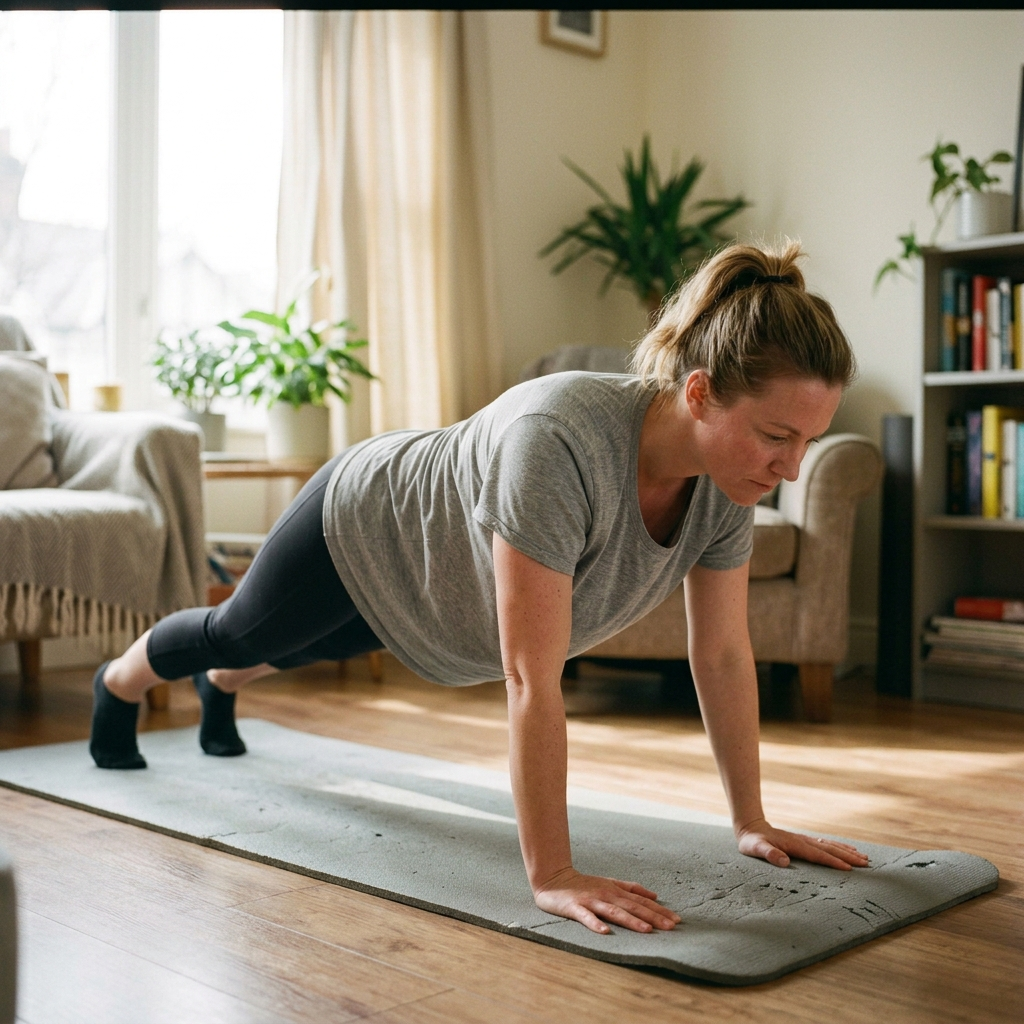
Here’s the actual plan. Simple, structured, and designed to meet your body where it is right now.
How to use this plan:
- Aim for 3–4 structured workout days per week, 15–25 minutes each
- Add daily gentle walking or movement, as you’re able
- Rest days are built in — listen to your body and take extra rest if you need it
Warm-Up (5 minutes)
- Seated or standing marching in place — 1 minute
- Arm circles — 30 seconds forward, 30 seconds backward
- Gentle torso twists — 1 minute
- Ankle rolls and knee lifts — 1 minute
- Deep breathing — 1 minute
This warms up your joints and gets blood flowing before you ask your body to do more.
Workout A: Full Body (Day 1 & Day 3)
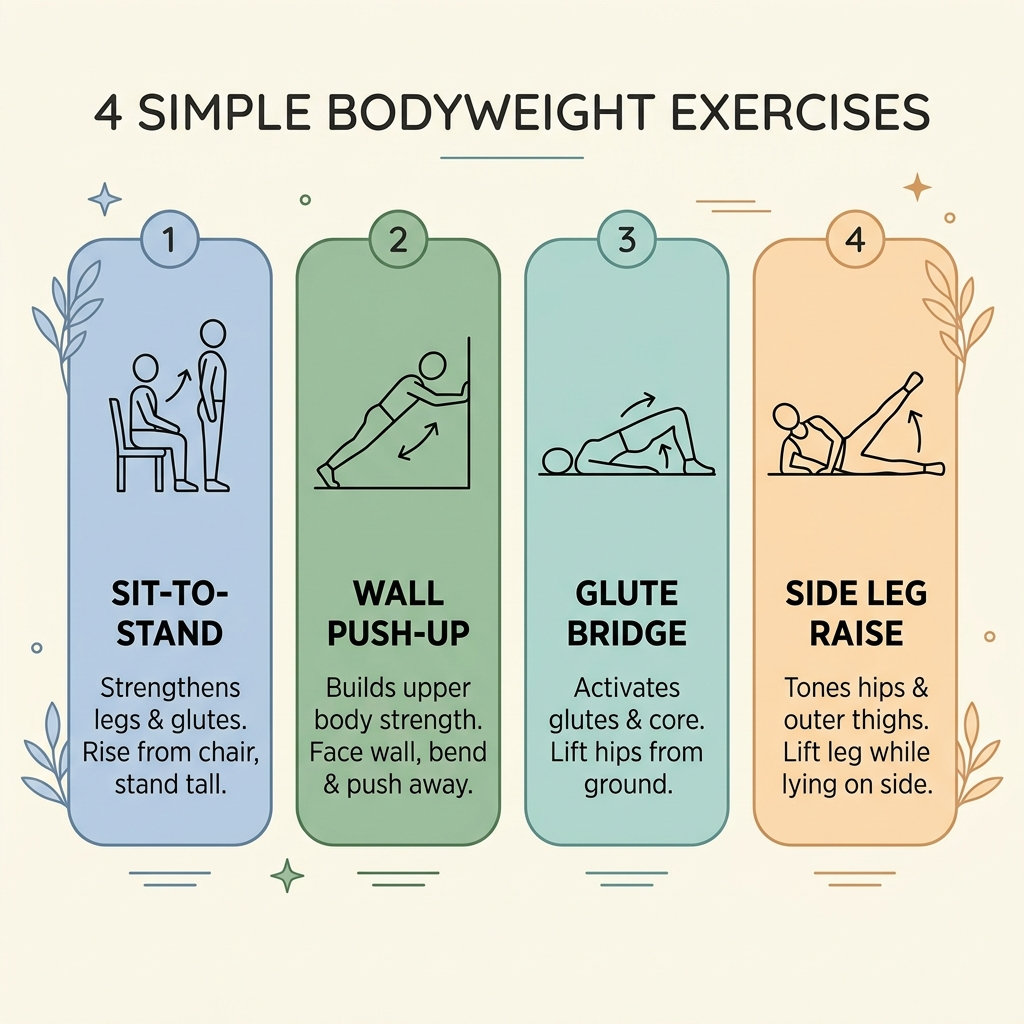
- Sit-to-stand from chair (or assisted squat): 2–3 sets x 8–10 reps. Stand up from a sturdy chair, sit back down slowly. This builds leg strength safely.
- Wall push-ups or countertop push-ups: 2–3 x 8–10. Stand at an angle, push away and back — gentler on shoulders than floor push-ups.
- Seated or standing row with resistance band (or towel pull): 2–3 x 10–12. Strengthens your back and improves posture.
- Glute bridges (on bed or mat): 2–3 x 10–12. Lie back, lift your hips gently, lower with control.
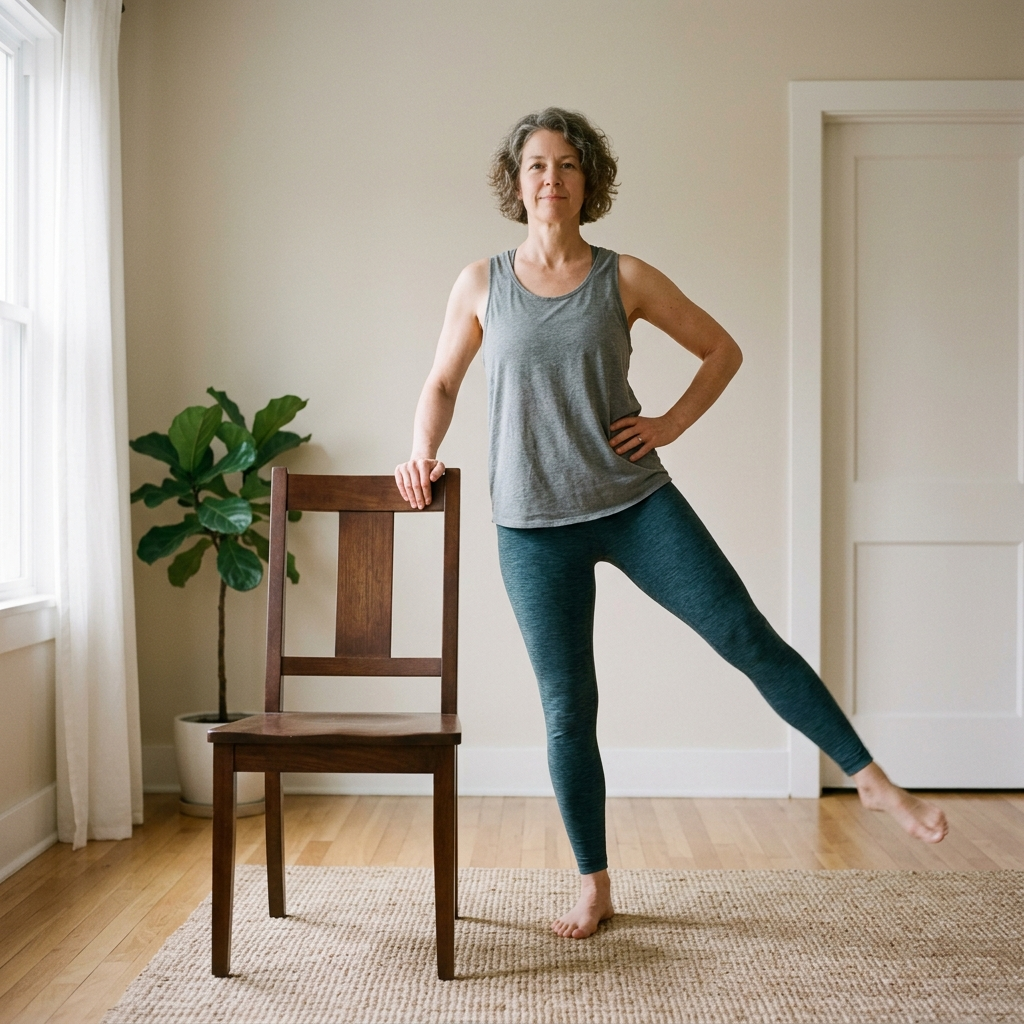
- Standing side leg raise (hold chair for support): 2 x 8–10 each side. Works your hips and improves balance.
- Seated or standing torso twist: 1–2 minutes. Gentle rotation, no forcing the range.
Workout B: Lower Body + Core (Day 2 or 4)
Safety First: How to Exercise Safely at a Higher Weight
- Mini squats (shallow range, hold chair if needed): 2–3 x 10–12. Bend just slightly at the knees and hips.
- Step-ups to a low step or stair: 2 x 8–10 each leg. Builds leg strength using something you already have at home.
- Standing hamstring curl (heel toward glutes): 2 x 10 each leg. Hold the chair, gently bend one knee back.
- Modified dead bug (arms only or legs only): 2 x 6–8 each side. Great for gentle core activation without floor pressure on your back.
- Plank against wall or on knees: 2–3 x 15–20 seconds. Build up slowly — even a few seconds counts as a win.
- Child’s pose or gentle stretch: 2–3 minutes to close out the session.
Progression Over 4 Weeks
- Weeks 1–2: Focus purely on form. 1–2 sets, shorter sessions. Getting the movement pattern right matters more than reps.
- Weeks 3–4: Add one more set, or a few more reps, or a slightly longer session. Small increases only.
Always prioritize comfort and safety over speed or intensity.This plan rewards consistency, not aggression.
Cool-Down (5 minutes)
- Gentle hamstring stretch (seated or standing)
- Calf stretch against a wall
- Chest and shoulder stretch
- Deep breathing to finish
Simple Home Routine: Exercises to Lose Belly Fat at Home for Beginners
One thing worth clarifying honestly: you can’t spot-reduce fat from just your belly. However, strengthening your core supports posture, stability, and overall fat loss when paired with walking and good nutrition.
Here’s a gentle, low-impact belly fat loss for beginners at home routine:
- Standing side crunches — 10–12 each side
- Seated or standing knee raises — 10–12 each side
- Torso twists — 12–15 each side
- Heel taps (lying on back, knees bent) — 10–12 each side
- Modified plank (on knees or against wall) — 15–20 seconds
- Bird-dog (on hands and knees, opposite arm/leg reach) — 6–8 each side
Do this as a 10–15 minute circuit, 3–4 times a week, alongside your main workouts. Skip the promises of “flat belly in 7 days” — real change comes from patience and consistency, not miracle routines. This gentle core work complements your full-body sessions and daily walking to move you toward your goal steadily.
Walking & Daily Movement: Your Secret Weapon
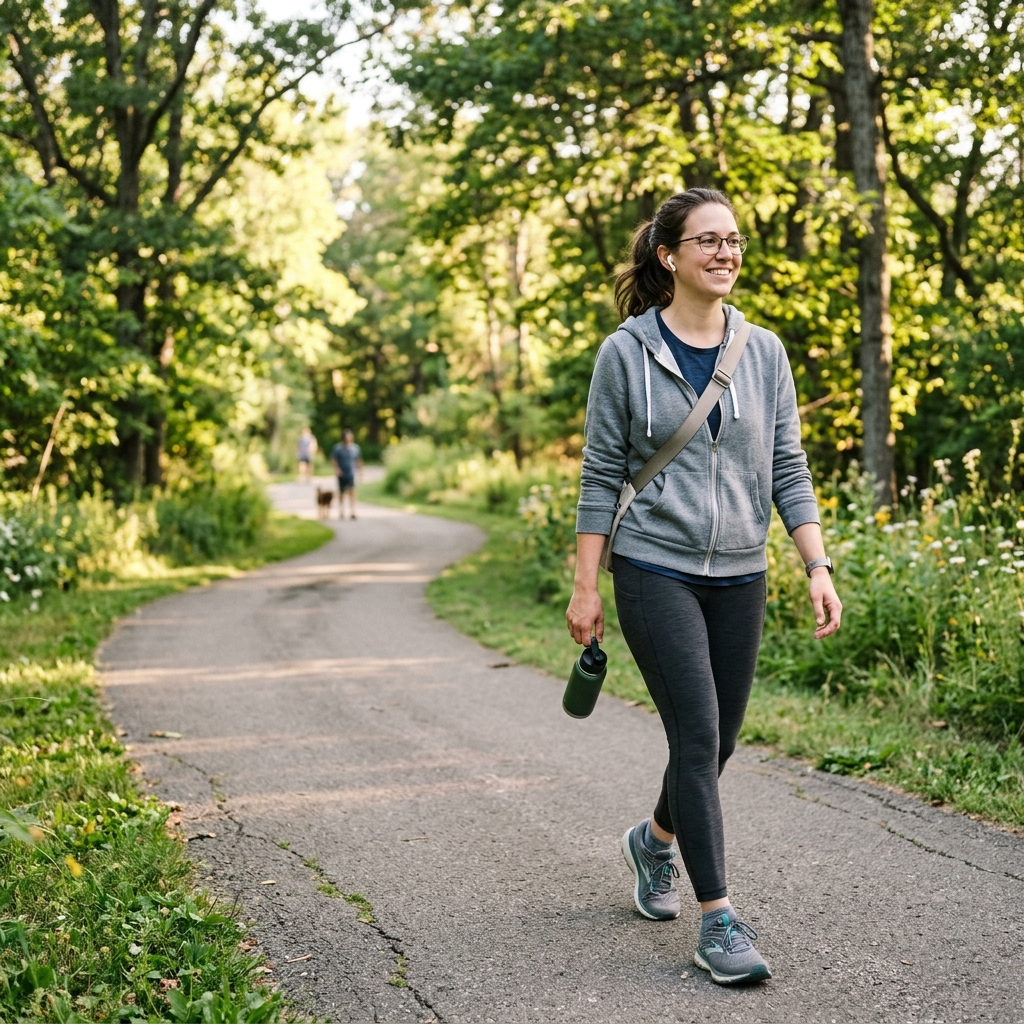
If there’s one tool that deserves more credit in weight loss conversations, it’s walking. It’s one of the safest, most sustainable options in any low impact home workout for overweight beginners.
Start with 10–15 minutes a day, split into two shorter walks if that’s easier on your body. Gradually build toward 30–45 minutes most days, at whatever pace feels comfortable.
Use step counts as a gentle goal if you like tracking progress: 5,000 steps, then 7,000, then eventually 10,000, over weeks and months — not overnight.
Walking after meals can help with blood sugar and digestion. And it doesn’t have to feel like a chore — put on music, catch up on a podcast, walk in nature, or bring a friend along.
Combined with your structured home workouts, this daily movement creates real fat-loss momentum, without punishing your body to get there.
Nutrition & Lifestyle Tips for Faster Results
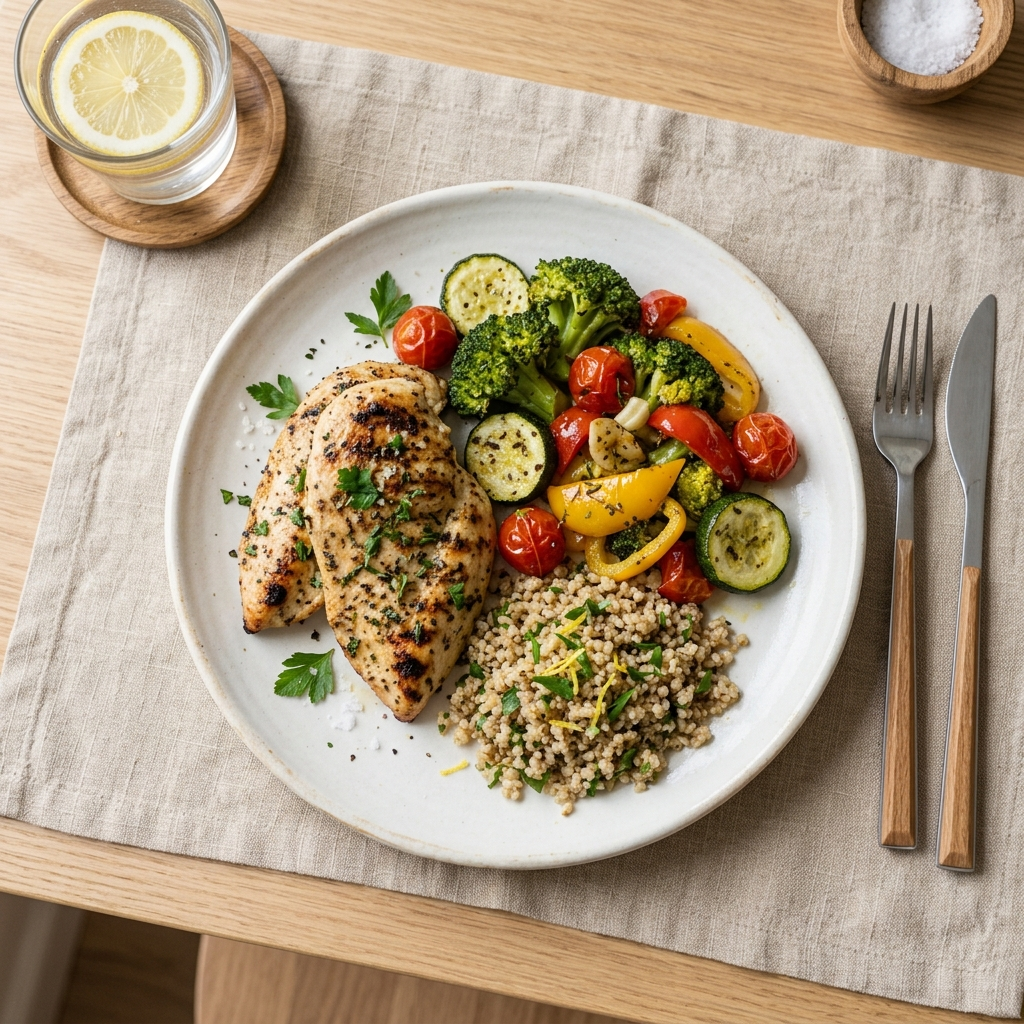
Movement matters, but what you eat plays a huge role too. Keep it simple, no extreme rules involved.
- Prioritize protein — eggs, lentils, chicken, tofu, yogurt, dal all work well
- Fill half your plate with vegetables at most meals
- Choose whole grains over refined carbs when you can
- Drink water regularly, and cut back on sugary drinks
- Sleep 7–8 hours — poor sleep increases hunger and cravings the next day
- Avoid extreme diets. Small, sustainable changes beat drastic restriction every time
This isn’t about perfection. It’s about supporting the energy your body needs to keep showing up for your workouts for obese beginners at home. Nutrition fuels your movement — it doesn’t replace it, and your movement doesn’t need to “earn” your food either.
Mindset & Self-Compassion: Loving Your Journey
This part matters as much as any exercise on this list.
Progress of Workouts for Obese Beginners at Home isn’t linear. Some weeks will feel amazing, others will feel like nothing’s changing. A bad day, or even a bad week, doesn’t erase the work you’ve already put in.
Your worth was never defined by the scale or the size of your belly. That’s true today, and it’ll still be true after you’ve reached your goals.
Take a moment to imagine yourself in four to eight weeks — a little stronger, a little more confident, more at home in your own body. That version of you is built one small session at a time, starting now.
Quick-Start Checklist
- Pick 3–4 days this week for your home workouts
- Clear a small, safe space at home to move in
- Start with 1–2 sets, focus on form and comfort over intensity
- Do the gentle core routine on off days
- Walk daily, even if it’s just 10 minutes
- Track your workouts and how you feel in a notebook or phone
- Be kind to yourself on the tough days — they’re part of the process too
FAQ
Are these workouts for obese beginners at home safe if I have knee or back pain? Most of these exercises are low-impact and modifiable — many use a chair or wall for support. Still, if you have significant joint pain, check with a doctor first and skip any move that causes sharp discomfort.
How soon can I expect to see changes in my belly? Most people notice more energy and looser-fitting clothes within a few weeks, before major visible changes. Belly fat loss tends to happen gradually with consistent movement and nutrition over 8–12 weeks or more.
Can I follow this plan if I’m very out of shape and can barely walk? Yes. Start with the warm-up exercises alone, or shorten sessions to just a few minutes. Even 5 minutes a day is a real start — build from there at your own pace.
What are the best exercises to lose belly fat at home for beginners if I can’t get on the floor? Standing side crunches, seated knee raises, and standing torso twists all work the core without needing to get on the ground. Modify wall planks by standing further from the wall to start easier.
How many days a week should a complete beginner work out? Three to four days a week is a solid starting point, with daily walking on the other days. This balances progress with enough recovery time for your body to adapt.
How often should I perform workouts for obese beginners at home to see results? To see tangible results, you should perform workouts for obese beginners at home at least 3 to 4 times per week. However, the secret to successful workouts for obese beginners at home is not just frequency, but recovery. When you commit to workouts for obese beginners at home, you need to schedule rest days in between.
A sustainable schedule for workouts for obese beginners at home looks like this:
Weekend: Active recovery.
Monday: Low-impact cardio workouts for obese beginners at home (e.g., walking in place).
Tuesday: Rest or light stretching.
Wednesday: Strength-focused workouts for obese beginners at home (e.g., resistance band rows).
Thursday: Rest.
Friday: Full-body workouts for obese beginners at home combining cardio and strength.
A Warm Closing
You don’t need to be perfect. You don’t need to move like the people in fitness videos, and you don’t need six-pack abs to be proud of showing up.
You just need to start, gently and consistently. Every step, every rep, every healthy choice is a love letter to your future self.
At bodylix, we believe in you — and we’re with you on this journey, one small win at a time.
If you’re also curious about nutrition, check out our guide on simple meal plans for fat loss. For more home routines, see our article on beginner gym workout for female.

Fitness Specialist & Former Tactical Trainer
Bal Krishna Poudel has spent more than 19 years in law enforcement organization, and fitness has been at the center of it all. He knows physical conditioning, dynamic strength training, and everyday wellness inside and out. For close to two decades, he taught at official police training centers, getting officers ready for the physical demands of the job—building their endurance and operational fitness. These days, he coaches people in his local community on strength and fitness. At 49, he doesn’t just talk about staying active—he lives it, showing up every day to train and move. He writes for Bodylix, where he shares workouts and nutrition advice that regular readers can actually use, backed by science and built around one goal: helping people stay strong and healthy for the long haul.

3 Responses