
Heart Rate Variability Training: What It Is and Why Your Recovery Depends On It
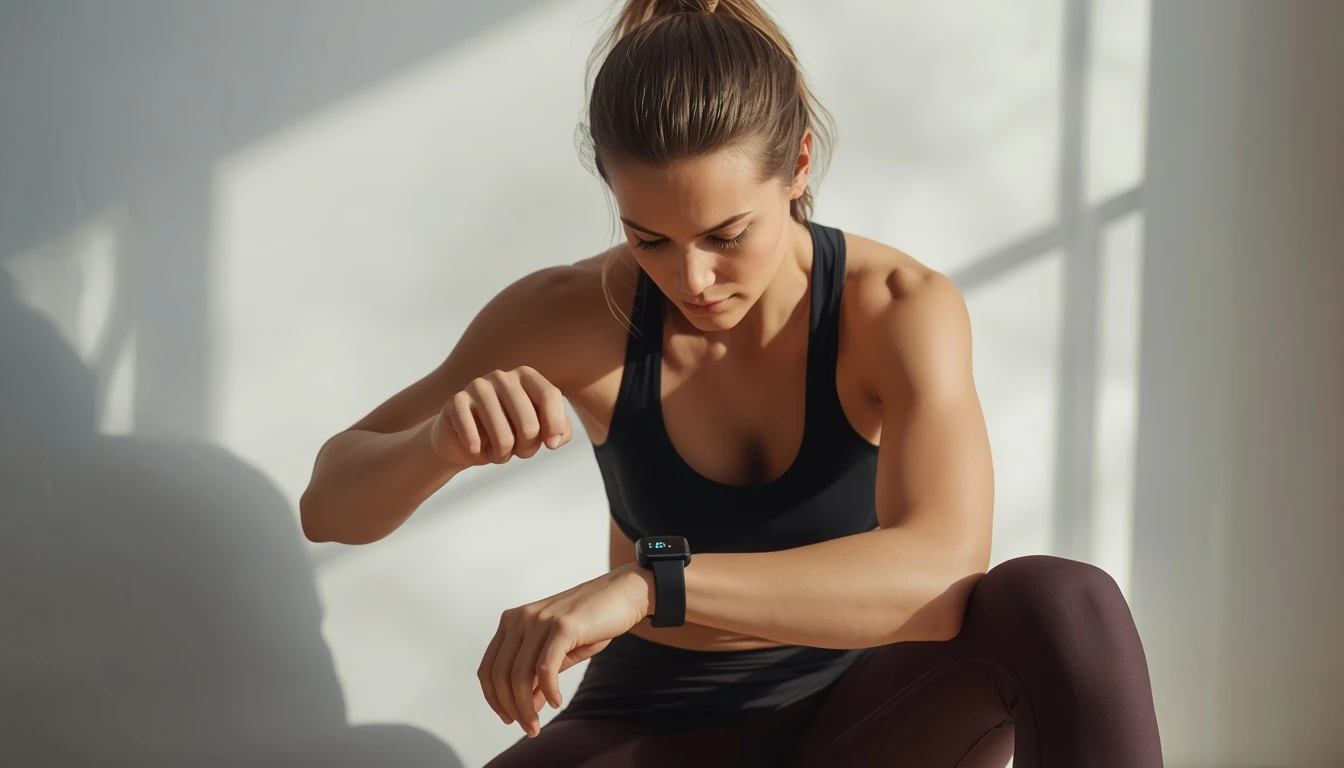
Let’s not overcomplicate this: your heart doesn’t beat like a metronome. Even at rest, the gap between beats shifts slightly with every breath, every stressor, every good night’s sleep. That shifting pattern is heart rate variability, and heart rate variability training is quickly becoming one of the most useful tools athletes and everyday exercisers have for figuring out when to push and when to back off.
This guide walks through what HRV actually measures, how to improve heart rate variability naturally, and how to build HRV training for recovery and performance into a routine you’ll actually stick with. By the end, you’ll have a simple system, not just a pile of numbers.
What is heart rate variability, really?
Heart rate variability is the measurement of time, in milliseconds, between consecutive heartbeats. It’s controlled by your autonomic nervous system, the part of your body running in the background, managing digestion, breathing, and stress response without you thinking about it.
Two branches drive this. The sympathetic branch is your gas pedal: fight-or-flight, cortisol, adrenaline. The parasympathetic branch is your brake: rest, digest, repair. A healthy, high HRV usually reflects strong parasympathetic input, your body’s able to shift into recovery mode easily. According to a widely cited review published in Frontiers in Public Health, a healthy heart’s oscillations are complex and constantly changing, which allows the cardiovascular system to rapidly adjust to sudden physical and psychological challenges. A flat, low HRV often means the sympathetic system is dominating, which happens under chronic stress, illness, overtraining, or poor sleep. This is the exact imbalance heart rate variability training is designed to catch early.
Our coaches see this play out constantly with clients who train hard but never check in on recovery. They hit every workout on the calendar regardless of how they feel, and their HRV trends quietly tank for weeks before a hard crash, an injury, a cold, a burnout spiral, makes the pattern obvious in hindsight.
One thing worth saying plainly: HRV is not a fitness score. A world-class athlete and a sedentary but well-rested person can both post decent numbers. It’s a stress and recovery gauge, not a VO2 max substitute. Confusing the two is probably the single biggest misunderstanding around heart rate variability training. Worth noting too, higher isn’t automatically better in every case. The same Frontiers review points out that certain cardiac conduction abnormalities can artificially inflate HRV readings, which is one reason this data works best as a trend, not a one-off verdict.
Why HRV training matters more than your resting heart rate
Resting heart rate tells you one number, once a day, averaged over sleep. HRV tells you a pattern, moment to moment fluctuation that reacts to alcohol, stress, illness, and training load, often before your resting heart rate budges at all.
Say you had a rough night of sleep and a stressful day before it. Your resting heart rate might look completely normal the next morning. Your HRV, though, will often already show the dip. That’s the whole appeal of HRV training for recovery and performance, it catches the early signal, not just the eventual symptom.
Research from psychiatrist Paul Lehrer and psychologist Richard Gevirtz, who’ve studied HRV biofeedback for years, points to something called resonance frequency breathing, roughly six breaths per minute, as a reliable way to strengthen the baroreflex, the body’s blood-pressure regulating feedback loop, and improve variability over time. Their review in Frontiers in Psychology describes the strengthening of homeostasis in the baroreceptor as the most supported mechanism behind these effects. It’s not a random number pulled from nowhere; it’s tied to how your baroreflex and respiratory systems sync up at that specific pace. This mechanism is a big part of why heart rate variability training has moved from a niche biohacking curiosity into something physical therapists and sports scientists actually recommend.
Athletes use this data to decide: hard session today, or an easy spin instead? Non-athletes use it just as usefully, as an early warning that stress is piling up before it turns into a sick day or a burnout week.
How to measure HRV without overcomplicating it
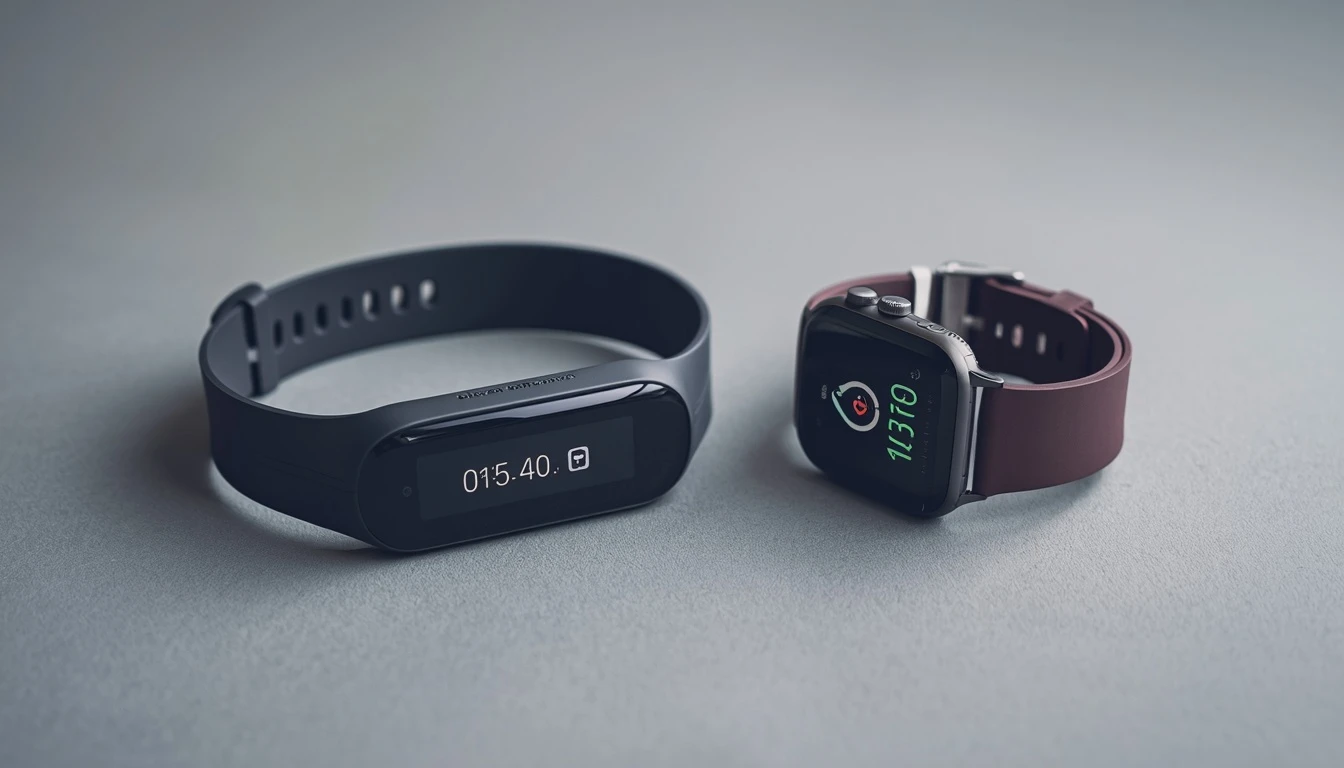
You don’t need a lab to start heart rate variability training. Most wearables, chest straps, smart rings, some watches, estimate HRV using RMSSD, a measurement of the variation between successive heartbeats. It’s the most common metric in consumer devices because it correlates well with parasympathetic activity and doesn’t require heavy processing.
Measure first thing in the morning, before coffee, before you’re upright and moving around. Keep the measurement window consistent, same time, same position, ideally lying down. Don’t compare your number to anyone else’s. HRV is wildly individual; genetics, age, and fitness history all shift the baseline. Track the trend over 7 to 14 days, not the daily number in isolation. One low morning means almost nothing. A week of declining numbers means something.
| Device type | Accuracy | Handles movement | Typical price | Best for |
|---|---|---|---|---|
| Chest strap | Highest, reads electrical signal directly | Very well | ~$60–$180 | Serious training, side-by-side accuracy |
| Smart ring | Good at rest, optical sensor | Poorly during activity | ~$250–$400 | Overnight and morning readings only |
| Smartwatch | Good at rest, variable in motion | Moderately | ~$200–$500 | All-day convenience, one device for everything |
Price ranges are approximate street prices at the time of writing; check current listings before buying.
Normative HRV values shift depending on whether you’re looking at a 24-hour reading, a short 5-minute reading, or an ultra-short reading under that. They’re genuinely not interchangeable, so don’t panic if two different tools give you two different baselines.
If you’re shopping for a dedicated chest strap, the Garmin HRM 600 is one we point people toward often.
Garmin HRM 600
Reads HRV directly from the chest rather than estimating it optically, and pairs with most major training apps instead of locking you into one ecosystem.
| Pros | Cons |
|---|---|
| Accuracy noticeably better than wrist sensors during movement | Not the cheapest chest strap on the market |
| Pairs with multiple apps and devices at once | Requires a chest strap, which some people find less comfortable than a wrist band |
| Good for anyone taking HRV training for recovery and performance seriously | Overkill if you only want a casual daily glance at readiness |
How to improve heart rate variability naturally
This is the part people actually want, so let’s get into it. These are the habits that move the needle fastest for anyone starting heart rate variability training from scratch.
Sleep first. Nothing moves HRV faster than sleep consistency. Not just duration, timing. Going to bed and waking at wildly different hours each day confuses your circadian rhythm, and that shows up in variability within days.

Slow, controlled breathing. Six breaths a minute, in for about five seconds, out for about five, for ten minutes daily. This is the resonance breathing approach mentioned earlier, and it’s genuinely one of the more evidence-backed methods for how to improve heart rate variability naturally, not a wellness fad, an actual mechanism tied to vagal and baroreflex activation.
Cold exposure, in moderation. Cold showers or brief cold plunges appear to boost parasympathetic activation afterward, though the research here is smaller-scale and effects vary a lot person to person. Worth trying. Not worth obsessing over.
Cut back on alcohol. This one has real, recent data behind it. A 2026 study in PLOS Digital Health that tracked nearly 21,000 adults using wearable sensors found that even low levels of alcohol use disrupt the body’s overnight recovery, participants showed higher resting heart rate, reduced HRV, poorer sleep, and lower next-day activity after drinking, with the effect stronger in women and younger adults. If you’re chasing better numbers and still drinking most nights, this is probably your highest-leverage fix. Full stop.
Move, but not always hard. Regular aerobic exercise improves baseline HRV over months. But this only works if you also program recovery. Constant high-intensity work without easy days does the opposite, it grinds variability down. If you’re deciding what kind of cardio to lean on, our walking vs. running comparison is a good next read, since lower-impact steady state tends to be gentler on recovery than repeated hard runs.
Manage psychological stress directly. Journaling, therapy, time outdoors, whatever actually works for you, chronic mental stress is one of the strongest suppressors of HRV there is, and no supplement or breathing app fixes it if the underlying stress never gets addressed.
Picture this: you’ve had two brutal weeks at work, you’re still training hard, and your sleep’s been patchy. Your HRV trend line has probably been sliding the whole time, quietly. Most people don’t notice until they get sick or their next workout feels impossible. That’s the exact gap heart rate variability training closes.
Building an HRV training routine for recovery and performance
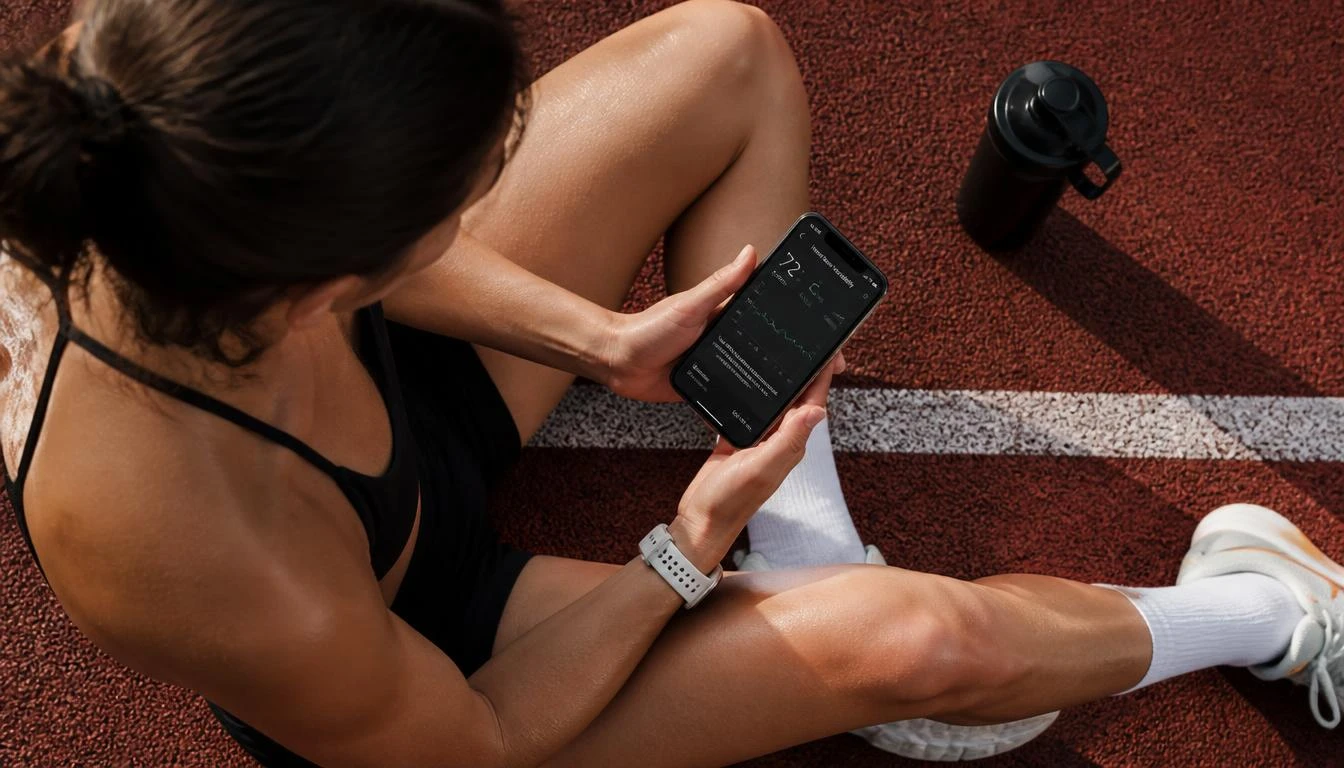
Here’s a simple framework to actually use heart rate variability training daily rather than just collecting data nobody looks at.
- Measure every morning, same conditions, log it somewhere, an app, a spreadsheet, whatever sticks.
- Establish your baseline over the first two to three weeks. Don’t make training decisions yet. Just collect data.
- Compare daily readings to your 7-day rolling average, not to yesterday alone. A single bad night isn’t a crisis.
- Adjust intensity, not attendance. A low reading doesn’t mean skip the gym, it often means swap the heavy squat day for zone 2 cardio or mobility work instead.
- Reassess weekly. If your average trends down for two straight weeks despite good sleep and normal stress, that’s worth a real look, training load, illness, or life stress is probably the driver.
Should a dip in your trend worry you?
A simple framing tool based on the guidance above, not a diagnosis. Persistent dips are worth discussing with a coach or doctor, especially alongside other symptoms.
Most wearable apps fall into two camps: ones that hand you a single daily “readiness score,” and ones that show you the raw trend line and let you interpret it. We’d honestly skip the first kind. The score itself is less useful than watching the direction of travel over time. A device that hides the underlying number behind a traffic-light color is making the decision for you instead of teaching you to read your own body, and that defeats the whole point of HRV training for recovery and performance. And if you’re setting up a dedicated space to actually act on that data, our home gym setup guide covers what’s worth buying first.
HRV and overtraining: the warning sign most people miss
Overtraining doesn’t usually announce itself. It creeps in, a slightly worse sleep here, a slightly heavier leg feeling there, until suddenly a performance plateau turns into a two-week setback. HRV is one of the earliest, most sensitive markers available for catching this before it becomes a real problem, and it’s the main reason serious athletes bother with heart rate variability training at all.
The pattern coaches watch for isn’t one bad morning. It’s a sustained downward trend across 10 to 14 days that doesn’t bounce back even when training load is dialed back slightly. That’s different from the normal daily wobble everyone has. A single rough reading after a late night out means nothing. A month of steadily eroding numbers, paired with nagging soreness or a resting heart rate that’s crept up a few beats, is a different story entirely.
This is where HRV training for recovery and performance earns its keep for serious athletes specifically. A marathoner in week ten of a training block, a lifter deep into a strength cycle, a weekend warrior training for a first triathlon, all of them benefit from having an objective number to check against how they feel, because “I feel fine” is exactly the kind of self-assessment that gets less reliable the more fatigued someone actually is. Coaches who build heart rate variability training into their athletes’ weekly check-ins tend to catch these dips a week or two before the athlete would have noticed on their own.
Common mistakes that wreck your HRV data
Even good HRV training for recovery and performance gets derailed by a few repeat offenders:
- Measuring at inconsistent times, afternoon one day, right after waking the next
- Panicking over one low reading instead of watching the trend
- Ignoring alcohol’s effect and blaming training load instead
- Comparing your number to a friend’s or an influencer’s, genetics alone can create a 20-plus millisecond gap between two equally healthy people
- Skipping the boring stuff while chasing fancier interventions like supplements or cold plunges
- Switching devices mid-tracking and assuming the new baseline means something changed physically, when really it’s just a different sensor and algorithm
Most guides oversell the tech side of heart rate variability training. The wearable matters far less than the boring daily habits underneath it. A forty-dollar chest strap used consistently will teach you more about your own recovery than a premium device checked once a week.
Quick answers
What’s a good HRV score?
There’s no universal good number, HRV depends heavily on age, genetics, and fitness level. What matters is your own trend over time, not comparing to a chart or another person’s reading.
Does higher HRV always mean better fitness?
No. Higher HRV usually reflects better recovery and lower stress, not raw fitness. A well-rested beginner can post a higher HRV than an overtrained elite athlete.
How long does it take to improve HRV?
Noticeable trend improvements from consistent sleep, breathing work, and reduced alcohol typically show up within 2 to 6 weeks, though individual response varies.
Can stress alone lower HRV without physical training?
Yes. Psychological stress is one of the strongest suppressors of HRV, independent of exercise or sleep quality.
Is heart rate variability training worth it for beginners?
Yes, mainly as an awareness tool. Beginners tend to get the most value simply from seeing how sleep and stress move the number, before worrying about fine-tuning training intensity around it.
Is a chest strap more accurate than a smartwatch for HRV?
Generally yes, especially during movement. For a resting morning reading, most modern wearables are reasonably close.
What I’d actually do
I’d measure every morning for two to three weeks before making a single training decision off it. That baseline is worth more than any gadget you buy in week one.
For gear, I’d start with a chest strap over a wrist sensor if accuracy actually matters to your training, the Garmin HRM 600 above is the one we point people toward most. And I’d skip any app that only shows a colored readiness score, ask if it’ll show you the raw trend line before you commit to it.
Here’s your next step, and it’s free. Pick one lever, sleep timing, alcohol, or ten minutes of slow breathing, and hold it steady for two weeks while you track your morning number. You’ll learn more from that one change than from switching devices three times.
Disclaimer. This article is for general education and isn’t a substitute for medical advice. If you have a heart condition, are on medication affecting heart rate, or notice unusual patterns in your readings, talk to a doctor before making major changes based on HRV data alone. Heart rate variability training is a helpful tool, not a diagnosis, and results vary by individual.
Sources
- Shaffer F, Ginsberg JP. “An Overview of Heart Rate Variability Metrics and Norms.” Frontiers in Public Health, 2017.
- Lehrer PM, Gevirtz R. “Heart rate variability biofeedback: how and why does it work?” Frontiers in Psychology, 2014.
- Grosicki GJ, et al. “Real-world effects of alcohol on heart rate, sleep, and physical activity by age and sex.” PLOS Digital Health, 2026.
For more practical fitness guides, visit bodylix.com
