
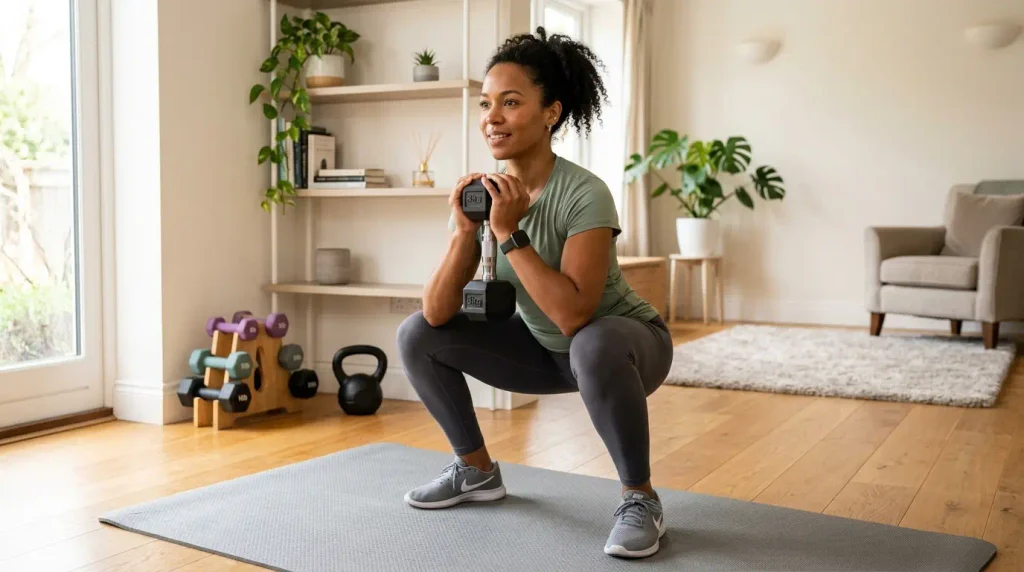
Many people assume real progress requires five or six gym sessions every week. When work, family, fatigue, or life simply gets in the way, that belief can make consistent training feel impossible. The good news is that a well-designed 3 day a week full body workout trains every major muscle group regularly while still leaving room for recovery and real life.
Three focused sessions can be enough to build strength, improve movement confidence, and support fat loss or muscle gain goals—without overwhelming your schedule. This guide walks you through exactly how to structure a simple, sustainable plan whether you train at home or in a gym. You will find clear workouts, progression advice, home-friendly options, and practical support for the days when motivation dips or life interrupts.
Also like to Read: Building a Home Gym Setup That Actually Fits Your Life
What Is a Three-Day Full-Body Workout?
A full-body workout trains several major muscle groups in a single session. Instead of isolating one body part, you cover the fundamental movement patterns that matter most for everyday strength and long-term results:
- Squat or knee-dominant movement (squats, lunges, step-ups)
- Hinge or hip-dominant movement (Romanian deadlifts, hip thrusts, glute bridges)
- Push movement (push-ups, presses)
- Pull movement (rows, pulldowns)
- Core or trunk-stability work (planks, dead bugs, Pallof presses)
- Optional carry, conditioning, or mobility exercise
This differs from an upper/lower split (which alternates upper-body and lower-body days) or a push-pull-legs split (which separates pushing, pulling, and leg work). In a 3 day full body workout routine, you practice the same movement patterns three times per week, often with slight exercise variations across the days. That frequent practice helps beginners learn technique faster and keeps the major muscle groups stimulated regularly.For people with limited training time or those just starting out, this structure is efficient and easier to stick with than more complex splits.
Who Should Use This Routine?
A three-day full-body approach suits:
- Complete beginners learning the basics
- People returning to exercise after a break
- Busy adults who can realistically train only three days each week
- Home exercisers with limited equipment ( check home setup Equipment )
- Anyone focused on general fitness, strength, body composition, or health
- Readers who feel overwhelmed by complicated workout splits
It can also work well for those prioritizing fat loss or moderate muscle building, provided nutrition and recovery support the goal.Advanced lifters who need very high training volume, competitive athletes with sport-specific demands, or people who simply prefer training one muscle group per day may eventually move to a different structure. Individuals with injuries, medical conditions, or other specific needs should consult a qualified professional and adapt the plan accordingly. The core idea remains flexible: adjust exercises, sets, and intensity to match your current ability and available equipment.
Benefits of Training Three Days Per Week
Training three times a week offers several practical advantages. You practice the major compound movements regularly, which builds skill and confidence. Rest days between sessions support recovery so that muscles and the nervous system can adapt. Scheduling becomes simpler, reducing the mental load of fitting workouts into a crowded week.Because the same muscle groups receive stimulus multiple times across the week, strength and movement quality often improve steadily. Missing one session feels less catastrophic than missing a day in a five- or six-day plan—you can usually shift the remaining workouts and keep momentum.
The lower pressure also makes it easier to balance training with work, family, sleep, and other responsibilities.Progress still depends on training quality, consistency over months, nutrition, sleep, and recovery. Three well-executed sessions will outperform six rushed or incomplete ones for most people starting out.
How to Schedule the Workouts
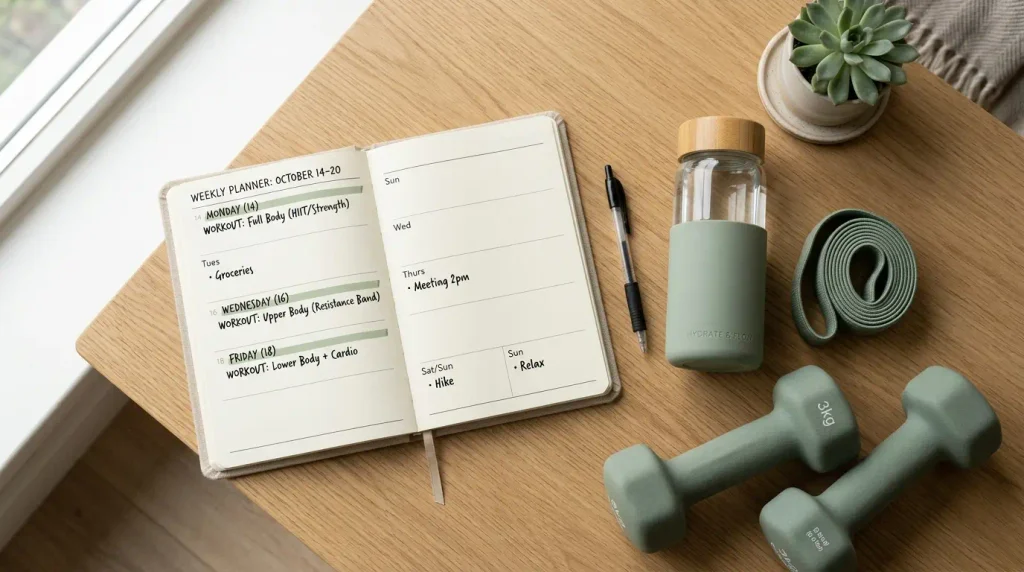
Space the sessions with at least one rest or easy day between them whenever possible. A common and effective layout looks like this:
- Monday: Workout A
- Tuesday: Rest, walking, or mobility
- Wednesday: Workout B
- Thursday: Rest or light activity
- Friday: Workout C
- Saturday: Optional easy cardio or mobility
- Sunday: Full rest
The exact days can shift to match your life. Tuesday-Thursday-Saturday or Wednesday-Friday-Sunday work equally well. What matters most is avoiding two hard full-body sessions on consecutive days when you are still building work capacity and recovery ability. Beginners especially benefit from that extra recovery time so that each session can be performed with good form and energy.If a day must be moved, simply keep the overall weekly volume and rest pattern as consistent as possible.
Warm-Up Before Every Workout
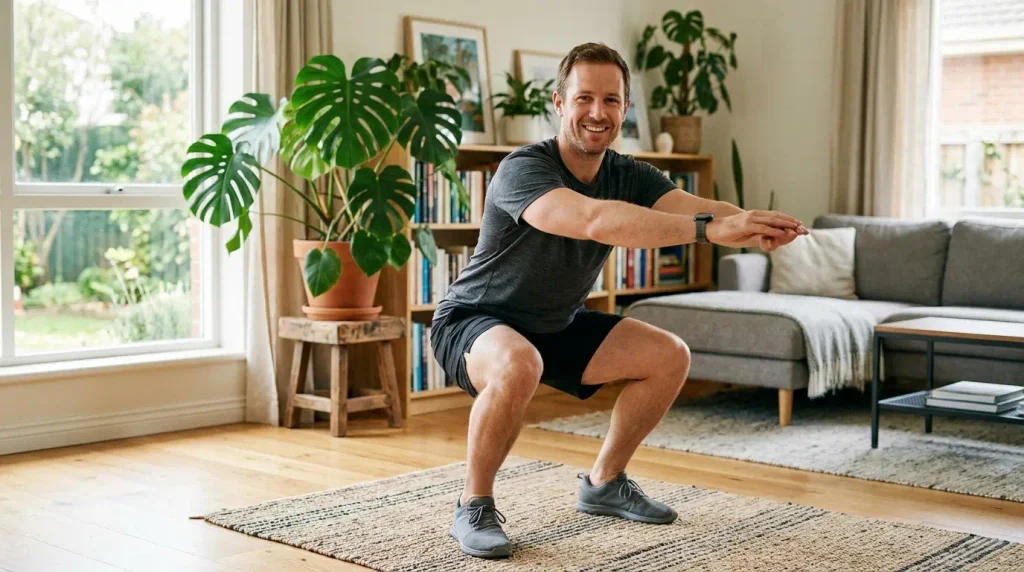
Spend five to ten minutes preparing your body. A simple sequence works for both home and gym:
- Easy marching in place, walking, or light cycling for 2–3 minutes
- Arm circles (10–15 each direction)
- Bodyweight hip hinges or good mornings (8–10 reps)
- Bodyweight squats or sit-to-stand from a chair (8–10 reps)
- Reverse lunges or step-backs (6–8 per side)
- One or two light sets of the first exercise in the workout
The goal is to raise body temperature, practice the movement patterns, and wake up the muscles—not to create fatigue before the real work begins.
Complete Three-Day Full Body Workout Plan
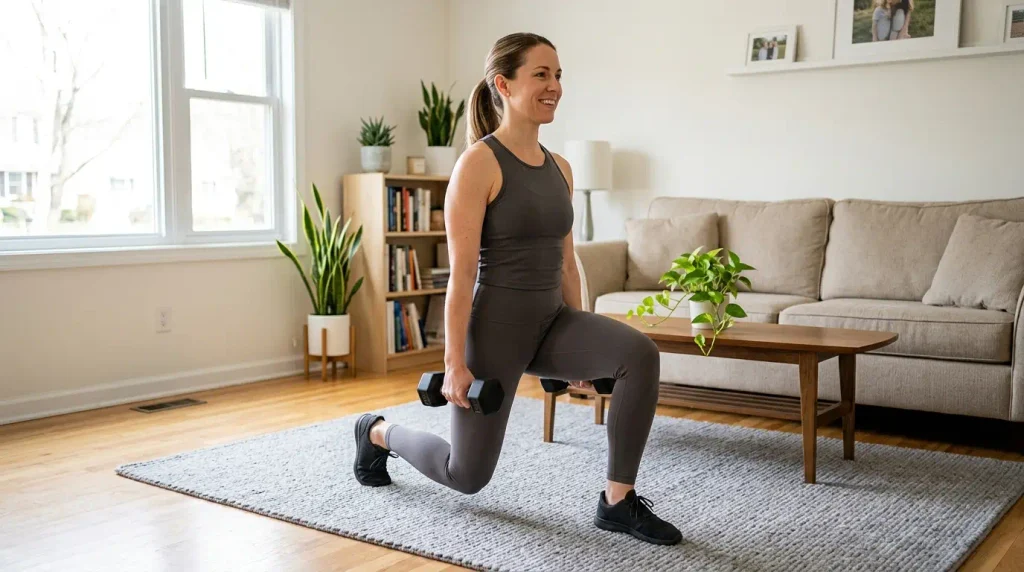
Here is a practical 3 day full body workout routine designed for beginners and intermediate trainees. Use the lighter options if you are new to strength training; progress the resistance or difficulty as form improves. Each workout includes home-friendly and gym-friendly choices.
Workout A
| Exercise | Sets | Repetitions | Rest | Main muscles |
|---|---|---|---|---|
| Goblet squat or bodyweight squat | 2–3 | 8–12 | 90–120 sec | Quads, glutes, core |
| Dumbbell bench press or incline push-up | 2–3 | 8–12 | 90 sec | Chest, shoulders, triceps |
| One-arm dumbbell row or band row | 2–3 | 8–12 per side | 60–90 sec | Back, biceps |
| Romanian deadlift (dumbbell or light) | 2–3 | 8–10 | 90–120 sec | Hamstrings, glutes, back |
| Standing shoulder press (dumbbell or band) | 2–3 | 8–12 | 60–90 sec | Shoulders, triceps |
| Dead bug or plank | 2–3 | 8–10 per side / 20–40 sec | 45–60 sec | Core |
Workout B
| Exercise | Sets | Repetitions | Rest | Main muscles |
|---|---|---|---|---|
| Reverse lunge or split squat | 2–3 | 8–10 per side | 90 sec | Quads, glutes |
| Push-up or machine chest press | 2–3 | 8–12 | 90 sec | Chest, shoulders, triceps |
| Lat pulldown, assisted pull-up, or band pulldown | 2–3 | 8–12 | 90 sec | Back, biceps |
| Hip thrust or glute bridge | 2–3 | 10–15 | 60–90 sec | Glutes, hamstrings |
| Dumbbell lateral raise | 2–3 | 10–15 | 45–60 sec | Shoulders |
| Side plank or bird dog | 2–3 | 20–30 sec / 8–10 per side | 45 sec | Core, stability |
Workout C
| Exercise | Sets | Repetitions | Rest | Main muscles |
|---|---|---|---|---|
| Step-up or leg press | 2–3 | 8–12 per side / 10–15 | 90 sec | Quads, glutes |
| Dumbbell floor press | 2–3 | 8–12 | 90 sec | Chest, triceps |
| Seated row, inverted row, or band row | 2–3 | 8–12 | 90 sec | Back, biceps |
| Kettlebell or dumbbell deadlift (light hinge) | 2–3 | 8–10 | 90–120 sec | Posterior chain |
| Farmer carry or suitcase carry | 2–3 | 20–40 meters | 60–90 sec | Grip, core, traps |
| Pallof press, plank, or slow mountain climber | 2–3 | 8–12 / 20–40 sec | 45–60 sec | Core |
Choose the variation that matches your equipment and current ability. Focus on controlled movement rather than maximum weight.
Exercise Instructions
Goblet squat / bodyweight squat
Stand with feet roughly shoulder-width. Hold a dumbbell or weight at chest height (or keep arms free for bodyweight). Sit the hips back and down as if lowering onto a chair, keeping the chest up. Drive through the mid-foot to stand. Breathe in on the way down, out on the way up. Common mistake: letting the knees cave inward. Beginner option: use a chair for support or reduce depth. Progress by holding a heavier weight or pausing at the bottom.
Push-up or incline push-up
Place hands slightly wider than shoulders. Lower the chest toward the floor or elevated surface while keeping the body in a straight line. Press back up. Inhale down, exhale up. Common mistake: letting the hips sag. Beginner modification: elevate the hands on a bench or wall. Progress to a lower surface or full floor push-up.
One-arm row
Hinge at the hips, support one hand on a bench or sturdy surface. Pull the weight toward the hip, keeping the elbow close. Lower with control. Common mistake: rotating the torso excessively. Beginner option: use a lighter band or dumbbell. Progress by increasing resistance or slowing the lowering phase.
Romanian deadlift
Hold weights in front of the thighs. Soften the knees slightly and hinge at the hips, sending the hips back while keeping the back flat. Feel a stretch in the hamstrings, then drive the hips forward to stand. Common mistake: rounding the lower back. Beginner option: practice with bodyweight or very light weights. Progress by adding load or increasing the range of motion gradually.
Shoulder press
Start with weights at shoulder height. Press upward until the arms are nearly straight, then lower with control. Common mistake: arching the lower back excessively. Beginner option: seated version or lighter resistance. Progress by adding weight once form is solid.
Similar principles apply to the other movements: control the path, breathe steadily, and prioritize form over load.
Sets, Repetitions, and Rest Periods
Beginners often start productively with two working sets per exercise. More experienced trainees may use three. Compound movements generally work well in the 8–12 repetition range; isolation or stability exercises can sit slightly higher (10–15). Rest long enough that the next set can be performed with good technique—usually 60–120 seconds for most exercises.Avoid training every set to complete failure, especially early on. Leave one or two repetitions “in the tank.” Adjust total volume based on how recovered you feel, your age, sleep quality, and overall stress. On lower-energy days it is better to complete two solid sets with good form than force three rushed ones.
How to Progress Over Time
Progressive overload simply means gradually increasing the challenge so the body continues to adapt. Practical ways to progress include:
- Adding one or two repetitions to a set
- Increasing the resistance slightly
- Adding a set once the current volume feels manageable
- Improving technique or increasing range of motion
- Slowing the lowering (eccentric) phase
- Adding a brief pause at the hardest point of the movement
A simple four-week example:
Week 1 – two sets with a manageable weight
Week 2 – add one repetition per set
Week 3 – increase the resistance a small amount
Week 4 – keep the new resistance and refine form Progress does not require heavier weights every single session. Small, consistent improvements compound over months.
Home Version of the Routine

Most of the plan works with bodyweight, resistance bands, adjustable dumbbells, or a sturdy chair.
- Squats → bodyweight, goblet with a backpack, or chair sit-to-stand
- Push movements → incline or wall push-ups, floor push-ups
- Pull movements → resistance-band rows or inverted rows under a sturdy table (if safe)
- Hinges → bodyweight good mornings or single-leg Romanian deadlift variations
- Core → dead bugs, bird dogs, planks
Inspect any household items carefully and avoid unstable furniture. A backpack loaded with books can serve as temporary resistance for goblet squats or carries if used safely.
Gym Version of the Routine
Gym users can substitute machines or free weights freely: leg press for step-ups, cable rows or seated rows for band rows, lat pulldown for assisted pull-ups, barbell or machine variations where preferred. Both free weights and machines are effective. Choose the option that allows safe, consistent practice of the movement pattern.
Three-Day Routine for Different Goals
Fat loss
Strength training preserves muscle while a moderate calorie deficit and daily movement (especially walking) support fat loss. The three full-body sessions provide the resistance stimulus; pair them with sustainable nutrition rather than extreme restriction.
Muscle gain
Focus on progressive resistance, adequate total food intake, and sufficient protein across the day. Recovery and sleep remain essential. The three weekly sessions can build meaningful muscle when consistency and nutrition align.
General fitness
Prioritize balanced movement, enjoyable activity on rest days, and consistency above intensity.
Beginners
Start with the lower end of the set range, lighter resistance, and extra attention to technique. Master the patterns before chasing heavier loads.
Women starting strength training
Resistance training supports strength, bone health, metabolic health, and daily function for everyone. The same movement patterns and progressive approach work well; individualize load and volume to current ability rather than assuming different exercises are required.
Cardio and Activity on Rest Days
Rest days can include easy walking, light cycling, gentle mobility work, stretching, or complete rest. These activities aid recovery without creating significant fatigue. Hard interval sessions or additional heavy lifting on rest days are usually unnecessary and can slow progress for beginners. Rest is an intentional part of the program, not a sign of low commitment.
Common Mistakes
Doing too much too soon → Start with the suggested sets and build gradually.
Changing exercises every week → Stick with the core movements long enough to improve them.
Ignoring pulling movements → Balance push and pull work to support shoulder health.
Training through sharp pain → Stop and assess; sharp or worsening pain is a signal to pause.
Using poor technique to lift heavier → Form and control come first.
Skipping warm-ups → A short warm-up improves performance and comfort.
Not resting between sessions → Recovery allows adaptation.
Copying advanced lifters → Use beginner-appropriate volume and intensity.
Believing sweat equals progress → Effective training does not require extreme fatigue every session. Expecting
visible changes in a few days → Strength and body composition improve over consistent weeks and months.
Failing to record workouts → Simple notes help track progress.
Stopping after one missed session → Resume at the next scheduled workout without self-punishment.
Emotional Consistency and Motivation
It is normal to feel discouraged after missing workouts, impatient when visible changes arrive slowly, or nervous about being judged in a gym. Soreness can feel frustrating, conflicting advice online can create confusion, and the sense of “not doing enough” can be heavy.Keep the first goal small: complete the three sessions most weeks. On busy days, a shortened version (two sets of the main lifts) is still valuable.
Track completed workouts rather than perfect ones. Notice improvements in strength, control, stamina, and how clothes feel or how daily tasks become easier. After a break, simply begin again with the next scheduled session—no need for punishment or “making up” volume. Your starting point and progress timeline are individual; comparison with someone else’s multi-year journey is rarely helpful.
Nutrition and Recovery Basics
Support the training with enough total food for your goal, regular protein-rich meals or snacks, fruits, vegetables, and carbohydrate sources that fuel activity. Stay hydrated and aim for consistent sleep. Manage stress where possible. No workout plan can fully overcome chronic under-recovery or an unsustainable diet. These are general principles only; individual needs vary.
Safety Guidance
Begin with manageable resistance and prioritize technique. Use stable surfaces and keep the training area clear. Stop immediately for sharp, severe, unusual, or worsening pain. Seek medical attention for dizziness, chest pain, fainting, or unusual shortness of breath. Anyone with existing injuries, chronic conditions, pregnancy-related concerns, or uncertainty should consult a qualified healthcare professional before starting a new exercise program.
Frequently Asked Questions
Is a 3 day a week full body workout enough?
Yes, for most beginners and busy adults a consistent 3 day a week full body workout provides sufficient stimulus for strength, fitness, and body-composition goals when paired with recovery and supportive habits.
What is the best 3 day full body workout routine for beginners?
The plan outlined above—covering squat, hinge, push, pull, and core patterns three times weekly with progressive overload—is a proven, practical starting point.
Can I build muscle training three days per week?
Yes. Progressive resistance, adequate nutrition, and recovery allow muscle growth even with three sessions.
Can I lose weight with a three-day workout plan?
Strength training supports fat loss by preserving muscle. Sustainable nutrition and overall activity levels are equally important.
Should I train on consecutive days?
Beginners usually recover better with a rest day between full-body sessions.
How long should each full-body workout take?
Most sessions last 40–60 minutes including warm-up, depending on rest periods and number of sets.
Can I do this workout at home without equipment?
Yes. Bodyweight and band variations cover the same movement patterns effectively.
Should I do cardio on rest days?
Easy walking or light activity is fine; hard cardio is optional and should not interfere with recovery.
How many exercises should I do in one full-body workout?
Five to seven well-chosen exercises covering the main patterns is sufficient for most people.
What should I do if I miss one workout?
Simply resume with the next scheduled session. Consistency over weeks matters more than any single workout.
Conclusion
A thoughtful 3 day a week full body workout can deliver meaningful strength, confidence, and fitness improvements without requiring daily gym time. The 3 day full body workout routine presented here prioritizes the movement patterns that matter most, leaves room for recovery, and adapts easily to home or gym settings.
You do not need perfection—only repeated, patient practice. Missed sessions do not erase earlier progress; strength grows through steady repetition that fits real life.
At Bodylix.com we believe training should support the life you already have. Start with the plan that feels realistic, focus on good form and gradual progress, and give yourself credit for showing up. Three days a week is enough to begin building the stronger, more capable version of yourself.
Read Also: The 3 Day a Week Full Body Workout That Actually Fits Your Life

Fitness Specialist & Former Tactical Trainer
Bal Krishna Poudel has spent more than 19 years in law enforcement organization, and fitness has been at the center of it all. He knows physical conditioning, dynamic strength training, and everyday wellness inside and out. For close to two decades, he taught at official police training centers, getting officers ready for the physical demands of the job—building their endurance and operational fitness. These days, he coaches people in his local community on strength and fitness. At 49, he doesn’t just talk about staying active—he lives it, showing up every day to train and move. He writes for Bodylix, where he shares workouts and nutrition advice that regular readers can actually use, backed by science and built around one goal: helping people stay strong and healthy for the long haul.

2 Responses