
Disclosure: This article contains affiliate links. If you purchase a product through one of our links, Bodylix.com may earn a small commission at no additional cost to you. We only recommend products that may offer useful value to our reader
Table of Contents
Scroll through fitness content long enough and you’ll start seeing home gyms that look like small commercial studios — racks, benches, plates stacked three high, a rowing machine tucked in one corner and a bike in another. It’s easy to look at that and think a “real” home gym setup has to look like that too.
It doesn’t. Most people building a home gym setup for the first time need a fraction of what those photos show. What actually matters is picking equipment that fits your space, your budget, and the way you’re realistically going to train — not filling a room because it looks impressive online.
This guide walks through what to buy first, what you can skip for now, and how to avoid the mistakes that leave good equipment sitting untouched in a closet. Whether you’ve got a spare bedroom or one corner behind the couch, there’s a version of this that works for you.
You may like to read : Inexpensive Home Gyms: Why the OSUDA Rowing Machine Is a Smart First Buy (Review + Setup Tips)
What Makes a Good Home Gym Setup?
A good setup isn’t defined by how much it costs or how much floor space it takes up. It comes down to a few practical things:
- It supports what you’re actually training for.
- It fits safely in the space you have.
- The equipment is versatile enough to cover several exercises, not just one.
- It can grow as you get stronger or more experienced.
- It’s easy to store, clean, and maintain.
- You didn’t spend money on things you don’t need yet.
- It lowers the barrier to actually starting a workout.
That last point matters more than people give it credit for. A resistance band sitting on your dresser gets used. An expensive machine buried under laundry doesn’t. The most expensive home gym setup isn’t automatically the best home gym setup — a small, well-chosen collection of gear you reach for regularly beats a room full of equipment gathering dust.
Decide Your Fitness Goal First
Before buying anything about home gym setup equipment, get clear on what you’re training for. Your goal should drive your equipment list, not the other way around.
| Goal | Useful Equipment |
|---|---|
| General fitness | Adjustable dumbbells, resistance bands, mat |
| Muscle building | Dumbbells, bench, rack, plates |
| Fat loss | Walking equipment, rower, bike, dumbbells |
| Strength development | Rack, barbell, plates, bench |
| Low-impact exercise | Exercise bike, rowing machine, bands |
| Mobility and flexibility | Yoga mat, foam roller, mobility tools |
| Beginner training | Bands, light dumbbells, mat, adjustable bench |
Someone focused on mobility and stress relief might need nothing more than a mat and a set of bands. Someone working toward serious strength gains will eventually want a bench and adjustable weights, and later a rack. There’s no universal shopping list — just the one that matches where you are right now.
Essential Equipment for a Beginner Home Gym
If you’re starting from zero, this is the order that tends to make sense. You don’t need all of it on day one.
Exercise Mat
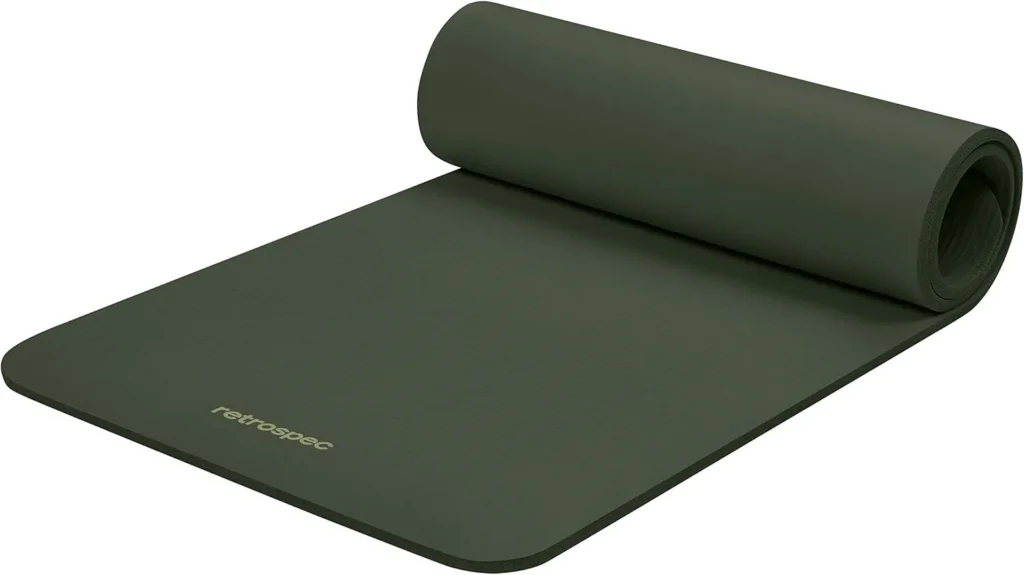
A mat gives you a stable, comfortable surface for stretching, core work, and bodyweight training, and it protects your floor from sweat and equipment. Look for one with decent thickness for joint comfort, a grippy surface so it doesn’t slide during movement, and a material that’s easy to wipe down after a workout.
Yoga mat — a practical option for anyone starting bodyweight or mobility work. Check the current listing for thickness, material, and dimensions before buying.
Resistance Bands
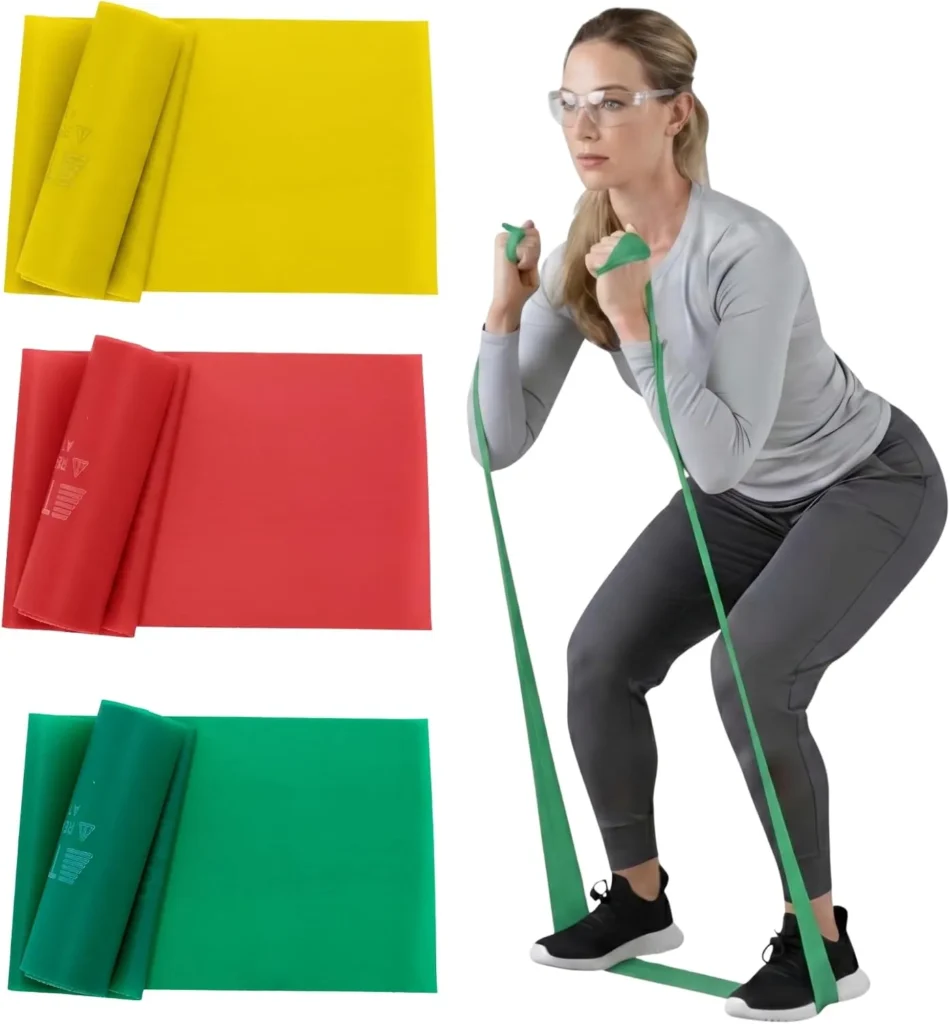
Bands are one of the best value-for-money purchases in home fitness. They’re cheap, they store in a drawer, and a single set can cover pushing, pulling, and lower-body exercises for your whole body. Look for a set with a range of resistance levels, plus handles, ankle straps, and a door anchor if you want more exercise variety.
They do have a ceiling — bands are harder to progressively overload the way free weights are, so as you get stronger, you’ll likely want to add dumbbells alongside them rather than instead of them.
Resistance band set — worth considering for beginners or anyone training in a small space. Confirm the resistance levels and included accessories on the product page.
Adjustable Dumbbells
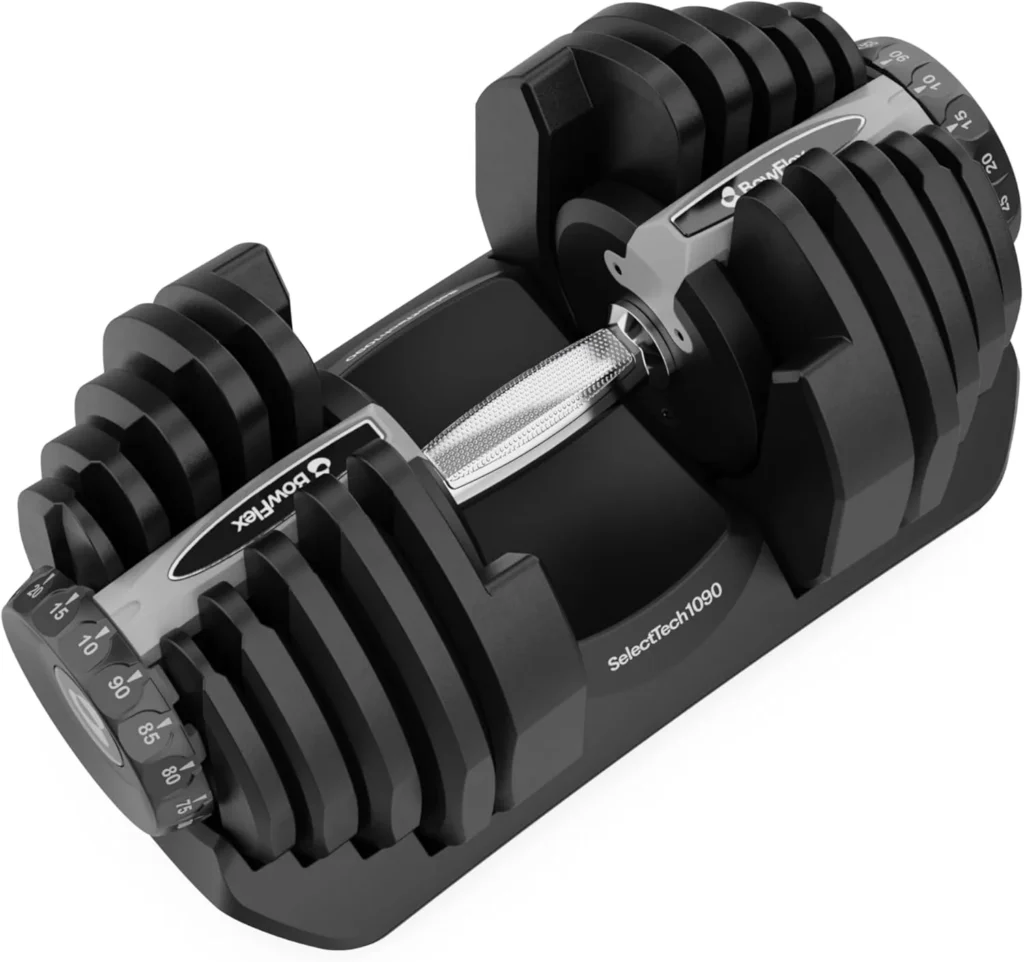
This is often the single best space-saving purchase for a home gym setup. Instead of a rack of ten dumbbell pairs, one adjustable pair can cover a wide range of loads for both upper- and lower-body exercises. Over time, this usually works out cheaper than buying multiple fixed sets, and it takes up a fraction of the space.
When comparing options, pay attention to how securely the weight locks in place and how comfortable the handle feels in your hand — a wobbly adjustment mechanism is a real safety concern, not a minor annoyance.
Adjustable dumbbell product — a strong choice for readers who want strength training equipment without dedicating a wall to dumbbell racks. Check the current listing for weight range, adjustment mechanism, and user reviews.
Adjustable Bench
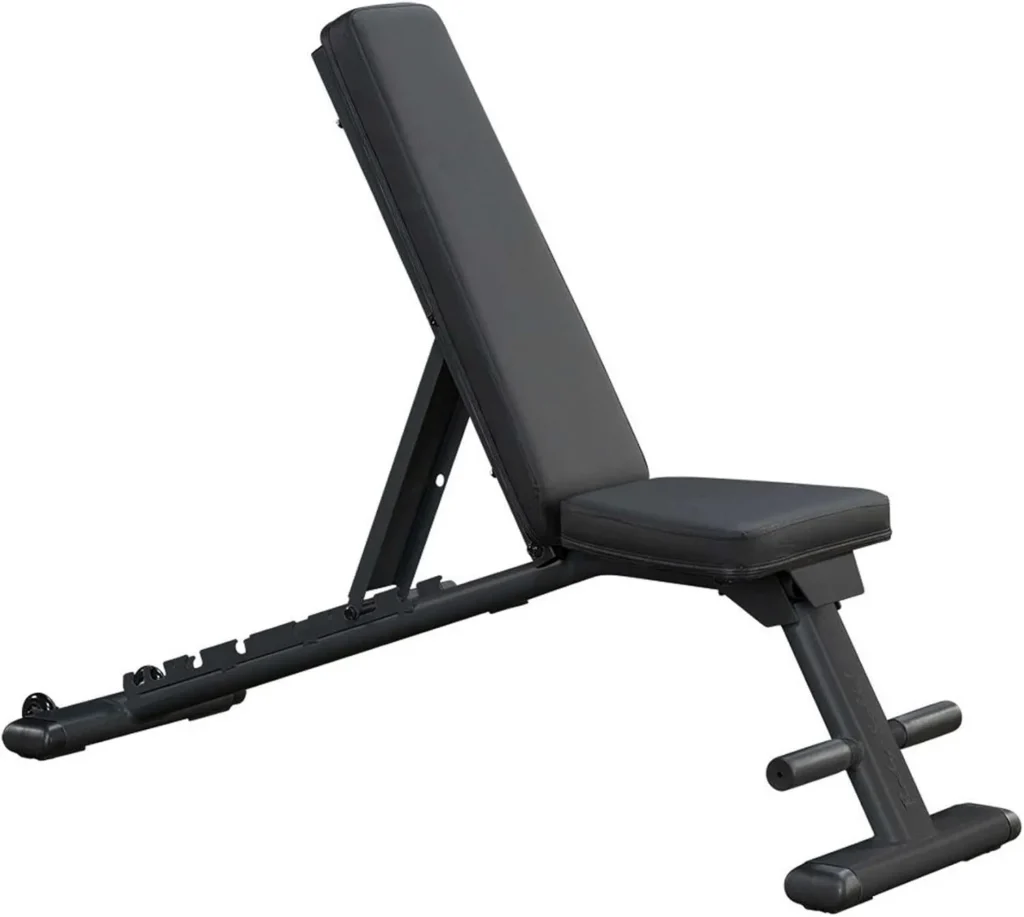
A bench opens up presses, rows, step-ups, split squats, and a long list of core exercises. Look for stable legs, a comfortable but firm pad, a weight capacity that matches your needs, and adjustability between flat, incline, and sometimes decline positions. A folding bench is worth considering if storage space is tight.
Always check the listed weight capacity and dimensions before buying — this is one product where the numbers actually matter for safety.
Foldable weight bench — a practical option for readers ready to add pressing and rowing movements to their routine.
Advanced Equipment Worth Considering
Once the basics are in place and you’re training consistently, a few additions can expand what you’re able to do.
Power Rack or Squat Stand
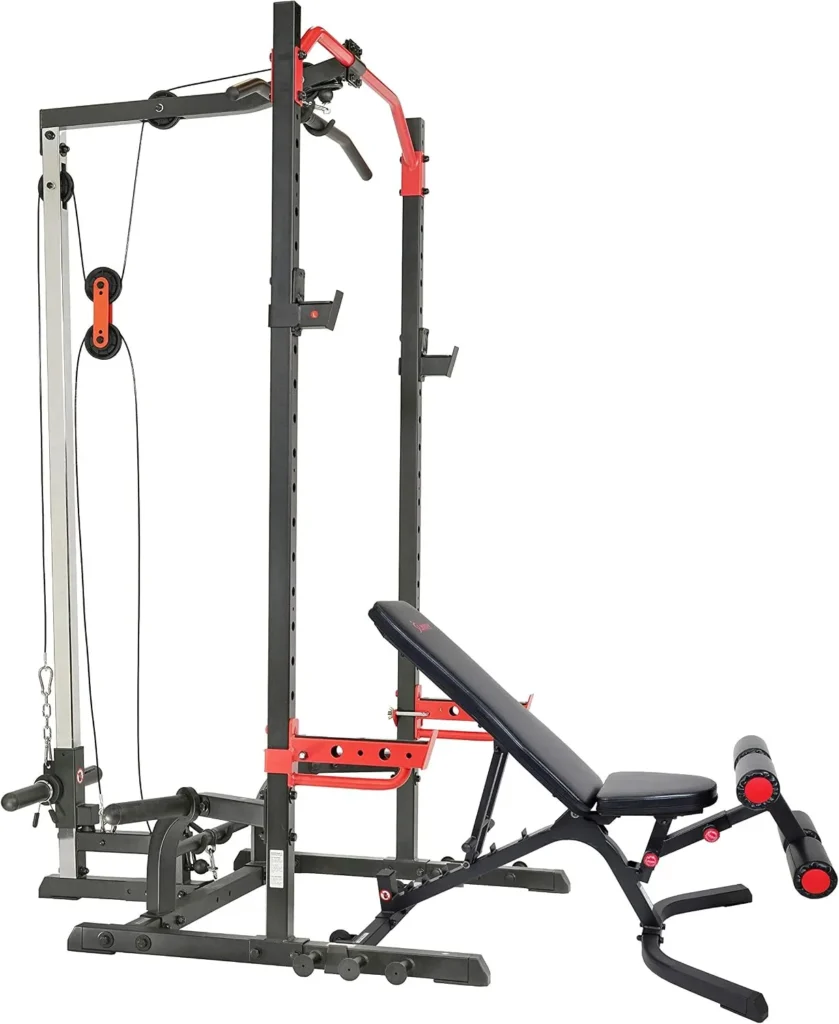
A rack lets you squat, press, and do pull-ups safely with a barbell, with safety bars to catch the weight if a lift fails. This is genuinely useful equipment for serious strength training, but it needs real floor space, sufficient ceiling height, and a solid understanding of how to set it up correctly. It’s not usually a first purchase.
Power rack or squat stand — worth considering for readers who’ve outgrown dumbbell-only training and want to add barbell work.
Cable Machine or Functional Trainer
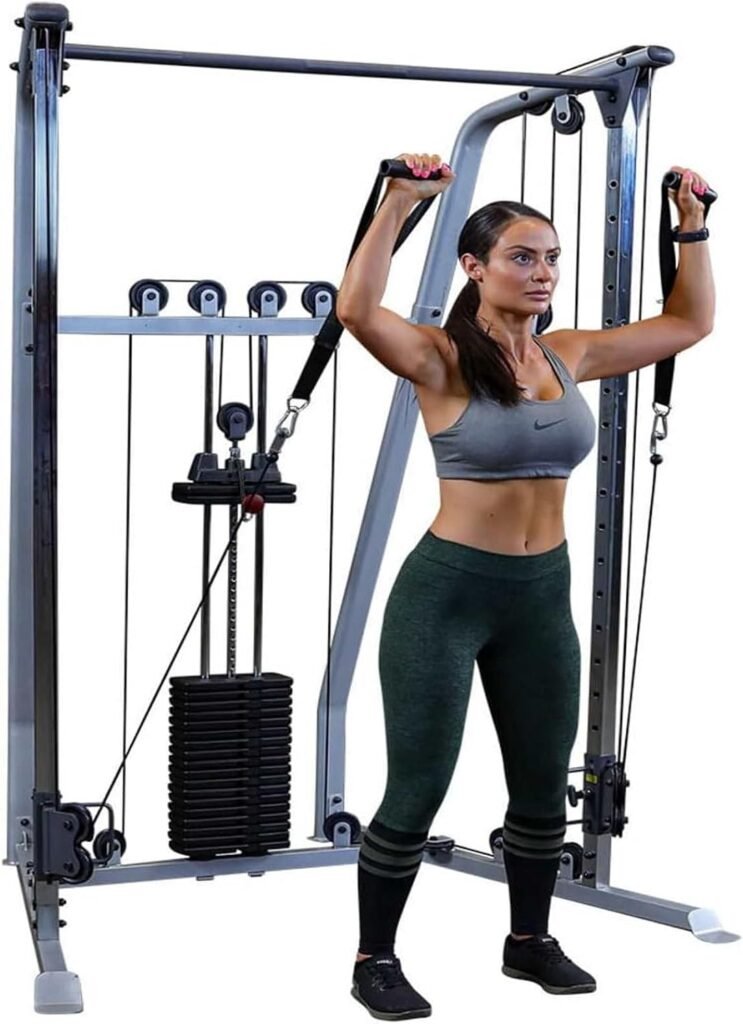
Cable machines offer a lot of exercise variety and adjustable resistance in one unit, which is appealing. But they also take up significant space and cost more than most beginners need to spend. For most people starting out, dumbbells and bands cover the same movement patterns at a fraction of the price and footprint.
Cardio Equipment
Rowing machines, exercise bikes, treadmills, elliptical trainers, and walking pads all raise your heart rate, but they suit different situations.
- Rowing machines work the whole body and are relatively compact when many models fold for storage — check the specific listing to confirm.
- Exercise bikes are generally low-impact and easier on the joints than running.
- Treadmills are the most space-demanding option and typically the priciest.
- Ellipticals offer low-impact cardio but tend to take up a fixed footprint that’s hard to reduce.
- Walking pads are compact and suit people who want light daily movement rather than intense cardio sessions.
Check each product listing for noise level, weight capacity, and folded dimensions rather than assuming a machine is quiet or apartment-friendly.
Compact rowing machine or exercise bike — a practical option for readers who want home cardio equipment without a treadmill’s footprint.
Best Home Gym Setup by Budget
There isn’t one best home gym setup — there’s a best setup for your specific budget, space, and goals. Here’s how that tends to break down.
Basic Setup
- Exercise mat
- Resistance bands
- One pair of dumbbells or adjustable dumbbells
This covers full-body strength and mobility work and suits beginners, apartment dwellers, and anyone who wants to test the waters before spending more.
Intermediate Setup
- Adjustable dumbbells
- Adjustable bench
- Resistance bands
- Mat
- A simple storage solution (rack, bin, or shelf)
Add a bench to a basic setup and you unlock presses, rows, step-ups, and a much wider range of full-body strength training. This tier suits people who’ve been training a few months and know they’ll stick with it.
Advanced Setup
- Power rack or squat stand
- Barbell and plates
- Adjustable bench
- Dumbbells
- Pull-up equipment
- Optional cardio machine
This is the closest thing to a commercial gym at home, and it comes with real requirements: more floor space, higher ceilings in some cases, a bigger budget, and enough training experience to use a barbell safely. It’s not a starting point for most readers — it’s where you end up after building habits with a simpler setup first.
Amazon Gear Recommendations
| Product Category | Recommended Product | Best For | Main Advantages | Limitations | Link |
|---|---|---|---|---|---|
| Exercise mat | [Yoga mat product] | Beginners, mobility work | Comfortable, protects flooring, easy to store | Doesn’t add resistance on its own | [Amazon link] |
| Resistance bands | [Resistance band set] | Small spaces, beginners | Affordable, portable, full-body use | Limited top-end resistance | [Amazon link] |
| Adjustable dumbbells | [Adjustable dumbbell product] | Space-conscious strength training | Space-saving, wide load range | Higher upfront cost than a single fixed pair | [Amazon link] |
| Weight bench | [Foldable weight bench] | Presses, rows, step-ups | Expands exercise options, some fold flat | Takes up floor space when unfolded | [Amazon link] |
| Cardio equipment | [Compact rower or bike] | Home cardio, low-impact training | Full-body or joint-friendly cardio | Can be bulky depending on model | [Amazon link] |
| Rack or stand | [Power rack or squat stand] | Barbell training, advanced lifters | Enables squats, pull-ups, safe barbell work | Needs significant space and ceiling height | [Amazon link] |
Prices, stock, ratings, and specifications change often on Amazon, so check the current listing before buying anything from this table — especially dimensions, weight capacity, and warranty terms.
Small-Space Home Gym Setup
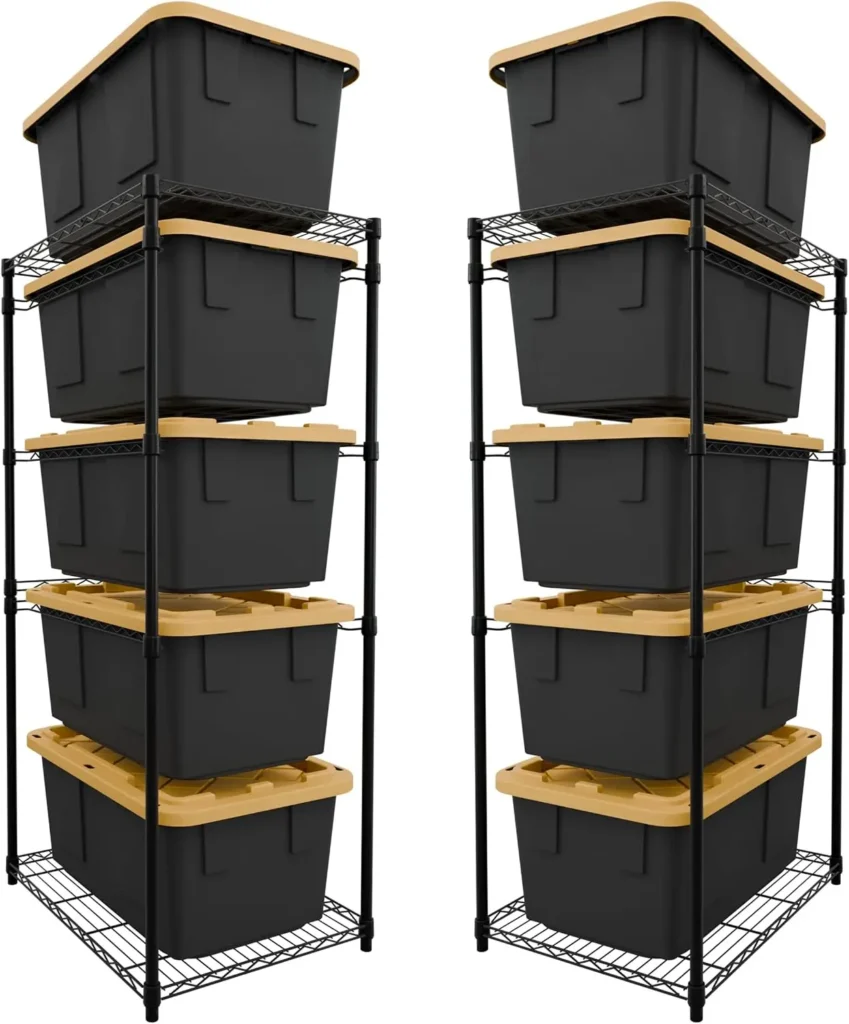
You don’t need a spare room to build an effective small-space home gym setup. Apartments, bedrooms, and shared spaces can absolutely work with the right choices. ( Recommended Storage Rack )
A few things that help:
- Favor foldable or adjustable equipment over fixed, bulky pieces.
- Use vertical storage — wall hooks, shelving, or over-door organizers — instead of letting gear pile up on the floor.
- Resistance bands are close to ideal for tight spaces since they roll up and tuck into a drawer.
- Under-bed storage bins work well for mats, bands, and light dumbbells.
- Check ceiling height if you’re considering any overhead movement or hanging equipment.
- Leave a clear, safe area to move in — nothing should block a doorway or walkway.
- If noise is a concern (shared walls, downstairs neighbors), look at listings that mention noise reduction rather than assuming any given machine is quiet.
A small space doesn’t limit your results nearly as much as people assume. Bands, adjustable dumbbells, and a mat can support strength, mobility, and cardio work without needing more than a few square feet.
Home Gym Setup for Different Users
Complete beginners: Start with a mat, bands, and one pair of light-to-moderate dumbbells. Focus on learning movement patterns before adding load.
Women beginning strength training: The same core equipment applies — dumbbells, a bench, and bands cover the vast majority of effective strength work regardless of gender. Choose weight ranges based on your current strength, not assumptions about what you “should” lift.
Weight loss focused readers: A mix of cardio equipment (bike, rower, or walking pad) and resistance training tends to work better long-term than cardio alone.
Muscle-building readers: Dumbbells, a bench, and eventually a rack with a barbell give you the load progression muscle growth depends on.
Older adults or people returning to exercise: Bands and light dumbbells allow a gradual, controlled return to activity. Check with a healthcare provider before starting anything new, especially with existing conditions.
Apartment dwellers: Foldable and adjustable gear, plus vertical storage, makes a real difference — see the small-space section above.
Busy professionals: A basic setup you can access in minutes beats a fully equipped gym membership you never have time to drive to.
Readers with very limited budgets: A mat and a set of bands can support a genuinely effective full-body routine on their own.
Everyone’s body, ability, and starting point are different. If you’re unsure whether an exercise or piece of equipment is appropriate for you, a physical therapist, doctor, or certified trainer can give guidance specific to your situation.
Common Home Gym Setup Buying Mistakes
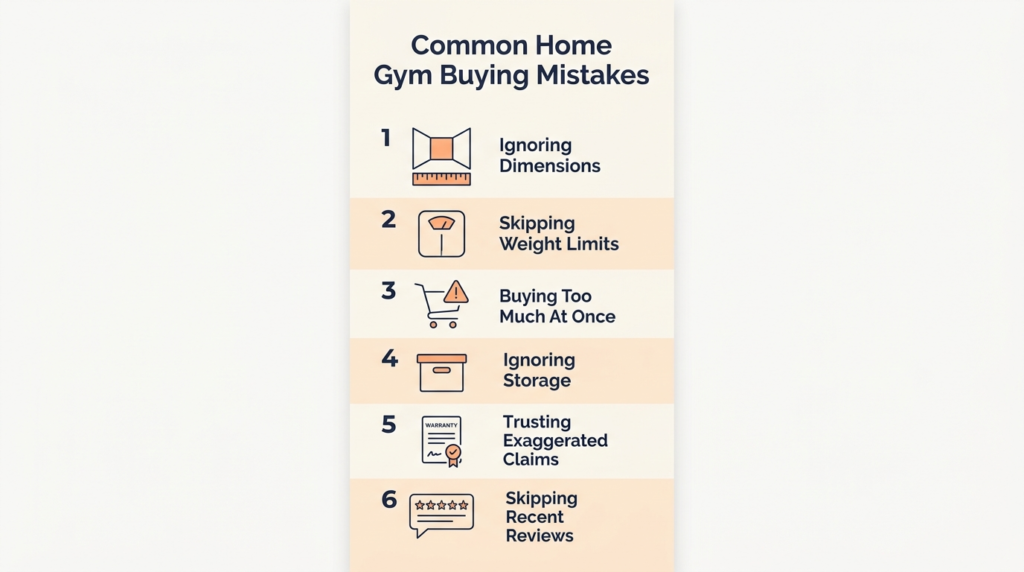
Buying because it looks impressive online. Solution: buy based on your goal and space, not what shows up in someone else’s photos.
Purchasing too much equipment at once. Solution: start with two or three versatile items and add more only once you’re using them consistently.
Ignoring dimensions. Solution: measure your space before ordering anything, especially benches, racks, and cardio machines.
Forgetting weight limits. Solution: check the listed user weight capacity on benches and cardio equipment before buying.
Skipping warranty details. Solution: read the warranty terms on the product listing, particularly for anything with moving parts.
Choosing complicated machines. Solution: favor simple, versatile equipment you’ll actually understand how to use.
Ignoring storage. Solution: pick equipment that folds, stacks, or tucks away if space is limited.
Buying equipment that doesn’t match your goals. Solution: go back to the goals table earlier in this guide before adding anything to your cart.
Trusting exaggerated claims. Solution: look for specific, verifiable details rather than vague promises.
Skipping recent reviews. Solution: sort reviews by most recent to catch quality or shipping issues that may have changed over time.
Ignoring the return policy. Solution: know the return window before you buy, especially for larger items.
Treating low price as the only measure of value. Solution: weigh durability, safety, and how much use you’ll realistically get, not just the sticker price.
How to Organize and Use Your Home Gym
Where you put things matters almost as much as what you buy. A few practical habits:
- Keep your equipment in one dedicated spot, even if it’s small, so setup takes seconds rather than minutes.
- Store bands, straps, and small accessories in a bin or drawer instead of letting them scatter.
- Keep the floor around your equipment clear — this is a safety issue, not just tidiness.
- Write a simple weekly schedule so you’re not deciding what to do every single day.
- A basic training log (even just notes in your phone) helps you see progress and stay motivated.
- Wipe down mats, benches, and grips after use.
- Periodically check bolts, cables, straps, and adjustment mechanisms for wear.
Equipment only creates value once it’s actually being used. Ten minutes of organizing now saves you from digging through a closet later — and that friction is often the difference between working out and skipping it.
Sample Weekly Home Workout Plan
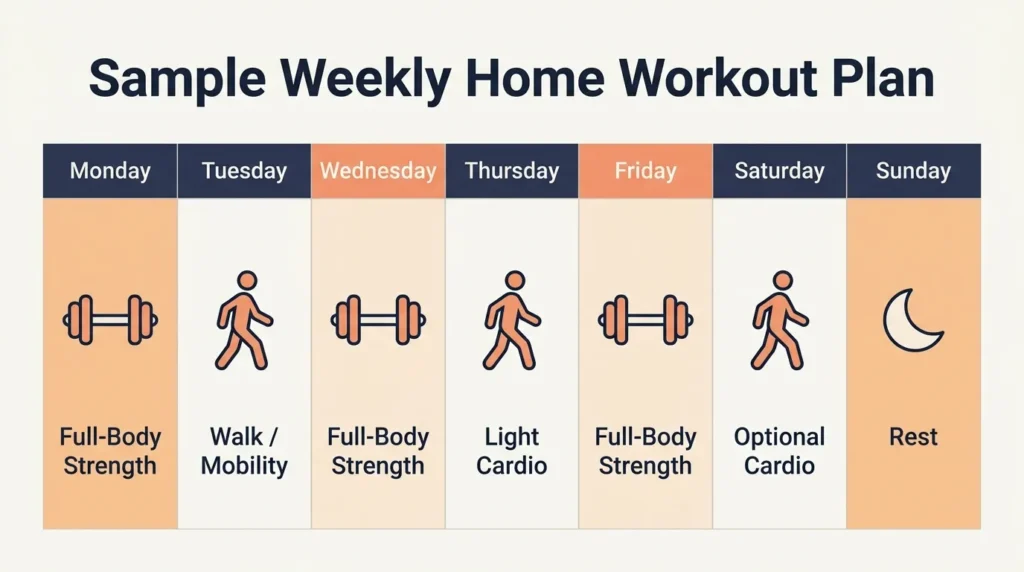
This is a general beginner-friendly structure, not an individualized program. Adjust based on your fitness level, and check with a professional if you have any health concerns.
- Monday: Full-body strength training
- Tuesday: Walking, mobility work, or rest
- Wednesday: Full-body strength training
- Thursday: Light cardio or rest
- Friday: Full-body strength training
- Saturday: Optional cardio or recreational movement
- Sunday: Rest
Example exercises for strength days, using common home gym equipment:
- Squat or goblet squat
- Push-up or dumbbell press
- Dumbbell row or resistance-band row
- Romanian deadlift
- Shoulder press
- Glute bridge
- Plank or dead bug
Start with a manageable number of sets and repetitions — something you can complete with good form and a bit of effort left in the tank — and build from there as it starts to feel easier.
How to Choose the Best Equipment for You
Before buying home gym setup , run through this checklist:
- What is my primary goal?
- How much space do I actually have?
- What is my realistic budget?
- Will I use this at least once or twice a week?
- Can I do several different exercises with it?
- Is it easy to store when I’m not using it?
- Does it have a suitable weight capacity for me?
- Are replacement parts and warranty information available?
- Does it have recent, relevant reviews?
- Is the return policy clear if it doesn’t work out?
The best home gym setup is a personal one. It’s whatever combination of gear fits your actual life and makes it easier — not harder — to keep showing up.
Staying Consistent (Without the Guilt)
If you’ve bought fitness equipment before and it ended up unused, you’re far from alone. That happens for reasons that have nothing to do with willpower — mismatched equipment, an unrealistic plan, or simply life getting busy.
It’s normal to feel a little guilty after missing a few workouts, discouraged when progress feels slow, or unsure how to use a new piece of equipment. It’s also normal to compare your setup to something you saw online and feel like yours doesn’t measure up. None of that means you’re doing it wrong.
A few things that genuinely help:
- Start with shorter sessions than you think you need — 15 to 20 minutes is enough to build a habit.
- Keep equipment visible but tidy, so it’s a reminder rather than clutter.
- Have a simple backup workout ready for days when motivation is low.
- Track how often you show up, not how perfect each session is.
- Notice small wins — more energy, better sleep, a bit more strength — not just changes you can see.
- If you fall off for a week or a month, restart without treating it as a failure.
- Choose a pace you can actually sustain over one that burns you out in three weeks.
Whatever your starting point, body type, budget, or space, there’s a realistic version of a home gym setup that works for you.
Safety and Responsible Use
A few basics apply no matter what equipment you buy:
- Read the manual before assembling or using anything new.
- Assemble equipment exactly according to the instructions.
- Regularly check bolts, pins, cables, straps, and adjustment mechanisms for wear.
- Set up equipment on a stable, level surface.
- Keep children and pets away from equipment during use.
- Use flooring appropriate for the equipment (mats can help protect both floors and joints).
- Start with lighter resistance than you think you need and build up.
- Learn correct form before adding heavier loads — a few sessions with a qualified trainer can be worth it.
- Stop immediately if you feel sharp, severe, unusual, or worsening pain.
- Talk to a qualified healthcare professional before starting a new exercise program if you have an injury, a medical condition, are pregnant, or are simply unsure whether an activity is right for you.
This guide can’t diagnose an injury or replace individualized medical advice — when in doubt, check with a professional.
FAQ
What equipment do I need for a basic home gym setup? A mat, a set of resistance bands, and one pair of dumbbells (ideally adjustable) cover most beginner needs and support a genuinely complete full-body routine.
What is the best home gym setup for beginners? For most beginners, the best home gym setup is the simplest one: a mat, bands, and light-to-moderate dumbbells. Add a bench once you’re training consistently.
Can I build muscle with home gym equipment? Yes. Dumbbells, resistance bands, and a bench are enough to apply progressive overload, which is the main driver of muscle growth, especially in the early stages of training.
Is a home gym cheaper than a gym membership? It depends on how much equipment you buy and how long you keep a membership. A basic setup often pays for itself within a year or two compared to an ongoing monthly membership, though this varies by location and gym pricing.
What is the best home gym setup for a small room? Foldable and adjustable equipment — resistance bands, adjustable dumbbells, and a folding bench — makes the most of limited square footage without sacrificing exercise variety.
Are adjustable dumbbells worth buying? For most people, yes. They save space compared to a full rack of fixed weights and usually work out cheaper than buying several individual pairs, though the upfront cost is higher than a single set.
Should I buy cardio equipment first? Not necessarily. Unless cardio is your main goal, most beginners get more value starting with strength basics — a mat, bands, and dumbbells — before adding a bike or rower.
How much space do I need for a home gym? A mat, bands, and dumbbells can fit in a space as small as a few square feet. Larger equipment like benches, racks, and cardio machines need more planning around dimensions and ceiling height.
How do I choose safe Amazon fitness equipment? Check the listed weight capacity, read recent reviews, confirm the warranty terms, and measure your space against the product dimensions before ordering.
What should I buy first if my budget is limited? A mat and a set of resistance bands. Both are inexpensive, versatile, and enough to start training consistently while you decide what to add next.
Final Verdict
A home gym setup doesn’t need a spare room, a big budget, or a shopping cart full of machines. It needs a handful of pieces that match your goals, fit your space, and are simple enough that you’ll actually reach for them on a regular Tuesday, not just when you’re feeling motivated.
Start with the basics — a mat, some bands, a pair of dumbbells — and let your setup grow only as your training does. Versatile equipment will almost always serve you better than an impressive-looking machine you use twice. Whether you’re working with a corner of a bedroom or a full spare room, the best home gym setup is simply the one you’ll keep coming back to.
Your space doesn’t need to be perfect to be useful. Buy what fits your life right now, use what you’ve got, and let the rest come later. Every session on that mat, with those bands, or under that bar is worth something — build from there.
Read Also: Pre Workout Nutrition: What to Eat Before the Gym (Plus Where Thavage Pre Workout Fits In)

Fitness Specialist & Former Tactical Trainer
Bal Krishna Poudel has spent more than 19 years in law enforcement organization, and fitness has been at the center of it all. He knows physical conditioning, dynamic strength training, and everyday wellness inside and out. For close to two decades, he taught at official police training centers, getting officers ready for the physical demands of the job—building their endurance and operational fitness. These days, he coaches people in his local community on strength and fitness. At 49, he doesn’t just talk about staying active—he lives it, showing up every day to train and move. He writes for Bodylix, where he shares workouts and nutrition advice that regular readers can actually use, backed by science and built around one goal: helping people stay strong and healthy for the long haul.

5 Responses