

Try a simple 3 day a week full body workout designed for real schedules — build strength, burn fat, and stay consistent without daily gym trips.
Table of Contents
Picture someone standing in front of a wall of workout apps, each one promising a different six-day split, a different set of “essential” exercises, a different reason the last plan failed. They’ve started and stopped more programs than they can count. Every time, the same thing happens — life gets busy, the schedule falls apart, and the guilt piles up faster than the results.
If that sounds familiar, you’re not lacking discipline. You’re probably just using the wrong tool. A 3 day a week full body workout strips away the complexity and gives you a plan you can actually keep. Three sessions, real recovery in between, and every major muscle group trained each time. No daily gym trips required, no guessing which day works which muscle. Just a routine that fits into a normal week.
You may also like: 10 Best Home Workouts for Beginners You Can Do Without Equipment
What Is a 3 Day a Week Full Body Workout?
A 3 day full body workout routine means exactly what it sounds like — three training sessions per week, and each one hits your whole body instead of splitting muscles across different days.
In a single session, you’ll typically work your legs, chest, back, shoulders, arms, and core. Instead of a “leg day” and an “arm day,” every workout touches nearly every major muscle group through a handful of well-chosen compound exercises — moves like squats, rows, and presses that recruit several muscles at once.
This setup works especially well for two kinds of people: beginners who need to build a foundation without overwhelming their body, and busy adults who simply can’t commit to five or six weekly sessions. Because you’re training the whole body three times, you also get more frequent practice with fundamental movement patterns, which speeds up how quickly your technique improves.
Benefits of a 3-Day Full-Body Workout Plan
A 3 day a week full body workout split isn’t just a scaled-down version of a “real” program. It has genuine advantages of its own.
- Efficient use of time. Three sessions a week is realistic for almost any schedule, even during busy stretches.
- More practice with the basics. Squatting, hinging, pushing, and pulling three times a week builds skill faster than doing each pattern once.
- Balanced strength and muscle development. Training everything, every session, keeps your body developing evenly instead of neglecting certain areas.
- Simpler planning. Three fixed days are far easier to commit to than a rotating five- or six-day split.
- Built-in recovery. With rest days between sessions, your muscles get time to repair and grow stronger, which matters just as much as the workout itself.
- Support for fat loss goals. Combined with reasonable nutrition and staying active during the day, resistance training three times a week can help support fat loss and overall body composition over time.
- Less pressure. You don’t have to show up every day to see progress. That alone makes the plan easier to sustain for months, not just weeks.
None of this means instant transformation or guaranteed results — consistency and time still do the heavy lifting. But this structure removes a lot of the friction that causes people to quit.
3 Day A Week Full Body Workout: How to Schedule Your Workouts
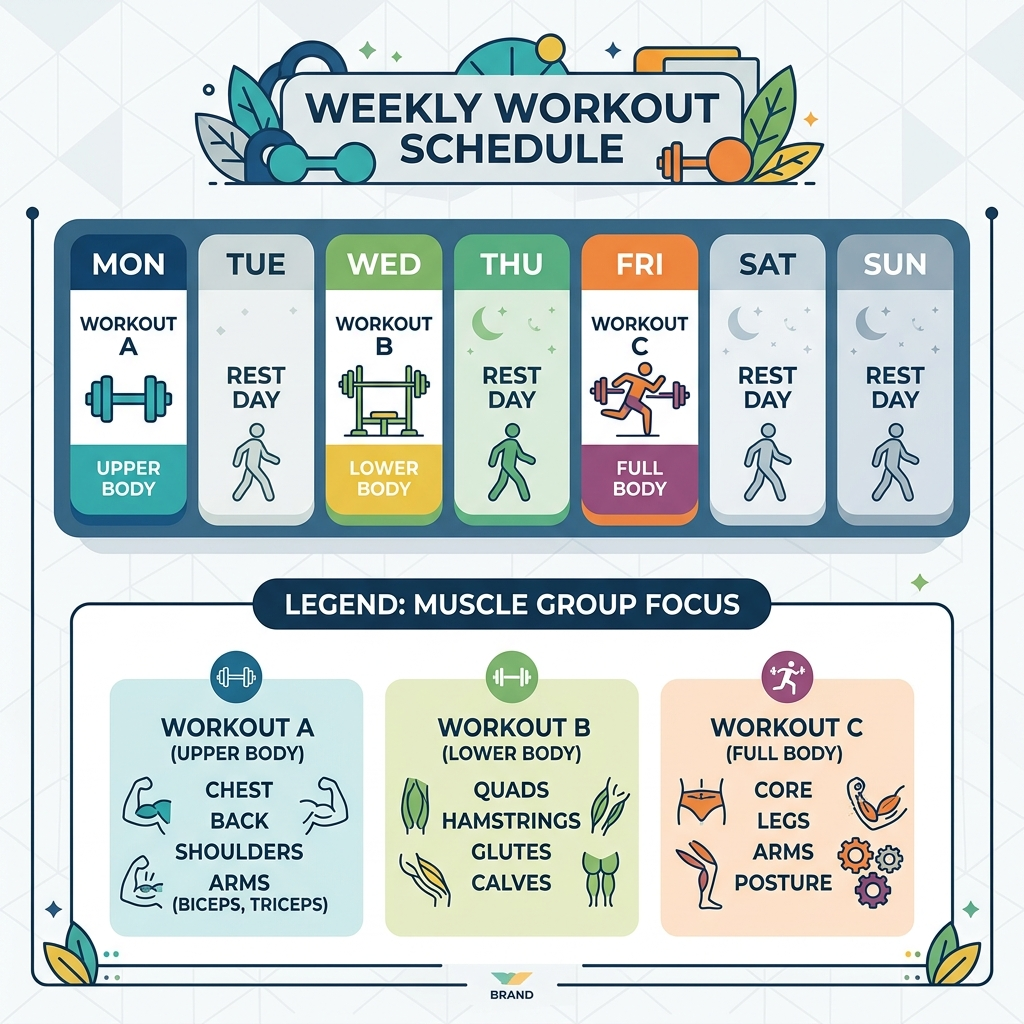
The best schedule is the one you’ll actually follow. A few common options:
- Monday, Wednesday, Friday — a classic pattern with a rest day between each session and two rest days over the weekend.
- Tuesday, Thursday, Saturday — useful if Mondays are chaotic or you prefer a mid-week start.
- Any three nonconsecutive days — for example, Sunday, Wednesday, Friday, if your work or family schedule doesn’t fit a neat pattern.
What matters most is spacing your sessions so you’re not training the same muscles two days in a row. Your rest days don’t have to mean doing nothing — a walk, some light stretching, or gentle mobility work can help you recover without adding stress. On other rest days, complete rest is perfectly fine too. Listen to how your body feels and adjust.
The Complete 3 Day Full Body Workout Routine
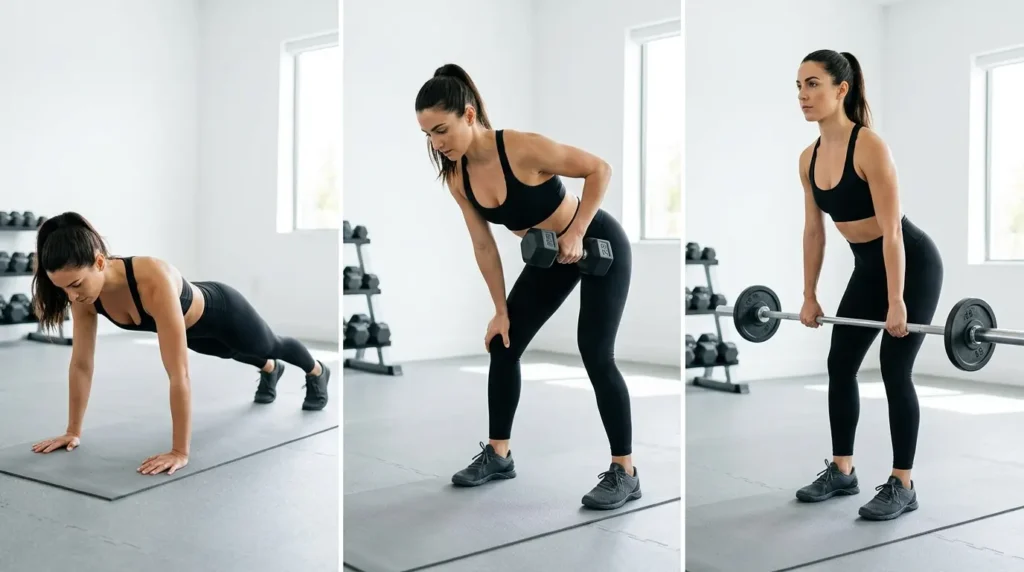
This 3 day full body workout routine uses three separate sessions so your body gets varied stimulus across the week while still training everything, every time. Each workout can be done at a gym or at home with dumbbells or resistance bands.
Workout A
| Exercise | Muscles Trained | Sets x Reps | Rest |
|---|---|---|---|
| Goblet squat | Quads, glutes, core | 3 x 10-12 | 60-90 sec |
| Push-up (or bench press) | Chest, shoulders, triceps | 3 x 8-12 | 60-90 sec |
| One-arm dumbbell row | Back, biceps | 3 x 10-12 per side | 60 sec |
| Romanian deadlift | Hamstrings, glutes | 3 x 10-12 | 90 sec |
| Shoulder press | Shoulders, triceps | 3 x 10-12 | 60 sec |
| Plank (or dead bug) | Core | 3 x 20-40 sec | 45 sec |
Goblet squat: Hold a dumbbell close to your chest, feet shoulder-width apart. Lower until your thighs are roughly parallel to the floor, then push through your heels to stand. Modification: squat to a sturdy chair until your form feels confident. Common mistake: letting the knees cave inward — keep them tracking over your toes.
Push-up: Hands under shoulders, body in a straight line from head to heels. Lower your chest toward the floor, then press back up. Modification: do push-ups from your knees or against a wall or counter. Common mistake: letting the hips sag — keep your core braced throughout.
One-arm dumbbell row: Support yourself on a bench or sturdy chair with one hand, row the dumbbell toward your hip, squeezing your shoulder blade. Modification: use a lighter dumbbell or a resistance band anchored to a door. Common mistake: twisting the torso to lift the weight instead of using the back muscles.
Romanian deadlift: Holding dumbbells in front of your thighs, hinge at the hips and lower the weights along your legs while keeping a slight knee bend. Return by driving your hips forward. Modification: reduce the range of motion until your hamstrings feel comfortable. Common mistake: rounding the lower back — keep your spine neutral.
Shoulder press: Press dumbbells overhead from shoulder height, avoiding an excessive arch in your lower back. Modification: press one arm at a time for better control. Common mistake: flaring the elbows too wide too fast.
Plank: Forearms and toes on the floor, body in a straight line. Brace your core and breathe steadily. Modification: drop to your knees. Common mistake: letting the hips rise too high or sag too low.
Workout B
| Exercise | Muscles Trained | Sets x Reps | Rest |
|---|---|---|---|
| Hip thrust | Glutes, hamstrings | 3 x 10-12 | 90 sec |
| Reverse lunge | Quads, glutes | 3 x 10-12 per leg | 60-90 sec |
| Incline push-up (or incline dumbbell press) | Chest, shoulders | 3 x 10-12 | 60-90 sec |
| Assisted pull-up (or lat pulldown) | Back, biceps | 3 x 8-10 | 90 sec |
| Lateral raise | Shoulders | 3 x 12-15 | 45 sec |
| Side plank | Core, obliques | 3 x 20-30 sec per side | 45 sec |
Hip thrust: Upper back on a bench, feet flat, barbell or dumbbell across your hips. Drive your hips up until your body forms a straight line, then lower with control. Modification: perform a glute bridge on the floor instead. Common mistake: overarching the lower back at the top — squeeze the glutes instead.
Reverse lunge: Step one foot back, lowering your back knee toward the floor while keeping your front knee stable. Modification: hold onto a wall or chair for balance. Common mistake: letting the front knee travel too far past the toes.
Incline push-up: Hands on a bench or sturdy elevated surface, body straight, lower your chest toward the edge. Modification: use a higher surface like a countertop to reduce difficulty. Common mistake: rushing the movement instead of controlling the descent.
Assisted pull-up: Use a resistance band or assisted machine to reduce your body weight, pulling your chin toward the bar. Modification: try a seated resistance band row instead. Common mistake: using momentum instead of controlled pulling.
Lateral raise: Raise dumbbells out to your sides until roughly shoulder height, then lower slowly. Modification: use very light weights or resistance bands. Common mistake: shrugging the shoulders instead of lifting with the arms.
Side plank: Stack your feet, prop up on one forearm, lift your hips into a straight line. Modification: bend the bottom knee for support. Common mistake: letting the hips drop toward the floor.
Workout C
| Exercise | Muscles Trained | Sets x Reps | Rest |
|---|---|---|---|
| Leg press (or front squat) | Quads, glutes | 3 x 10-12 | 90 sec |
| Walking lunge | Quads, glutes, balance | 3 x 10-12 per leg | 60-90 sec |
| Dumbbell bench press | Chest, shoulders, triceps | 3 x 8-12 | 60-90 sec |
| Chest-supported row | Back, rear shoulders | 3 x 10-12 | 60-90 sec |
| Glute bridge (or hamstring curl) | Glutes, hamstrings | 3 x 12-15 | 45 sec |
| Farmer’s carry | Core, grip, shoulders | 3 x 30-40 sec | 45 sec |
Leg press: Feet shoulder-width on the platform, lower the weight with control, then press back up without locking your knees. Modification: substitute bodyweight squats if a machine isn’t available. Common mistake: letting the lower back round off the pad.
Walking lunge: Step forward into a lunge, then bring your back leg through into the next step. Modification: do stationary lunges to build balance first. Common mistake: taking too short a step, which limits the range of motion.
Dumbbell bench press: Lying on a bench or the floor, press dumbbells up over your chest, then lower with control. Modification: perform the movement on the floor if you don’t have a bench. Common mistake: flaring the elbows out to 90 degrees, which can strain the shoulders.
Chest-supported row: Lying face-down on an incline bench, row dumbbells toward your hips. Modification: use a resistance band anchored at chest height instead. Common mistake: using the lower back to heave the weight up.
Glute bridge: Lying on your back, feet flat, lift your hips until your body forms a straight line, then lower slowly. Modification: perform single-leg bridges once double-leg feels easy. Common mistake: pushing through the toes instead of the heels.
Farmer’s carry: Hold a dumbbell in each hand and walk with a tall posture and braced core. Modification: use lighter weights or shorten the distance. Common mistake: letting the shoulders round forward.
3 Day A Week Full Body Workout: Warm-Up Before Each Workout

Every session in your 3 day a week full body workout deserves a proper start. Spend five to ten minutes preparing your body before you start lifting — this short warm-up sets the tone for the rest of your 3 day full body workout routine. A simple warm-up might include:
- Two to three minutes of light cardio, like brisk walking or marching in place.
- Dynamic mobility moves such as leg swings, arm circles, and hip openers.
- A lighter, easier set of your first exercise to rehearse the movement pattern.
Warming up helps your joints and muscles get ready to work and lowers your risk of feeling stiff or awkward during your heavier sets. It’s a small investment that makes the rest of the session feel smoother.
Cool-Down and Recovery

Finishing a 3 day a week full body workout well matters just as much as starting it right. After your last set, take a few minutes to walk around and let your heart rate settle. Follow that with some gentle stretching for the muscles you trained, holding each stretch for 20 to 30 seconds without bouncing.
From there, recovery is mostly about the basics: drink water, eat a balanced meal within a few hours, and prioritize sleep that night. Muscle recovery happens between sessions, not during them, so what you do after each 3 day a week full body workout genuinely counts.
It’s also worth remembering that soreness isn’t a scorecard. Plenty of highly effective sessions leave you barely sore, while a bad night’s sleep can make an easy workout feel brutal the next day. Progress on a 3 day full body workout routine is about consistency and gradual improvement, not how wrecked you feel afterward — and that’s true whether you’re three weeks or three months into your 3 day a week full body workout.
How Many Sets and Reps Should Beginners Do?
If you’re new to strength training, less really can be more at the start of a 3 day a week full body workout. A practical approach:
- Begin with one to three working sets per exercise.
- Stick to a manageable rep range, generally 8 to 15 reps.
- Leave a couple of reps “in the tank” rather than pushing to complete failure every set.
- Prioritize clean, controlled technique over lifting heavier weight.
- Add sets or weight gradually as your form and confidence improve.
There’s no need to chase intensity in your first few weeks of a 3 day full body workout routine. Your nervous system and connective tissue need time to adapt, and building that base carefully pays off later.
How to Use Progressive Overload
Progressive overload simply means giving your muscles a bit more challenge over time so they keep adapting — a key part of any 3 day a week full body workout. You don’t need dramatic jumps — small, steady changes work best:
- Add one or two extra reps to a set before increasing weight.
- Increase the weight slightly once your reps feel controlled and comfortable.
- Add an extra set when your recovery between sessions feels solid.
- Improve your range of motion or control before chasing heavier loads.
- Occasionally shorten your rest periods, but only once your technique is consistent.
Think of progress on your 3 day full body workout routine as a gradual climb rather than a race. Small, sustainable increases beat big jumps that leave you sore, discouraged, or hurt.
Common Mistakes to Avoid
A few habits tend to derail people more than anything else on a 3 day a week full body workout:
- Training hard every single day without allowing recovery.
- Sacrificing form to lift a heavier weight.
- Switching routines every week before giving one a real chance to work.
- Adding too much volume too soon.
- Skipping the warm-up because you’re short on time.
- Pushing through sharp or worsening pain instead of stopping.
- Comparing your progress to someone else’s highlight reel.
- Treating sleep and food as afterthoughts instead of part of the plan.
Avoiding these isn’t about being perfect — it’s about noticing the patterns that quietly undo your 3 day a week full body workout progress.
Nutrition and Lifestyle Support
Your 3 day a week full body workout does a lot of the work, but what happens outside the gym shapes how well your body responds.
Aim to include a source of protein at most meals — options like eggs, poultry, fish, dairy, legumes, or tofu all work well and support muscle recovery. Round out your plate with fruits, vegetables, whole grains or other carbohydrates for energy, and healthy fats from sources like nuts, seeds, or olive oil. Fueling right is just as important as showing up for your 3 day a week full body workout itself.
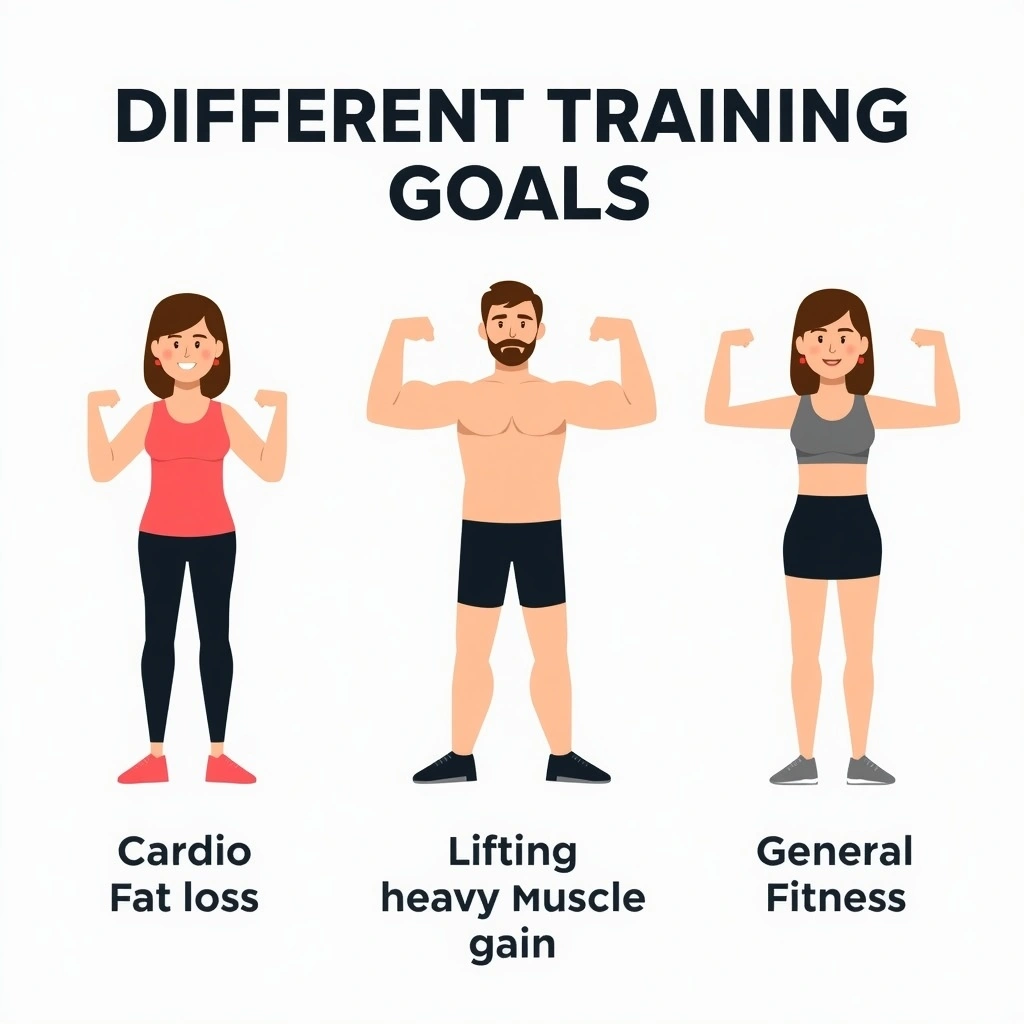
Staying hydrated matters more than people expect, especially on training days. And try to build a consistent sleep routine — most adults do best with somewhere around seven to nine hours a night, since that’s when a lot of muscle repair actually happens.
None of this requires an extreme or restrictive diet. The goal is simply to fuel your 3 day a week full body workout in a way that fits your actual life and preferences.
How to Stay Consistent
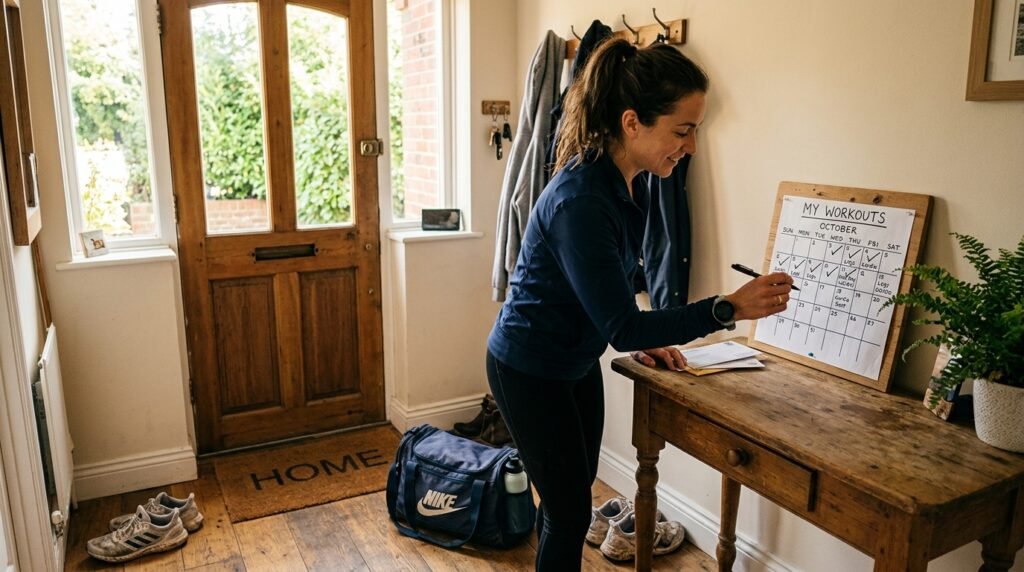
The hardest part of any 3 day a week full body workout usually isn’t the workout itself — it’s showing up week after week. A few things that make consistency easier:
- Schedule your sessions like appointments. Put them on your calendar so they’re not left to chance.
- Keep the plan simple. Following the same 3 day full body workout routine for several weeks builds momentum and lets you track real progress.
- Track what you do. A simple notebook or notes app entry with your exercises and weights helps you see improvement over time.
- Prepare ahead of time. Lay out your clothes or pack your bag the night before to remove decision fatigue.
- Focus on showing up, not perfection. A shorter, easier version of the workout still counts.
- Restart without guilt after a missed session. Life happens. One missed workout doesn’t erase your progress — it’s the pattern over months that matters.
Small, repeatable efforts add up in ways that dramatic, unsustainable ones never do. Give yourself credit for the sessions you complete, not just the ones you imagine doing perfectly.
Who Should Modify or Avoid This Routine?
This 3 day a week full body workout is designed to be approachable, but it’s not automatically right for everyone. If you have an existing injury, a diagnosed medical condition, are pregnant, or have any concerns about starting a new exercise program, talk with a qualified healthcare professional before you begin or before modifying any exercise here.
It’s also important to understand the difference between normal training effort and something more serious. Feeling challenged during a set is expected. Sharp, sudden, or worsening pain is not — if that happens, stop the exercise and don’t push through it.
Frequently Asked Questions
Is a 3 day a week full body workout enough to build muscle? Yes, for most beginners and many intermediate exercisers, three well-structured full-body sessions a week provide enough stimulus to build strength and muscle over time, especially when paired with adequate protein and recovery.
Can I lose weight with a three-day full-body routine? Resistance training three times a week can support fat loss and improved body composition when it’s combined with reasonable nutrition and general daily activity. It’s one piece of the picture, not a standalone guarantee.
How long should each workout take? Most sessions in this plan take roughly 45 to 60 minutes, including your warm-up, depending on how much rest you take between sets.
Should I train on consecutive days? It’s generally better to space your three sessions out, such as Monday, Wednesday, Friday, so your muscles have a full day to recover between workouts.
Can beginners follow this routine? Yes. The exercises include modifications specifically so beginners can start at a comfortable level and build up gradually.
What should I do on rest days? Light activity like walking, stretching, or mobility work is a great option, or you can simply rest completely if that’s what your body needs.
Can I do this routine at home? Yes. Every exercise includes a home-friendly alternative using dumbbells, resistance bands, or just your body weight.
How long should I follow the plan before changing it? Sticking with this structure for at least 8 to 12 weeks gives you enough time to build skill and see meaningful progress before considering changes.
Final Thoughts
Fitness doesn’t have to mean daily gym trips or an impossibly complicated schedule. A 3 day a week full body workout gives you a realistic structure — one that trains every major muscle group, respects your need for recovery, and actually fits into a normal week.
Start with one session. Not a perfect one, just a real one. The plan works because you can keep doing it, and that’s what turns three days a week into lasting strength.
Also read: 10-Minute Full Body Workout for Beginners (No Equipment Needed)

Fitness Specialist & Former Tactical Trainer
Bal Krishna Poudel has spent more than 19 years in law enforcement organization, and fitness has been at the center of it all. He knows physical conditioning, dynamic strength training, and everyday wellness inside and out. For close to two decades, he taught at official police training centers, getting officers ready for the physical demands of the job—building their endurance and operational fitness. These days, he coaches people in his local community on strength and fitness. At 49, he doesn’t just talk about staying active—he lives it, showing up every day to train and move. He writes for Bodylix, where he shares workouts and nutrition advice that regular readers can actually use, backed by science and built around one goal: helping people stay strong and healthy for the long haul.

One Response