
How Many Steps a Day to Lose Weight? A Realistic Beginner Guide

Affiliate disclosure: This page contains affiliate links. If you buy through them, I may earn a commission at no extra cost to you. All opinions are my own.
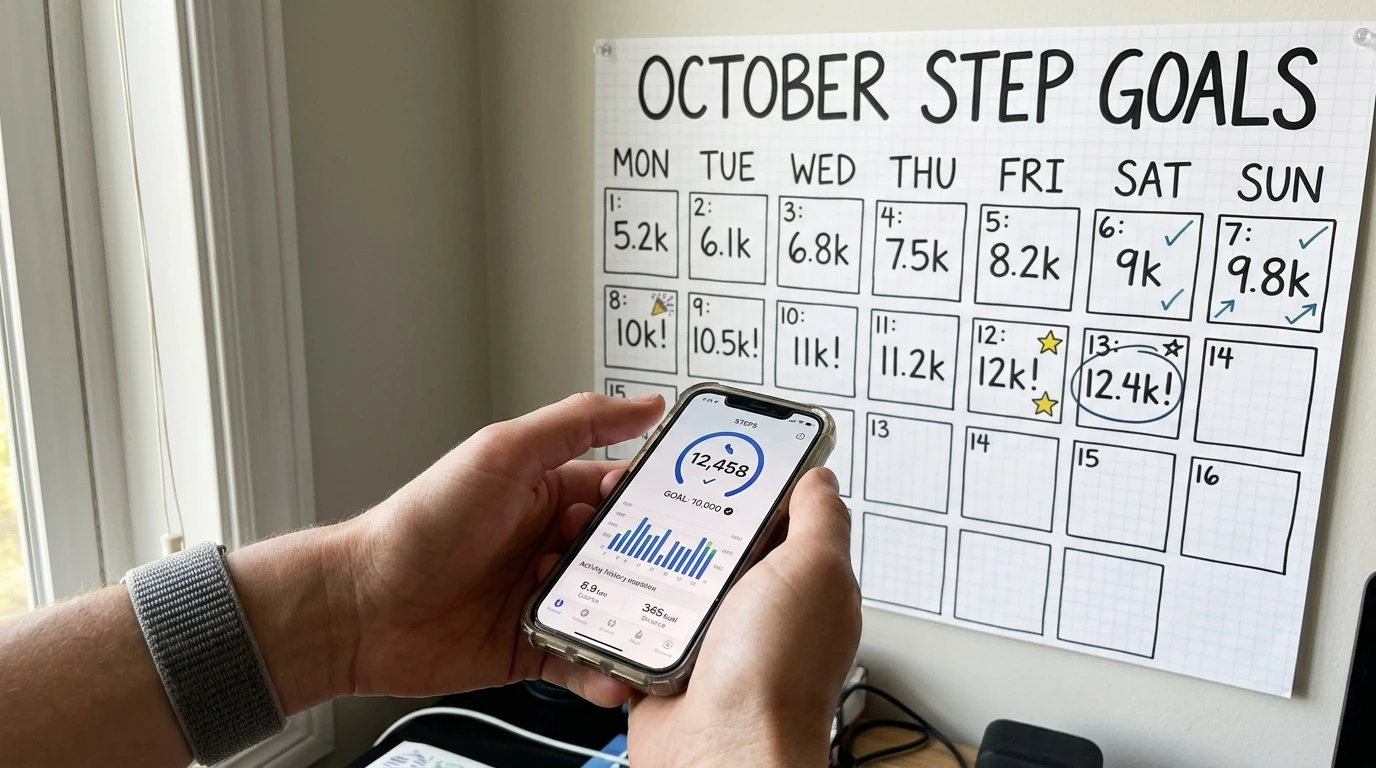
You’ve seen the number everywhere: 10,000 steps. But when I first asked myself How Many Steps a Day to Lose Weight, I honestly didn’t believe it would make any real difference. I’d spent so long thinking weight loss needed intense workouts or strict diets. But I decided to try it anyway — just to see what happened. After the first month, small changes started showing up. I felt lighter, had more energy, and my clothes fit differently. Those little wins kept me going. Within 36 days, my daily step count had nearly tripled from where I began. What started as a skeptical experiment became my daily routine. Once it clicked into place as a habit, it didn’t feel like work anymore — it just felt like part of my day.
Below I’ll share exactly what I learned, the real numbers, a step-by-step progression plan, and how to keep going long enough to see your own changes. No crash programs, no impossible targets — just honest answers to How Many Steps a Day to Lose Weight and keep it off.
My story: how counting steps changed everything
I started counting steps when I was seriously thinking about losing weight. At first, I really didn’t believe it would work. I’d look at the numbers and think, “Can walking really make that much difference?” But I kept going anyway. After about one month, I began noticing real changes — more energy, better sleep, clothes fitting looser. That was all the motivation I needed. Within 36 days, my daily steps had nearly tripled. And once it became a solid daily habit, everything got easier. It didn’t feel like effort anymore — it just became how I live my day. That’s why I wrote this guide: to show you exactly How Many Steps a Day to Lose Weight and how to build the same habit without burning out.
How Many Steps a Day to Lose Weight — first find your baseline
Before picking any target number, you need to know where you actually stand. Most smartphones track steps automatically — check your average over the last 7 days. That’s your honest starting point, not what you wish you were doing.
| Daily Steps | Activity Level | Weight Loss Impact |
|---|---|---|
| Under 5,000 | Sedentary | Maintenance range — start building here |
| 5,000–7,499 | Low Active | Health improves, slow fat loss begins when paired with good eating |
| 7,500–9,999 | Moderately Active | Consistent weight loss — this is the sweet spot most people miss |
| 10,000–12,499 | Active | Faster loss + long-term maintenance range |
| 12,500+ | Highly Active | Accelerated results — build up here gradually |
Don’t feel bad about your starting number. Many people with desk jobs sit between 3,000 and 4,500 steps. That’s normal — and it’s exactly where small, steady changes make the biggest difference. I started low too. The question isn’t “how many steps should I be doing?” — it’s “how many steps should I add next?”
Step ranges explained: what each target actually delivers
5,000–7,000 steps: building the foundation
If you’re currently under 5,000, aim for 5,000 first. This range shifts you from sedentary to active. Research shows even modest increases lower cardiovascular risk, improve mood, and help regulate blood sugar. You won’t see rapid weight loss here — but you’re building the habit that makes everything else possible. Stay here 2–3 weeks before pushing higher.
7,000–9,000 steps: where real weight loss starts
This is the answer to How Many Steps a Day to Lose Weight that matters most. At roughly 7,500+ steps, you’re burning an extra 300–500 calories most days — enough to see consistent loss of about 0.5 to 1 lb per week when paired with sensible eating. It’s not extreme enough to burn you out, and it’s sustainable for years rather than weeks. This is where I live now — and it’s where the results actually stick.
9,000–10,000+ steps: faster results & maintenance
Above 9,000 steps, calorie burn climbs to 500–700 extra calories daily. But here’s the key: build up gradually. I didn’t jump straight from 4,000 to 10,000 — I added 500 steps at a time. 10,000 steps isn’t magic — it started as a 1960s pedometer campaign — but it’s proven to be a reliable benchmark for keeping weight off long-term.
Want to see how walking compares with running overall? We break down the pros, cons, and real calorie numbers here: Walking vs Running for Weight Loss — Which Actually Works Better.
Steps vs calories burned: the real math
Let’s strip away the guesswork. Roughly speaking:
- 1,000 steps ≈ 40–50 extra calories burned (varies by your weight, height, and pace)
- +2,000 steps/day ≈ 1 lb lost every 9–12 weeks — from walking alone
- +4,000 steps/day ≈ 1 lb lost every 4–6 weeks — from walking alone
These numbers look slow, and that’s the point. Walking doesn’t deliver overnight results — but the results you get from walking are the ones that stay. Rapid-loss approaches tend to return as soon as you stop. Walking builds a daily habit that becomes part of your life, just like it did for me.
Important: you cannot out-walk a bad diet. If you walk 8,000 steps then eat 600 extra calories in processed snacks, the numbers cancel out. Walking accelerates weight loss — it doesn’t replace eating well. For practical meal guidance that supports your walking progress, see our list of low-calorie, high-protein foods.
Want faster results alongside your walking?
A structured meal plan can double your progress without extra walking time. Many readers use the 14-Day Rapid Soup Diet to kickstart weight loss while building their daily movement habit.
Learn More →How Many Steps a Day to Lose Weight — your 8-week progression plan
Here’s exactly how I did it — and how you can too. Increase by 500 steps only when your current target feels easy, not when you’re struggling through it.

| Weeks | Daily Step Target | What to Do |
|---|---|---|
| Baseline | Your current average | Track 7 days — this is your honest starting line |
| Weeks 1–2 | Baseline + 500 steps | Add one 15–20 min walk or spread movement across your day |
| Weeks 3–4 | Previous + 500–1,000 steps | Extend your main walk or add a shorter second walk daily |
| Weeks 5–6 | Previous + 500–1,000 steps | Pick up pace slightly; focus on consistency over distance |
| Weeks 7–8 | 7,000–9,000 steps target | Lock in your weight-loss range; hold here 4+ weeks before increasing |
If you’re already above 6,000 steps, start at your current number and move up from there. The principle stays the same: small increases, no jumps, plenty of recovery. That’s how I went from roughly 3,500 to over 10,000 — one manageable step up at a time.
Small daily habits that add thousands of steps
You don’t need to march for 90 minutes straight to hit your number. Most people accumulate steps better by spreading them out:
- Park farther away — adds 1,000–1,500 steps across a day without extra time
- Take the stairs — every flight adds roughly 100 steps and builds extra fitness
- Walk while on calls — hands-free conversations are perfect walking time
- 10-minute blocks — three short walks equal one long one; your body can’t tell the difference
- After-meal strolls — 10–15 minutes after dinner aids digestion and adds consistent steps
- Set hourly reminders — stand and move 2 minutes every hour; it adds up and protects your posture
Don’t obsess over perfect days. If illness, weather, or life gets in the way, take the break and restart where you left off. One low-step day doesn’t derail your progress — but quitting after one bad day does.
If you’re new to structured exercise alongside walking, our beginner home workouts and low-impact plans for 40+ fit perfectly at your own pace. And to see how walking fits into the bigger picture, read our comparison of cardio vs strength training.
Walking plus food: speed up your results
Walking creates the calorie deficit — food controls it. When you align the two, results speed up without extra effort.
- Prioritize protein at meals — keeps you full longer and supports muscle while you lose fat
- Drink water before meals — reduces overeating and pairs perfectly with your walking progress
- Don’t drastically cut calories — eating too little kills energy and makes walking feel like a chore
- Sleep 7+ hours — poor sleep increases hunger hormones and slows fat loss regardless of steps
Eating well also doesn’t need to cost more. Our guide shows exactly how: Plant-Based Diet on a Budget.
Want a ready-made routine that ties movement, meals, and habits together? Grab our 30-Day Fitness Reset for $27 — step-by-step from day one.
When will you actually see results from walking?
Results don’t happen overnight — and that’s a good thing. Fast results vanish just as quickly.

- Weeks 1–4: Better sleep, more energy, clothes feel looser — scale moves slowly. This was exactly my experience.
- Weeks 5–8: Steady downward movement on the scale, others start noticing the difference.
- Weeks 9–12: Visible changes you can see and measure consistently.
- Month 6+: Walking is just part of your day — weight stays off naturally, exactly how it happened for me.
Your questions answered
How Many Steps a Day to Lose Weight if I’m a total beginner?
Start at your real baseline. Most beginners land between 3,000 and 5,000. Add 500 steps next week. Then another 500 the week after. Keep going until you reach 7,000–9,000. That’s your sweet spot. No need to rush — I didn’t, and it still worked.
Is 5,000 steps enough to lose weight?
5,000 steps is a strong starting baseline and supports general health, but consistent weight loss typically becomes reliable above 7,000 for most people. Use 5,000 as your foundation and build upward gradually. Slow progress beats quitting fast.
Can you lose weight just by walking more steps?
Yes — walking is one of the most sustainable forms of exercise for weight loss. It burns calories without stressing your body, builds consistency, and the results tend to stick. I tripled my own daily steps and the changes have stayed. Pair it with sensible eating and you’ll see steady progress.
Should I force myself to hit 10,000 steps immediately?
No — jumping straight from under 5,000 to 10,000 almost always leads to soreness, fatigue, and quitting. Build up over 6–8 weeks. Sustainable progress beats sudden effort every time.
What if I can’t walk much due to joint pain or weather?
Indoor walking, swimming, and stationary cycling all count toward your movement goals. Steps are just a convenient way to measure activity — the real goal is consistent daily movement. Adapt to what your body allows and build from there.
Your starting point today
Forget the pressure to hit some big number immediately. Here’s your honest plan:
- Find your real baseline over the next 7 days — no judgment, just numbers
- Add 500 steps to that number next week — that’s your only target
- Keep meals sensible: enough protein, plenty of water, mostly whole foods
- Stick there 2–3 weeks until it feels easy, then add another 500
- Repeat until you land in the 7,000–9,000 range and stay there
That’s it. No paid apps, no special gear, no schedule that takes over your life. Just walking a little more than you did yesterday, every day. That’s exactly how I started — and it changed everything.
Disclaimer. This is educational content, not medical advice. Results vary by individual. Consult a healthcare provider before starting a new exercise program, especially if you have existing conditions or concerns.
Sources
- Schoenfeld BJ et al. — Calorie expenditure and walking-based activity (2017)
- U.S. Department of Health and Human Services — Physical Activity Guidelines
- Schoenfeld BJ et al. — Daily walking volume and long-term weight maintenance (2017)
- Morton RW et al. — Protein intake and body composition during weight loss (2018)
For more practical fitness and nutrition guides, visit bodylix.com

Fitness Specialist & Former Tactical Trainer
Bal Krishna Poudel has spent more than 19 years in law enforcement organization, and fitness has been at the center of it all. He knows physical conditioning, dynamic strength training, and everyday wellness inside and out. For close to two decades, he taught at official police training centers, getting officers ready for the physical demands of the job—building their endurance and operational fitness. These days, he coaches people in his local community on strength and fitness. At 49, he doesn’t just talk about staying active—he lives it, showing up every day to train and move. He writes for Bodylix, where he shares workouts and nutrition advice that regular readers can actually use, backed by science and built around one goal: helping people stay strong and healthy for the long haul.
