
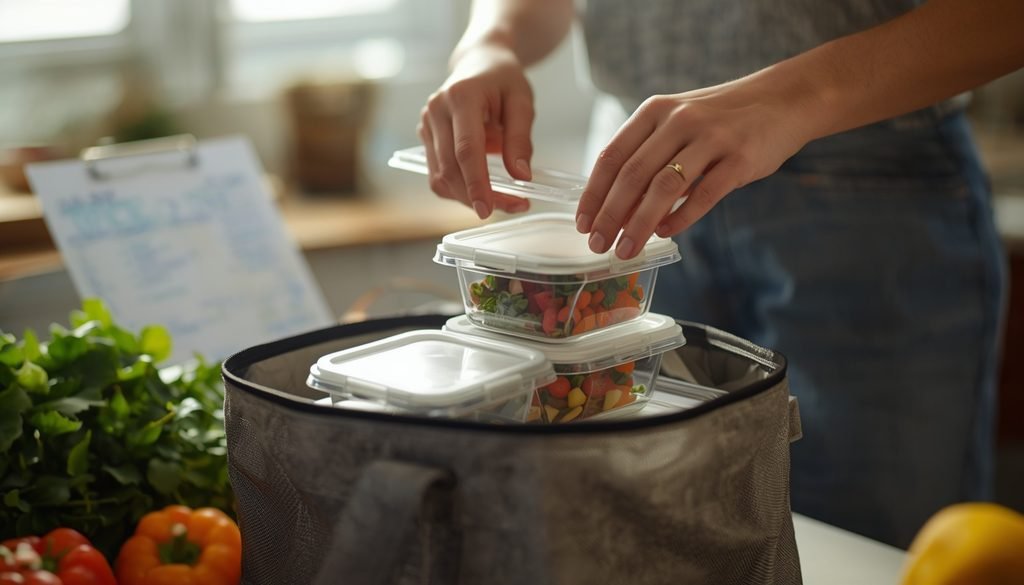
Let’s get something out of the way first. You do not need a $9 jar of almond butter to eat plant-based. You don’t need a Buddha bowl with six artfully arranged toppings either. That’s Instagram. This is dinner.
Here’s what a plant based diet on budget actually looks like most nights: rice, lentils, whatever vegetable didn’t go bad yet, and maybe a fried egg on top if you’re feeling fancy. That’s it. That’s the secret.
And honestly? It’s cheaper than eating meat most days of the week. Not “cheaper if you shop at a fancy co-op.” Cheaper, full stop. Beans cost less than beef. They just do. Once you’ve got a few cheap vegetarian recipes in your back pocket, this whole thing stops feeling like a diet and starts feeling like… just how you eat now.
You may like : High Protein Meals for Muscle Building: 12+ Easy Meal Ideas
Table of Contents: Your Guide to a Plant Based Diet on Budget
Why Everyone Assumes Plant Based Is Expensive
I get it. You open Instagram and every plant based creator’s kitchen looks like a Kinfolk photoshoot. Six types of mushrooms. A $14 hemp seed situation. Nobody’s showing you the actual Tuesday dinner, which, for most of us, is dal and rice, eaten standing at the counter because you’re hungry and it’s ready in twenty minutes.
The expensive version of plant based eating exists. It’s optional. Most of the people actually eating this way, day in and day out, are not buying it.
Here’s the thing nobody talks about: the whole idea that a plant based diet on budget is some kind of contradiction only makes sense if you’re comparing it to the wrong version of plant based eating. Compare dal and rice to a steak dinner, and sure, plants win easily. Compare an Instagram grocery haul to a regular one, and yeah, that looks expensive too. But that’s not a fair fight. Nobody eating this way day to day is buying six kinds of mushrooms on a Tuesday. They’re buying lentils, because lentils are cheap and they work.
The Real Cost Math
No fancy spreadsheet needed here. Dried lentils, chickpeas, and rice are some of the cheapest calories you can buy, in pretty much any grocery store, anywhere. Meat costs more because of everything that goes into raising, processing, and storing it. That’s not a dig at meat eaters. It’s just how the pricing works out.
Build your meals around grains and legumes, and vegetables become the seasoning, not the expense. That one shift changes your grocery bill more than almost anything else you could do.
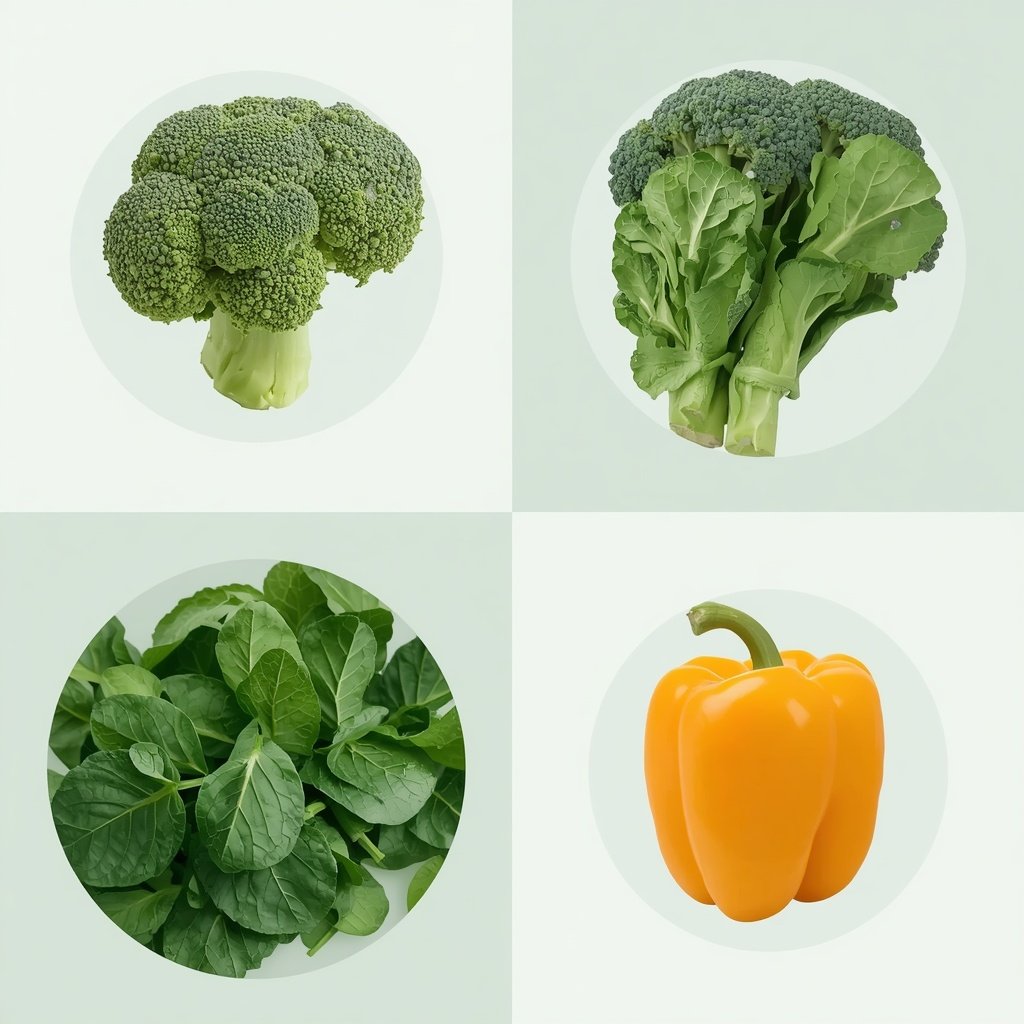
Want a rough sense of scale? A kilogram of dried lentils will feed a household for several meals and usually costs less than a single serving of meat at a restaurant. That’s not a marketing line, it’s just what happens when you price out the actual ingredients. This is exactly why so many cheap vegetarian recipes lean on the same handful of staples again and again. It’s not a lack of imagination. It’s just where the real savings are hiding.
Five Rules That Make This Easy: Plant Based Diet On Budget
Build around legumes and grains, not vegetables. Vegetables add flavor and nutrients. Beans and rice are your actual meal.
Go dried, not canned. Dried beans cost a fraction of canned ones. Yes, you have to soak them. Soak them overnight while you sleep, problem solved, and it costs you zero effort. Recommedation: Instant Pot / pressure cooker (solves “soaking takes too long”)
Buy what’s in season, locally. It’s cheaper. It also tastes better, which nobody tells you but is genuinely true.
Cook big batches. A giant pot of dal costs barely more than a small one. Make the big pot.
Stop being scared of “boring.” Rice and beans five nights a week isn’t a punishment, it’s the backbone of some of the best food cultures on earth. Nobody in many countries thinks dal bhat is a sad meal.
None of these five rules require a special trip to a health food store or a subscription box showing up at your door. That’s kind of the whole point. A genuinely workable plant based diet on budget isn’t built on discipline or willpower, it’s built on a short list of habits that make the cheap option the easy option too. Once cooking a big batch of dal becomes routine, you stop thinking of it as “eating on a budget” and start thinking of it as just how you cook now.
Your Cheap Pantry List for a Plant Based Diet on Budget
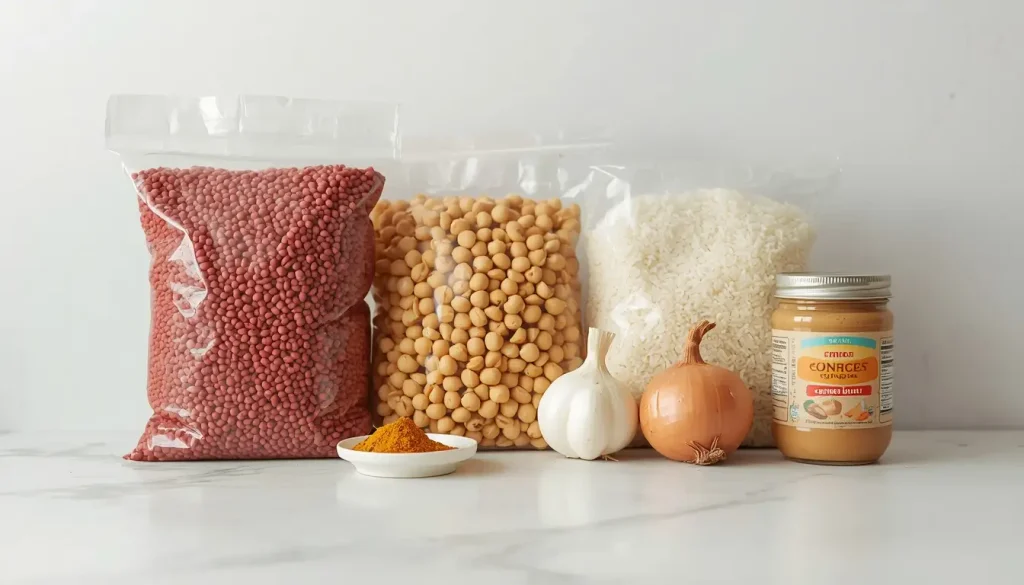
Stock this once, and you’re set for months:
- Rice
- Lentils — red cooks the fastest if you’re impatient like me
- Chickpeas, dried or canned
- Black beans or kidney beans
- Oats ( Buying dried lentils in bulk instead of small packs is usually where the real savings kick in.)
- Onion, garlic, ginger
- Basic spices: cumin, turmeric, chili powder, salt, pepper
- Cooking oil
- Frozen mixed vegetables (cheaper than fresh, and they never go bad on you)
- Peanut butter
- Whole wheat flour
Look at that list again. Nothing exotic. Nothing you need a specialty store for.
Seven Recipes to Start With Tonight
Basic dal. Cook red lentils in water till soft. Separately, sauté onion, garlic, ginger, cumin. Stir together, add turmeric and salt. Rice on the side. Twenty five minutes, costs almost nothing. This is the recipe that proves a plant based diet on budget doesn’t need to be complicated.
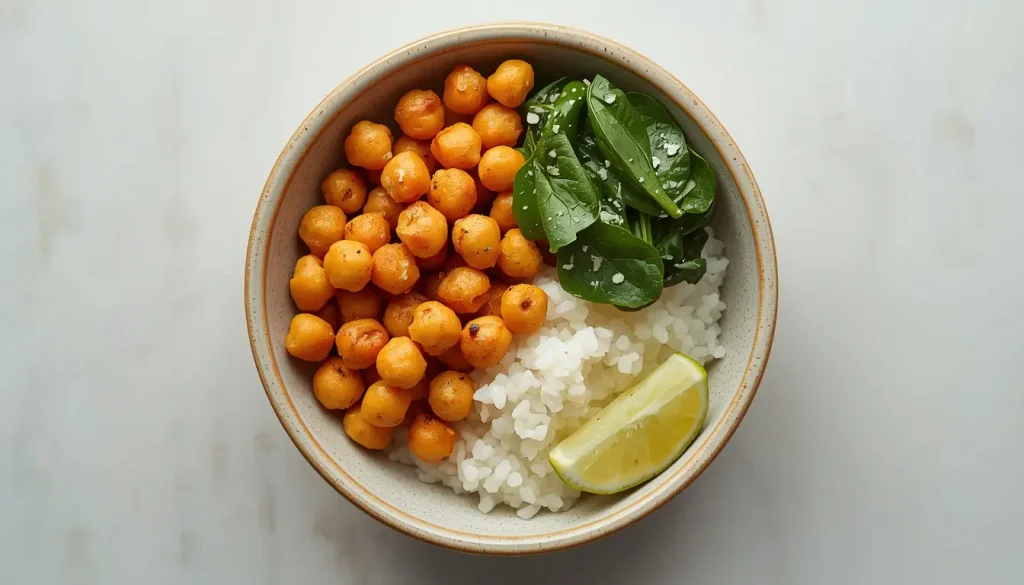
Chickpea rice bowl. Toss cooked chickpeas with cumin and paprika, a squeeze of lime if you’ve got it. Over rice, with frozen spinach or whatever’s around. One of those cheap vegetarian recipes you can throw together without even really thinking about it.
Peanut butter noodles. Peanut butter, soy sauce, splash of vinegar, hot water, whisked into a sauce. Toss with noodles and leftover vegetables. Ten minutes. Genuinely good, not just “good for cheap.”
Bean chili. Kidney beans, black beans, canned tomatoes, onion, garlic, chili powder, cumin. Simmer half an hour. Makes way more than you need, so freeze the rest for a week you don’t feel like cooking. A solid example of a budget friendly vegetarian meal that actually keeps well.
Oats, savory or sweet. Savory: cook in vegetable broth, top with sautéed greens or a fried egg. Sweet: cook in milk or water, banana on top, spoon of peanut butter. Either way, it’s breakfast that costs you almost nothing.
Vegetable fried rice. Use day old rice, it fries up better than fresh. Scramble in an egg, throw in frozen peas and carrots, soy sauce, garlic. This is basically free if you’re using leftovers, and it’s exactly the kind of meal that makes a plant based diet on budget feel effortless instead of restrictive.
Chana masala. Chickpeas simmered in tomato, onion, garlic, ginger, garam masala, chili powder. Rice or flatbread on the side. This one’s a favorite around here, cheap, filling, and it actually tastes like someone cared.
A Week of Meals, Mapped Out
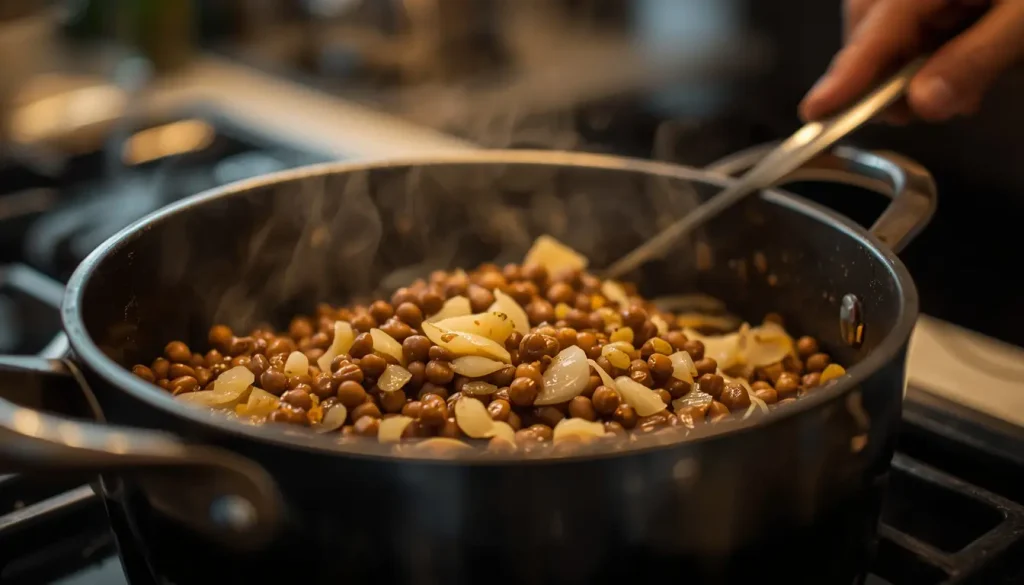
Sunday: Cook a big pot of rice and a big pot of beans or lentils. This is your base for the whole week.
Monday through Wednesday: Rotate that base — dal one night, chana masala the next, a rice bowl after.
Thursday: Clear-out-the-fridge night. Whatever vegetables are on their last legs go into a stir-fry or a soup.
Friday or the weekend: Something a little more involved, if you’ve got the time and want it , a proper chili, a curry, whatever sounds good.
Not glamorous. Works every time, though.
Where People Blow Their Budget
Buying pre-made “plant-based” products. Meat substitutes and packaged vegan snacks are often priced like a treat, because they are one. Whole foods beat them on price basically every time.
Not buying in bulk. Rice, lentils, oats — cheaper per kilo when you buy more at once, as long as you’ve got somewhere to store it.
Letting produce rot in the fridge. This is the quiet budget killer. Buy what you’ll use this week. Freeze what you won’t get to.
Chasing specialty ingredients. Nutritional yeast, imported grains, all that — nice to have, not required. Nail the basics first.
Protein — the Question Everyone Asks
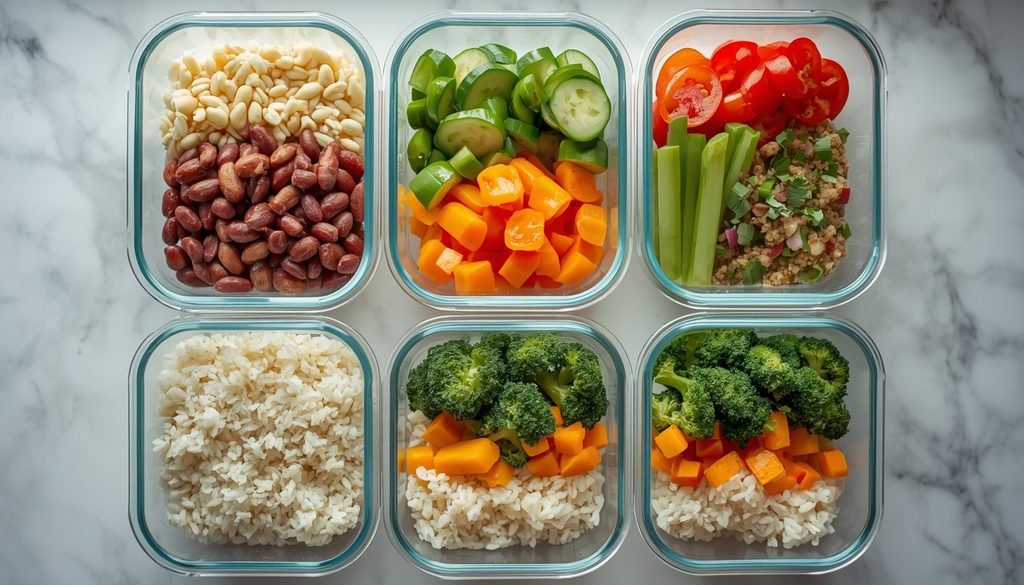
Fair question, and I’ll give you the honest answer: legumes, whole grains, peanut butter, and eggs if you eat them cover your protein needs. No powder required. Lentils bring a solid amount of protein per serving on their own, and pairing them with rice rounds out the amino acid profile — which is exactly why rice-and-lentils combinations show up in cuisines all over the world, long before “complete protein” became a marketing term.
Tofu and tempeh are budget options too, in stores where they’re stocked, though prices swing a lot by region. Check the price against your local lentils before assuming it’s the cheaper pick. Sometimes it is. Sometimes it really isn’t.
FAQ
Is plant based diet on budget actually cheaper than eating meat? Usually, yes — when you’re building meals around legumes, grains, and seasonal produce instead of packaged plant-based products.
Do I need special vegan products to do this? No. Meat substitutes and vegan snacks are extras, not requirements. The foundation here is whole, unprocessed staples you can find anywhere.
How do I hit my protein needs on a tight budget? Lentils, beans, chickpeas, whole grains, peanut butter. Pair grains with legumes — rice and dal, for instance — for a well-rounded amino acid profile.
What’s the cheapest plant-based protein out there? Dried lentils and chickpeas, especially bought in bulk.
Can I actually meal prep this for a whole week cheaply? Yes. Big batch of rice, big batch of beans or lentils, one cooking session. Vary the seasoning through the week and you’re set.
Is a plant based diet on budget actually realistic long term?
Yes. Once you build meals around lentils, rice, and beans instead of packaged products, the savings aren’t a short-term trick, they hold up week after week.
Where can I find good cheap vegetarian recipes to start with?
Start simple: dal, chana masala, and bean chili are cheap vegetarian recipes that use the same handful of pantry staples and take under thirty minutes each.
Where to Start
Strip away the marketing and what’s left is dal, rice, beans, and whatever’s in season, food that’s fed people affordably for generations, long before it had a hashtag. That’s the whole idea behind a plant based diet on budget, and it’s simpler than most guides make it sound.
Don’t try to overhaul your whole kitchen this week. Pick two cheap vegetarian recipes from this list. Cook them. See how you feel. Build from there.
That’s really the whole plan.
Affiliate Disclosure: Some links in this article are Amazon affiliate links. If you buy something through them, Bodylix may earn a small commission at no extra cost to you. We only recommend products we’d genuinely suggest anyway.
Read Also: Pre Workout Nutrition: What to Eat Before the Gym (Plus Where Thavage Pre Workout Fits In)

Fitness Specialist & Former Tactical Trainer
Bal Krishna Poudel has spent more than 19 years in law enforcement organization, and fitness has been at the center of it all. He knows physical conditioning, dynamic strength training, and everyday wellness inside and out. For close to two decades, he taught at official police training centers, getting officers ready for the physical demands of the job—building their endurance and operational fitness. These days, he coaches people in his local community on strength and fitness. At 49, he doesn’t just talk about staying active—he lives it, showing up every day to train and move. He writes for Bodylix, where he shares workouts and nutrition advice that regular readers can actually use, backed by science and built around one goal: helping people stay strong and healthy for the long haul.

2 Responses