
Home Workouts Without Equipment
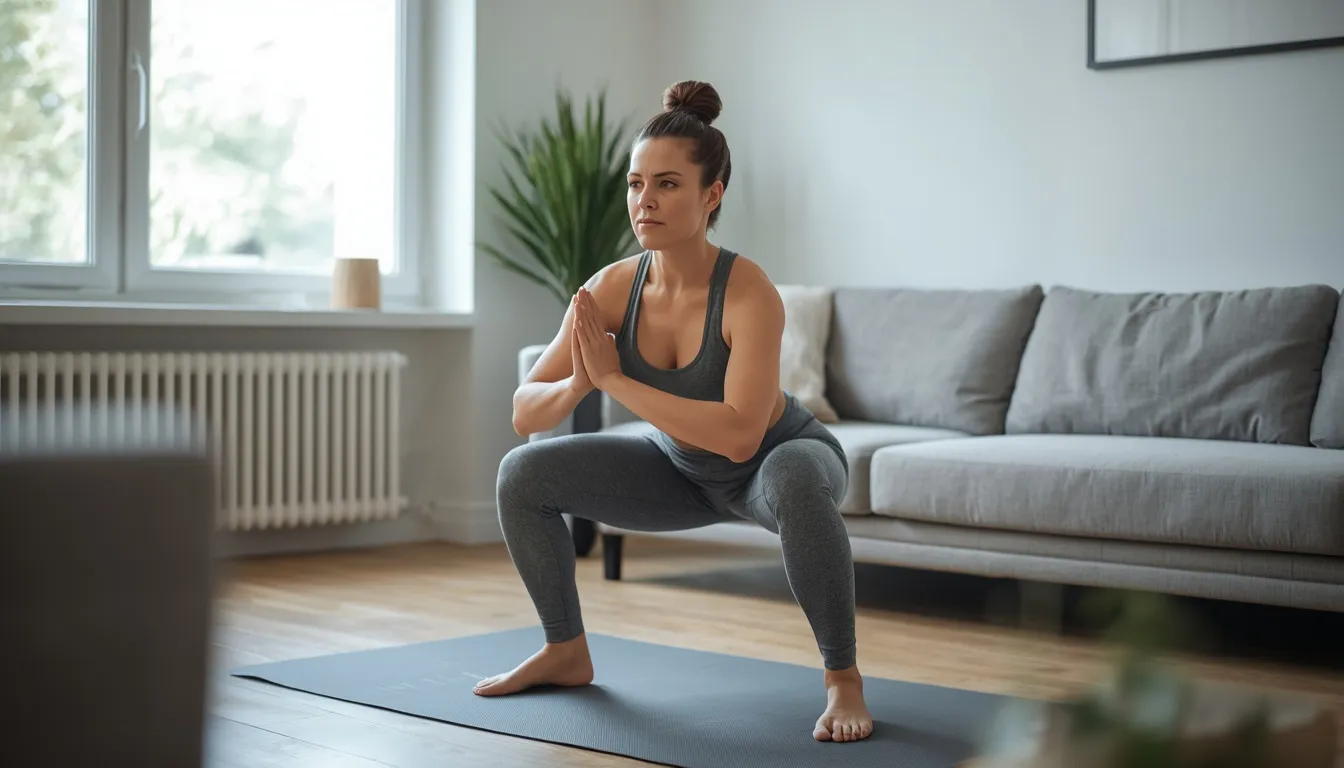
Gyms are fine if you like them. Plenty of people don’t. You can get stronger, move better, and feel less sluggish using nothing but the floor under your feet. Home workouts without equipment work because your body is the load. Squats, push-ups, bridges and planks still force your muscles to work hard when you treat them seriously.
I started these exact moves in a tiny rented room with an old yoga mat and zero confidence. Some days I quit after ten minutes and still felt better afterward. That small start was enough to build a habit that stuck. If someone ordinary like me could do it, you can too.
What actually works with simple bodyweight moves
Your muscles respond to hard work, not the logo on a machine. A controlled squat loads your legs and glutes. A push-up hits chest, shoulders and arms. Bridges wake up the backside. Planks teach your core to stay solid.
Most people fail for two reasons. They start with moves that are too hard, or they do the exact same thing for months. Start where you are. Knee push-ups count. Chair-assisted squats count. Ten minutes counts.
I like full-body sessions three or four days a week for most beginners. You hit everything often enough to improve without living on the floor. Give at least one full rest day between harder efforts. Sleep and food matter more than perfect exercise choice at this stage.
Keep the reps controlled. Two seconds down, one second up. Feel the muscles working. Stop a couple of reps before form falls apart. That approach builds strength without hammering your joints.
20-minute no equipment routine you can start today
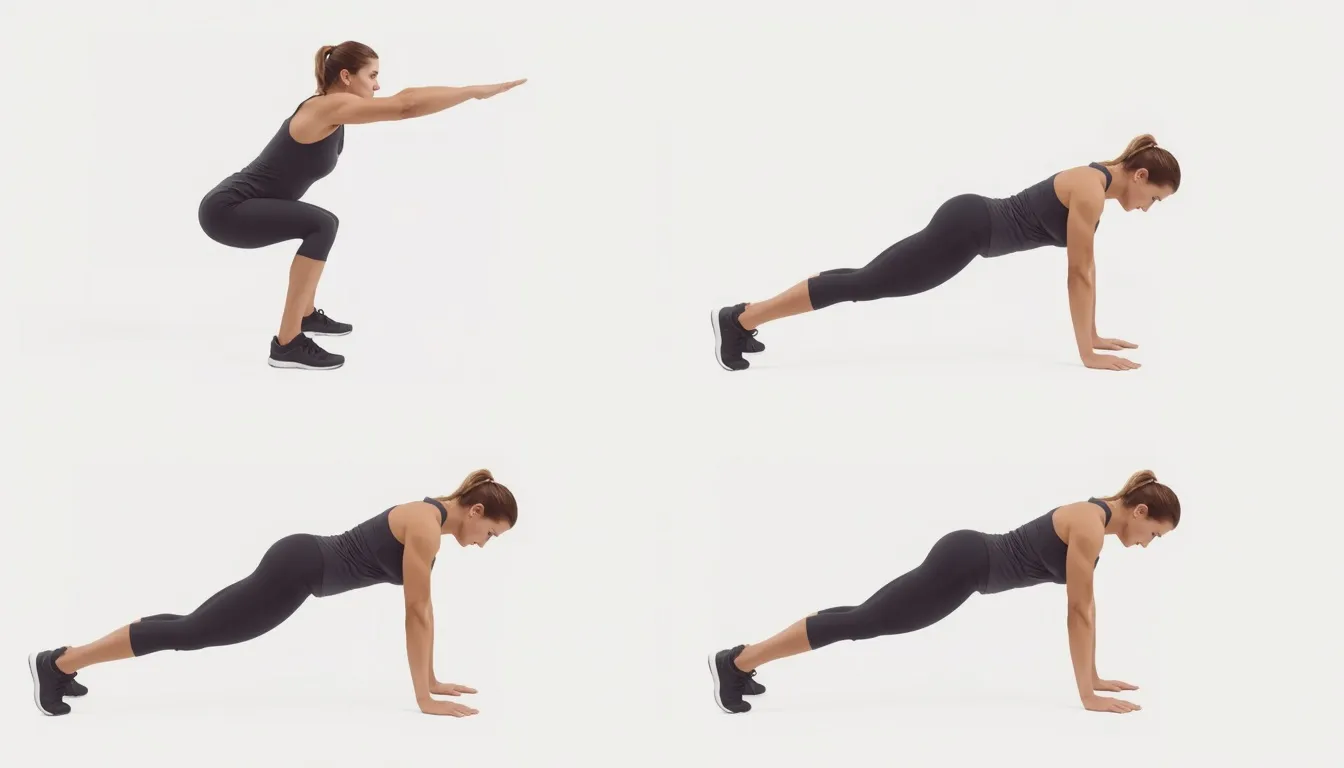
Here’s a simple no equipment home workout for beginners. March in place for a minute, then do the circuit three times. Rest 45–60 seconds between moves if you need it. Total time sits around 20 minutes.
- Bodyweight squat — 10–12 reps
- Knee or regular push-up — 8–10 reps
- Glute bridge — 12–15 reps
- Forearm plank — 20–40 seconds
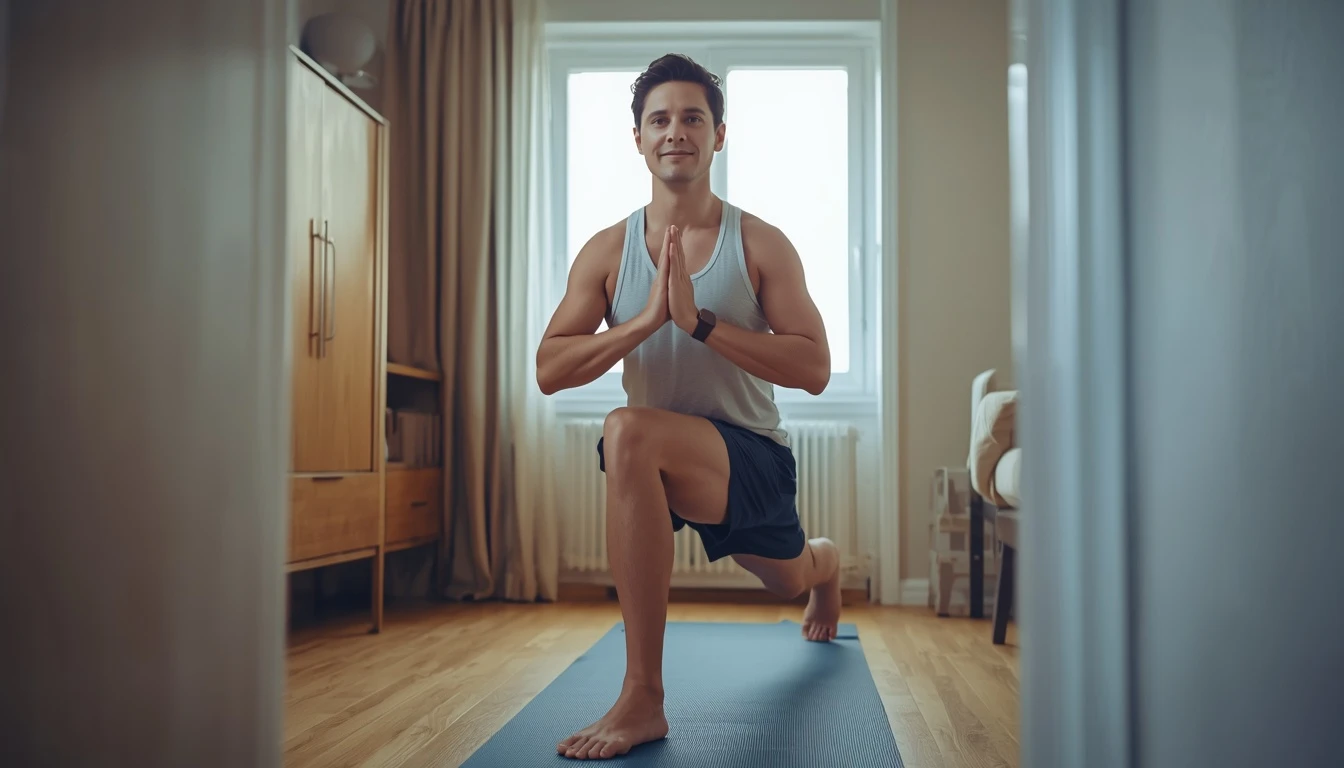
- Reverse or stationary lunge — 8 per leg
- Dead bug or bird-dog — 8 per side
That’s a full body workout without weights covering legs, push, core and stability. Breathe out on the hard part. Keep your middle tight.
Only have ten minutes? Do two rounds. Feeling good? Add a fourth round or slow the tempo on the last set of each move.
12 Pack 48 sqft Home Gym Mat, Puzzle Exercise Mat, EVA Interlocking Foam Floor Tiles for Home Workout
Gives you a clean, cushioned surface so your knees and wrists don’t complain during floor work.
Learn more →This page may contain affiliate links. If you buy through them, Bodylix may earn a commission at no extra cost to you.
Weight loss, strength or general fitness — pick your path
The moves stay mostly the same. The focus shifts.
Home workout plan no equipment weight loss
Keep rest shorter — 30 to 45 seconds. Add 20–30 seconds of mountain climbers or high knees at the end of each round. Train four days a week if recovery allows. Walk on the other days and keep protein solid. You’ll burn more total calories while holding onto muscle.
Building strength
Slow the reps. Pause one second at the bottom of squats and push-ups. Choose the harder variation you can still control for 6–10 good reps. Rest 60–90 seconds. Three focused sessions beat six rushed ones.
Just feeling better day to day
Stick with the 20-minute circuit three or four times a week. Mix in longer planks or side planks. Consistency matters more than intensity here.
Small space home exercises no equipment work the same way. Use stationary lunges. Do push-ups on your knees or against a wall. Bridges need almost no room. You can finish a full session between a bed and a wall if that’s what you’ve got.
Four-week progression and practical numbers
Write down the reps and how hard the set felt. Next time try to beat one number or hold the plank a few seconds longer.
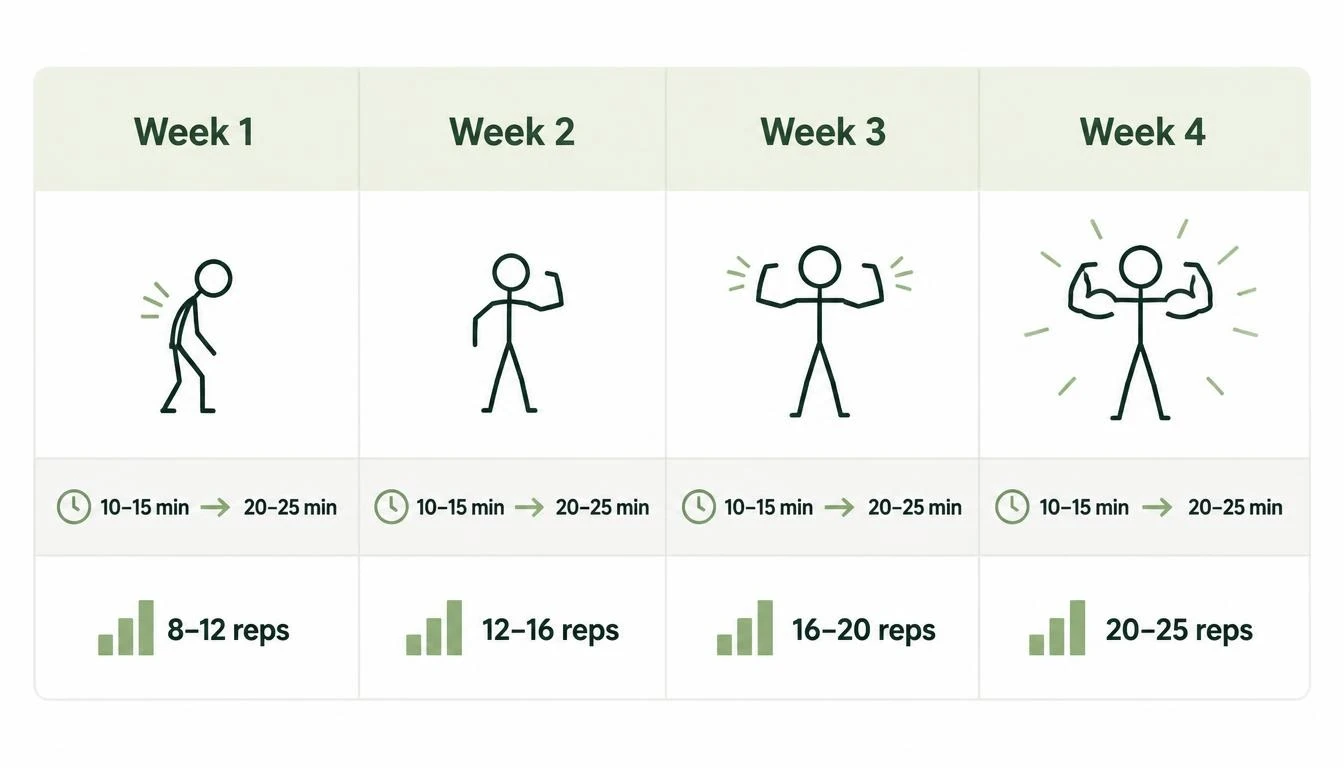
Here’s a realistic Week 1–4 path for a full body workout without weights:
| Week | Days | Rounds | Focus | Time |
|---|---|---|---|---|
| 1 | 3 | 2–3 | Clean form | 12–18 min |
| 2 | 3–4 | 3 | Add 1–2 reps where possible | 18–20 min |
| 3 | 3–4 | 3–4 | Harder variation or slower tempo | 20–25 min |
| 4 | 4 | 3–4 | Test max controlled push-ups and squats | 20–25 min |
After four weeks daily tasks should feel easier and your energy should sit higher. If things stall, drop back one week or take a couple of easier days.
Time options stay flexible. Ten minutes means two rounds. Twenty minutes is the main circuit. Thirty minutes means four rounds plus a bit of extra core or easy marching.
Low motivation, small space and common stalls
Some days you won’t feel like moving. That’s normal. Don’t wait for the perfect mood. Put the clothes on, do the first two exercises, then decide. Most of the time you’ll keep going. If you stop after five minutes you still did more than nothing.
Joints complaining? Shorten the range. Box squat to a chair. Elevate your hands for push-ups on a sturdy table. Focus on bridges and dead bugs until things settle. Sharp pain that sticks around means stop that variation.
Bored? Change the order. Throw in a side plank. Keep the main movement patterns so progress continues.
No space? Stationary everything. Wall push-ups. Seated knee lifts if needed. A yoga-mat-sized patch is enough.
I’ve watched people overthink this for months and never start. The ones who get stronger simply show up most days and add a little over time. That’s the whole game.
Sample week and real tracking numbers
Here’s a practical weekly layout:
| Day | Focus | Time | Notes |
|---|---|---|---|
| Monday | Full circuit | 20 min | 3 rounds |
| Tuesday | Walk or rest | 20–30 min | Easy movement |
| Wednesday | Full circuit | 20 min | 3 rounds, slower tempo |
| Thursday | Rest or light mobility | 10 min | Stretch what feels tight |
| Friday | Full circuit | 20–25 min | 3–4 rounds |
| Saturday | Optional short session | 10–15 min | 2 rounds or just core + legs |
| Sunday | Full rest | — | Recover |
Track total weekly rounds or total push-up reps across the week. Small weekly increases add up fast.
For more beginner options see our 10 best home workouts for beginners you can do without equipment and simple exercises for beginners at home. If your back needs extra work, the back exercises at home without equipment guide pairs well. Long-term habit ideas live in how to stay fit at home without a gym.
Quick answers
Can I really build muscle with home workouts without equipment?
Yes, especially if you’re newer to training. Bodyweight work builds strength and muscle when the sets get hard and you keep making the moves tougher. Advanced lifters will want extra load later, but most people have years of progress available with smart bodyweight training.
How many days a week should I do a no equipment home workout for beginners?
Three solid days is enough to improve. Four works if you recover well. More than that usually means lower intensity or shorter sessions. Rest days are when you get stronger.
What if I can only do 10 minutes?
Do two rounds of the main circuit. Consistency over months beats perfect 45-minute sessions you skip. Short sessions still raise heart rate, load muscles, and build the habit.
Do I need a mat or special floor?
A thin yoga mat or carpet helps wrists and knees. Hard floors work if you’re careful. Interlocking foam tiles give a nicer surface if you plan to train often.
How long until I see results?
Most people feel better energy and easier movement in 2–3 weeks. Visible strength and shape changes usually show in 4–8 weeks if nutrition and sleep support the work.
What I’d actually do
I’d clear a small patch of floor, put on clothes that move, and do the 20-minute circuit three days this week. I’d write the reps in my phone notes. Next week I’d try to beat one number. If a day felt heavy I’d still do ten minutes and call it a win.
I’d keep protein decent and walk most days. That’s the simple system that actually sticks. No apps required, no complicated tracking, just showing up and adding a little over time.
If you want a structured 30-day version with daily actions and tracking, the Bodylix 30-Day Fitness Reset walks you through it step by step.
Start today with two rounds. Tomorrow do it again. That’s how ordinary people get stronger at home with nothing but their body.
Disclaimer. This article is for general education and isn’t medical advice. Results vary from person to person. Check with a doctor or qualified professional before starting a new exercise program, especially if you have pain, an injury, or a health condition.
Sources
- American College of Sports Medicine. Position stands and guidelines on resistance training and physical activity.
- Simple bodyweight training improves cardiorespiratory fitness with minimal time commitment (PMC).
- Effects of home-based exercise programs on mobility, muscle strength, balance and gait in older adults (PubMed).
- U.S. Department of Health and Human Services. Physical Activity Guidelines for Americans.
- Effects of an 8-week minimal-dose home-based eccentric exercise program (PMC).
For more practical fitness and nutrition guides, visit bodylix.com
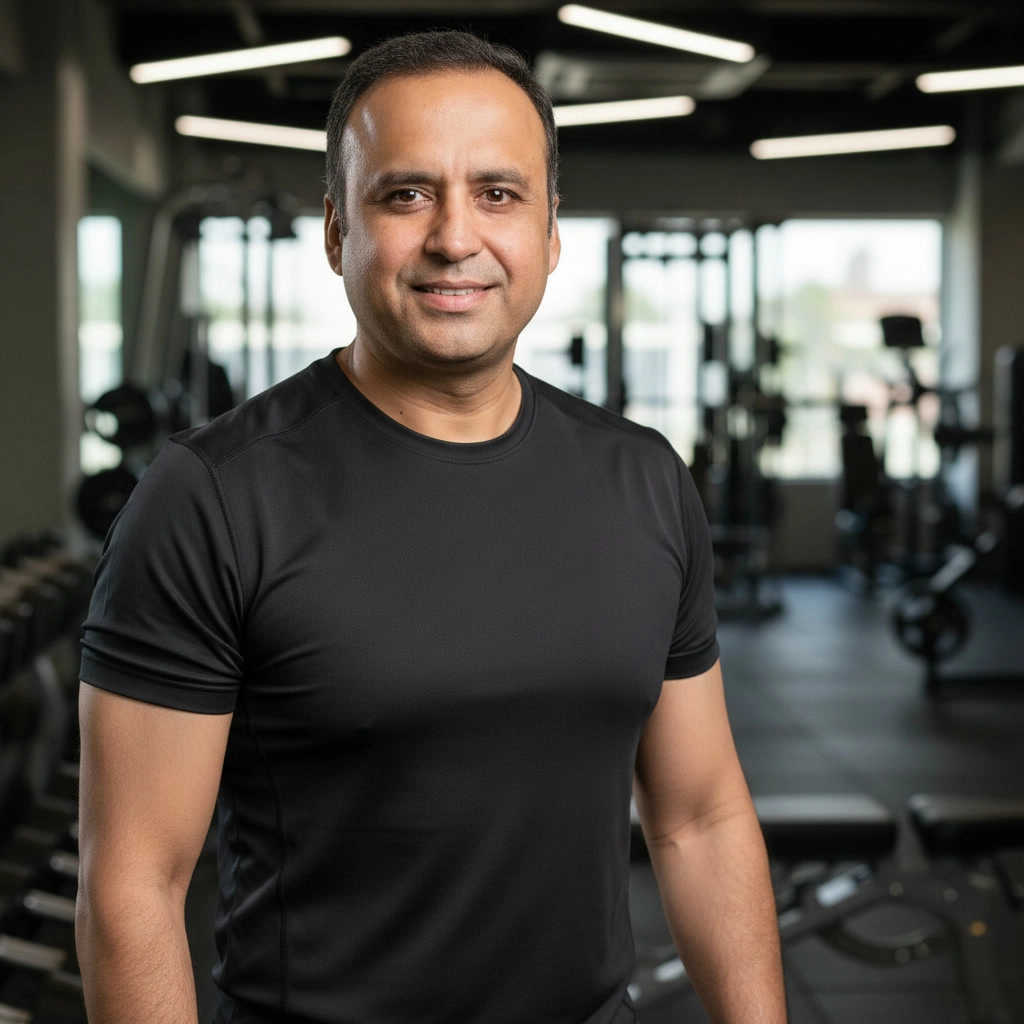
Fitness Specialist & Former Tactical Trainer
Bal Krishna Poudel has spent more than 19 years in law enforcement organization, and fitness has been at the center of it all. He knows physical conditioning, dynamic strength training, and everyday wellness inside and out. For close to two decades, he taught at official police training centers, getting officers ready for the physical demands of the job—building their endurance and operational fitness. These days, he coaches people in his local community on strength and fitness. At 49, he doesn’t just talk about staying active—he lives it, showing up every day to train and move. He writes for Bodylix, where he shares workouts and nutrition advice that regular readers can actually use, backed by science and built around one goal: helping people stay strong and healthy for the long haul.
