
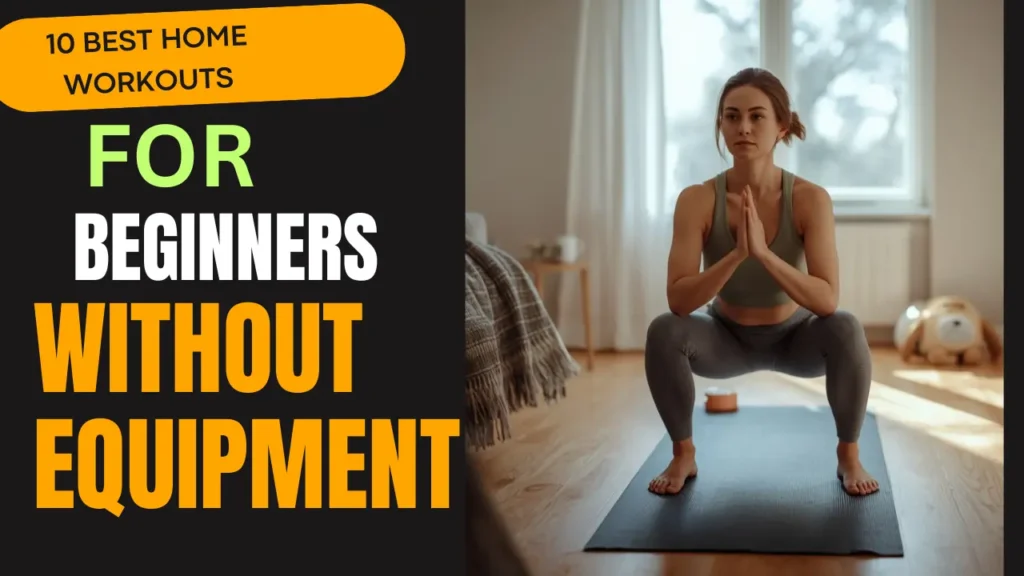
If you’re looking for the 10 best home workouts for beginners, this guide gives you a complete, no-equipment plan you can start today. These home workouts for beginners use only your bodyweight — squats, push-ups, lunges, planks, jumping jacks, and more — to build strength, burn calories, and boost energy without a gym. Each move includes simple form cues and beginner-friendly options so you can train safely at home, even in a small space. Follow this step-by-step routine 3–4 days a week and turn your living room into your personal training zone with the best home workouts for beginners.
A few years ago, a woman named Sarah messaged me after her third failed attempt at a gym membership. She’d paid for a year, gone four times, and canceled out of guilt more than anything else. What actually got her moving again wasn’t a fancy program or a new pair of shoes. It was six exercises on her living room floor, done in her socks, while her toddler napped in the next room. Three months later she was doing full push-ups for the first time in her life. Nothing about that story involved a gym. actually that’s was the best home workouts for beginners.
That’s really what this guide is for. If you’ve ever felt like “getting fit” means signing up somewhere, buying equipment you’re not sure how to use, or finding an hour of free time you simply don’t have, this is written for you. Home workouts work because they remove almost every excuse that usually gets in the way. No commute to the gym, no waiting for a machine, no environment that makes a beginner feel like they don’t belong yet.
You also don’t need equipment to get real results, especially in the beginning. Your own bodyweight is enough resistance to build strength, improve balance, and get your heart rate up, particularly if you haven’t trained consistently before. Dumbbells and machines matter more later, once bodyweight movements start to feel easy. Right now, the goal is simpler: learn to move well, build the habit, and prove to yourself that this is something you can actually stick with.
By the end of this guide, you’ll know ten exercises that train your whole body, how to do each one with proper form, and a complete beginner routine you can start today. No experience required.
Table of Contents
1. Bodyweight Squats
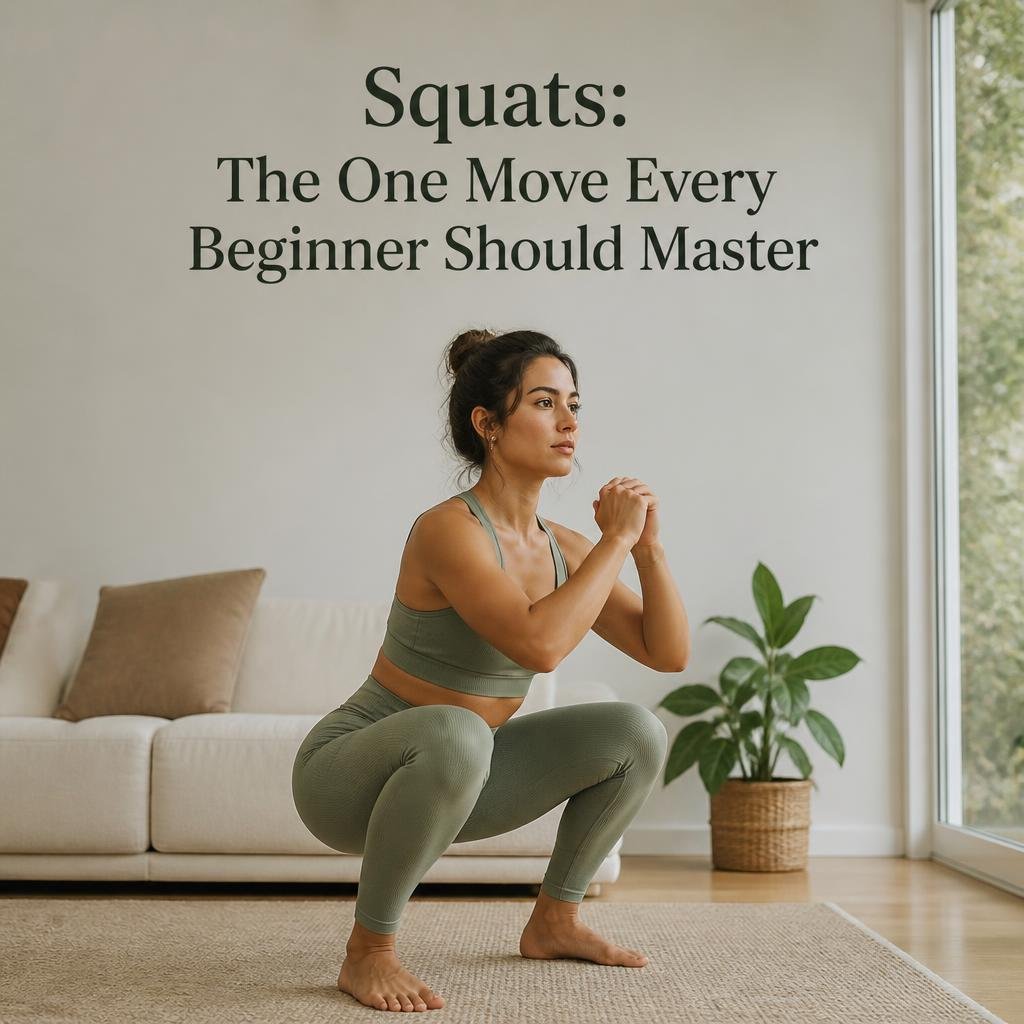
Stand with your feet roughly shoulder width apart, toes pointed slightly outward. Send your hips back like you’re sitting into a chair, keeping your chest up and your weight through your heels. Lower until your thighs are close to parallel with the floor, then push back up to standing.
Squats primarily work your quads, glutes, and hamstrings, with your core working the whole time to keep you stable. Beginners can start with 8 to 12 repetitions.
The most common mistake is letting the knees cave inward as you lower. Keep them tracking in line with your toes. The second most common mistake is rushing the movement. A slow, controlled squat builds far more strength than a fast, sloppy one.
2. Push-Ups
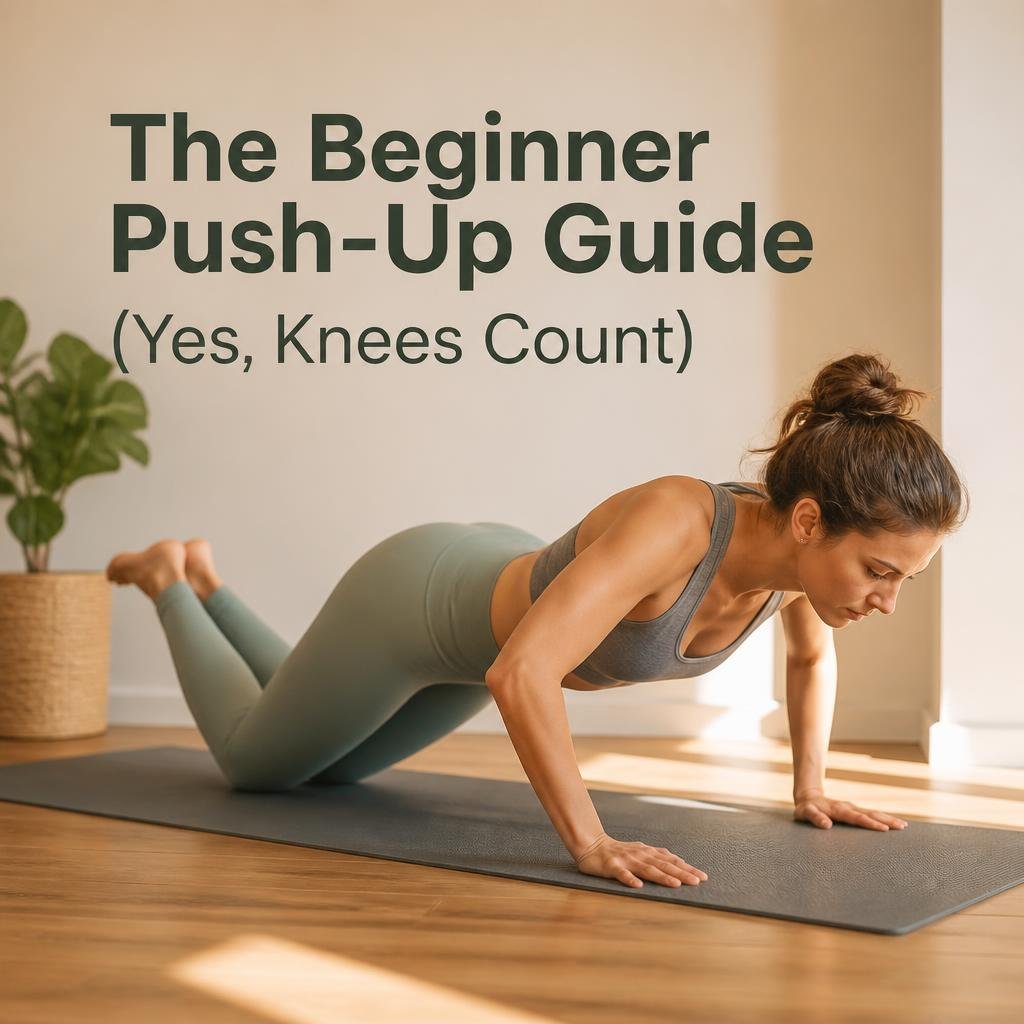
Place your hands slightly wider than shoulder width, body in a straight line from head to heels. Lower your chest toward the floor with your elbows at roughly a 45 degree angle from your body, then press back up.
Push-ups train your chest, shoulders, triceps, and core. If a full push-up isn’t available yet, drop to your knees and keep that same straight line from head to hip. There’s no shame in this version. It builds the exact same strength.
Beginners can aim for 5 to 10 repetitions. The most common mistake is letting the hips sag toward the floor, which puts unnecessary strain on the lower back.
3. Reverse Lunges
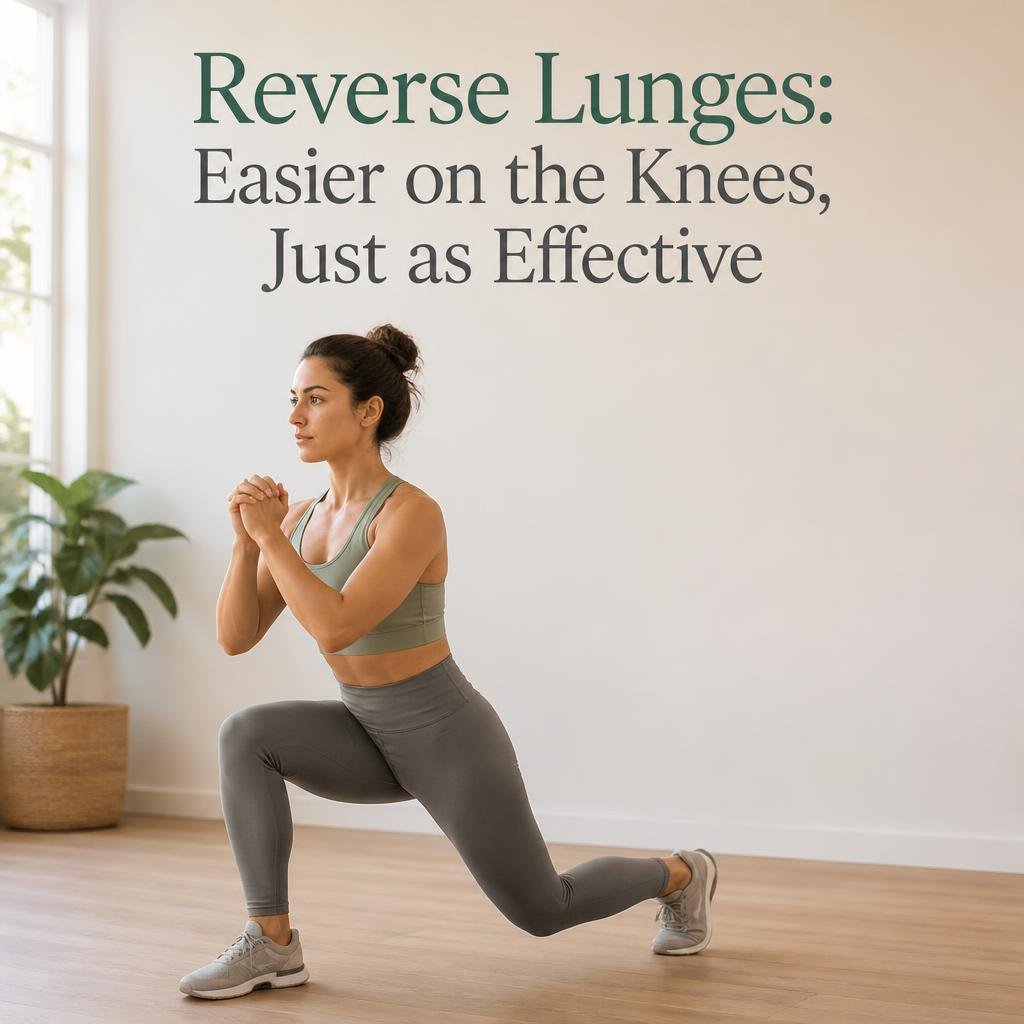
Step one foot backward into a lunge, lowering until both knees are close to 90 degrees, then push through your front foot to return to standing. Alternate legs, aiming for 8 reps per side.
Many beginners find reverse lunges easier to control than forward lunges, making them a useful starting variation.
Focus on keeping the movement controlled and your front knee tracking comfortably in line with your foot rather than allowing it to collapse inward. Keep your weight centered through the middle of your front foot.
4. Glute Bridges
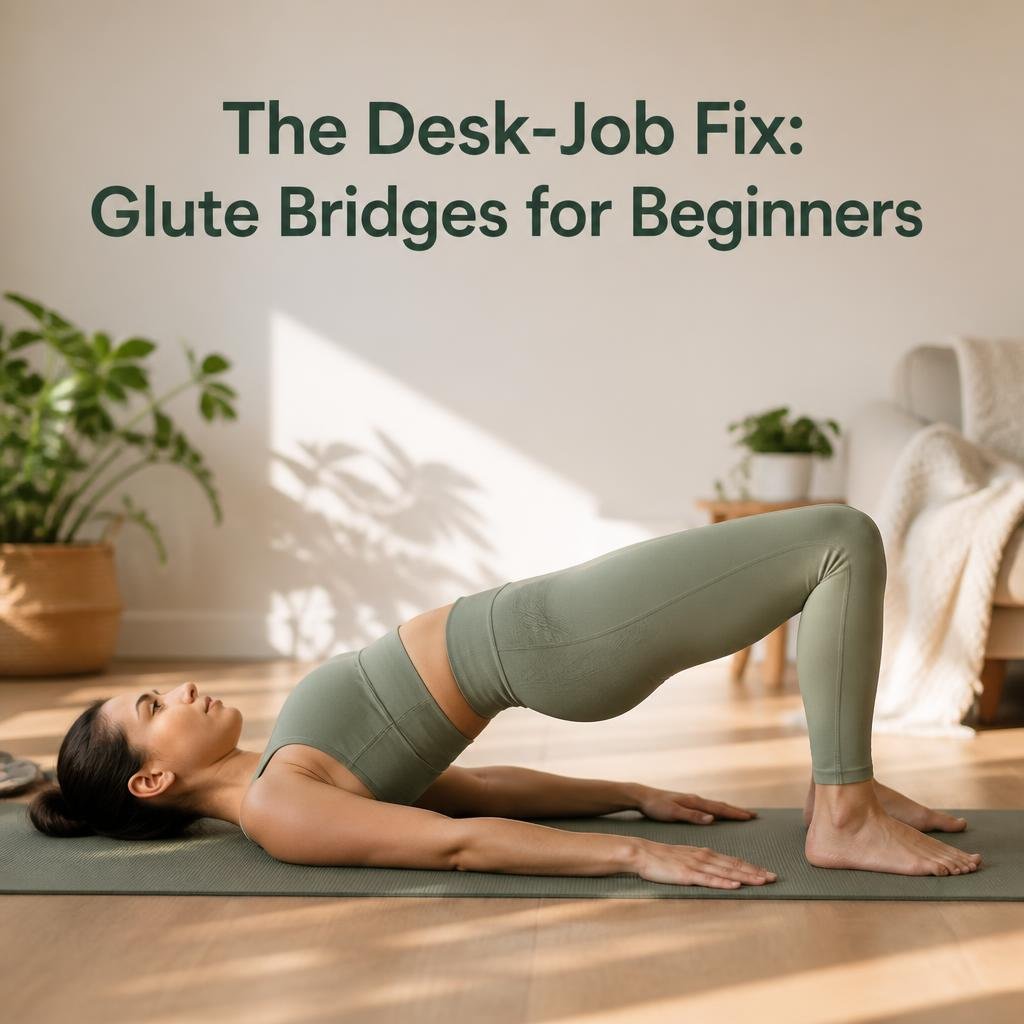
Lie on your back, knees bent, feet flat on the floor about hip width apart. Push through your heels to lift your hips toward the ceiling, squeezing your glutes at the top, then lower back down with control.
This one targets your glutes and hamstrings, and it’s genuinely one of the most underrated exercises for people who sit at a desk all day. Aim for 12 repetitions.
The most common mistake is using the lower back to lift instead of the glutes. If you feel this in your back rather than your backside, slow down and focus on the squeeze at the top.
5. Plank
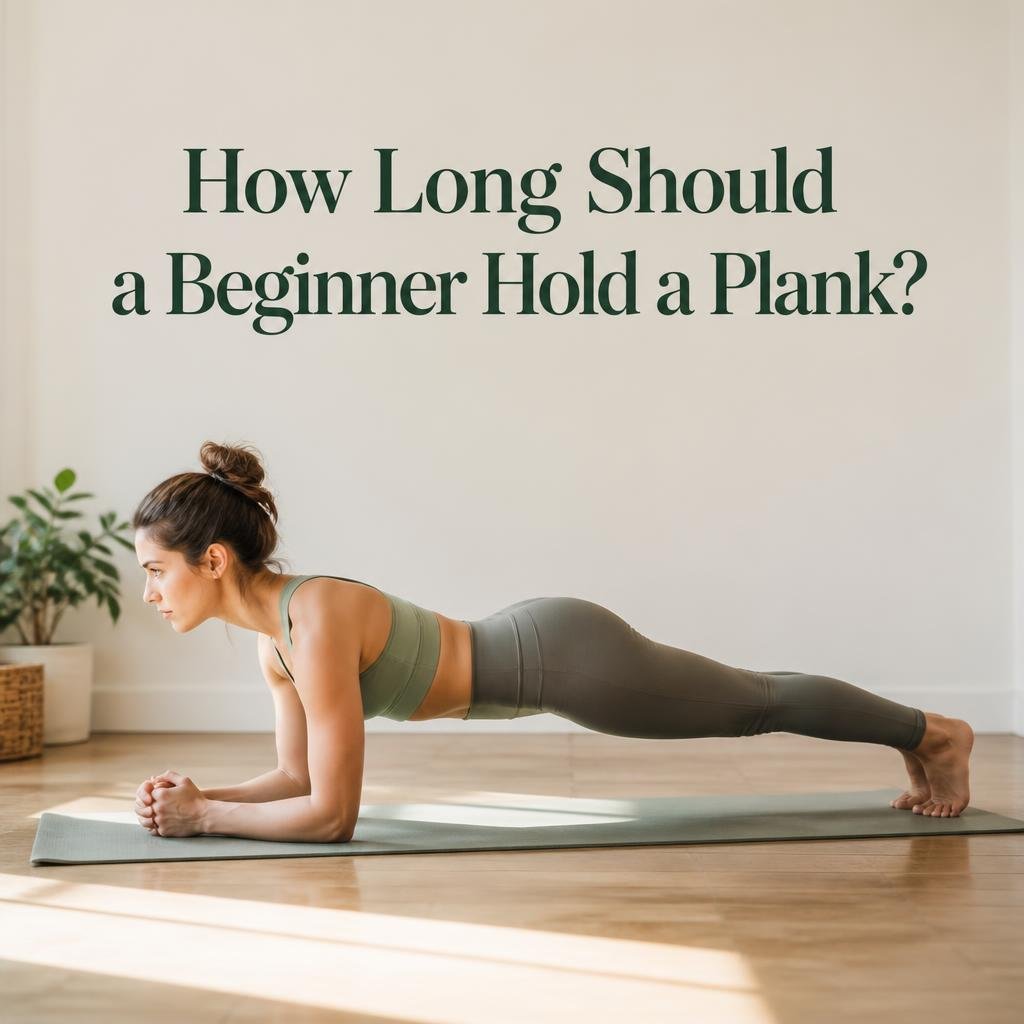
Rest on your forearms and toes, body in a straight line from shoulders to ankles, core engaged, hips level. Hold this position while breathing normally.
The plank works your entire core, along with your shoulders and glutes to a lesser degree. Beginners can start with a 20 second hold and build from there.
The biggest mistake is letting the hips drop toward the floor as fatigue sets in, or on the opposite end, piking the hips up too high. A mirror or a quick video of yourself can help you check your form the first few times.
6. Mountain Climbers
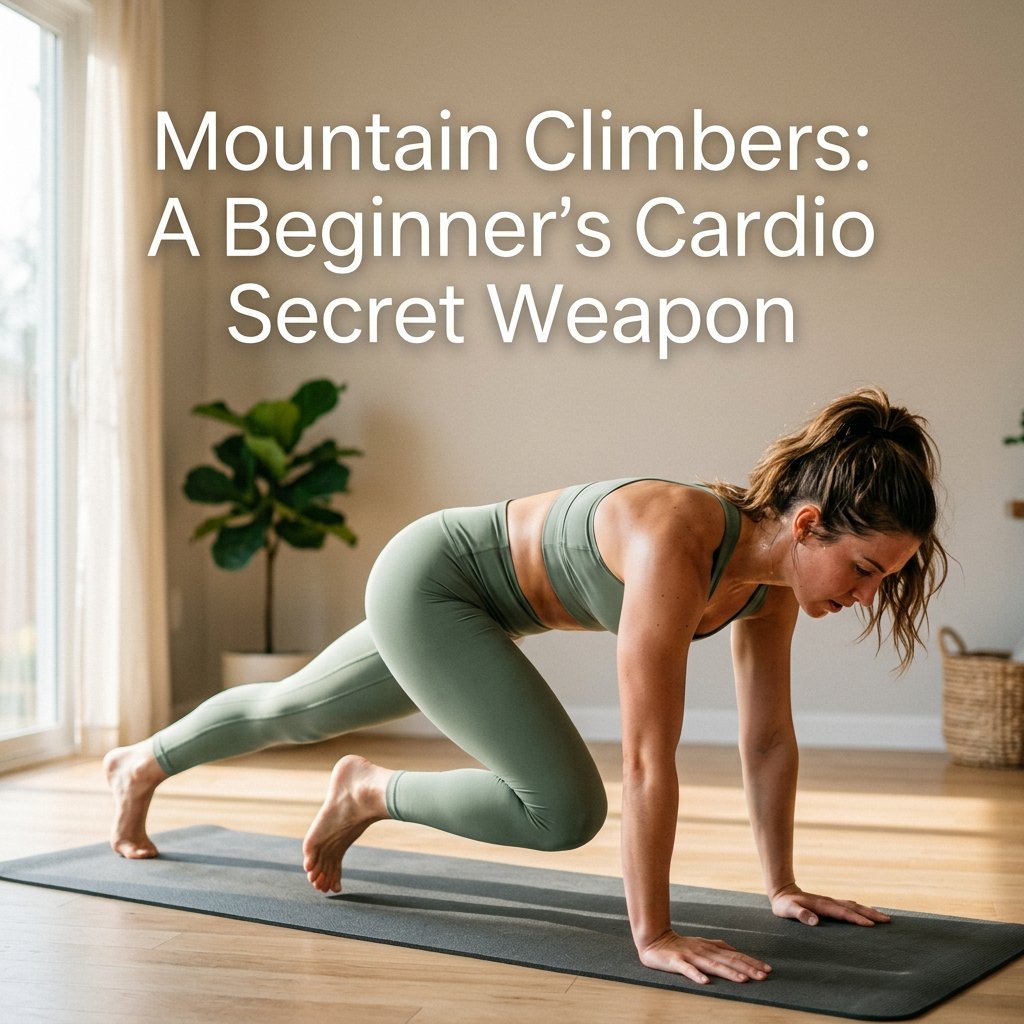
Start in a plank position, then drive one knee toward your chest, return it, and immediately drive the other knee in. Keep alternating at a controlled pace.
This exercise works your core while also raising your heart rate, making it one of the better cardio options on this list that still doesn’t need any equipment. Beginners can aim for 20 total reps, 10 per side.
The most common mistake is letting the hips bounce up and down. Keep them level, like the plank position you started in.
7. Bird Dog
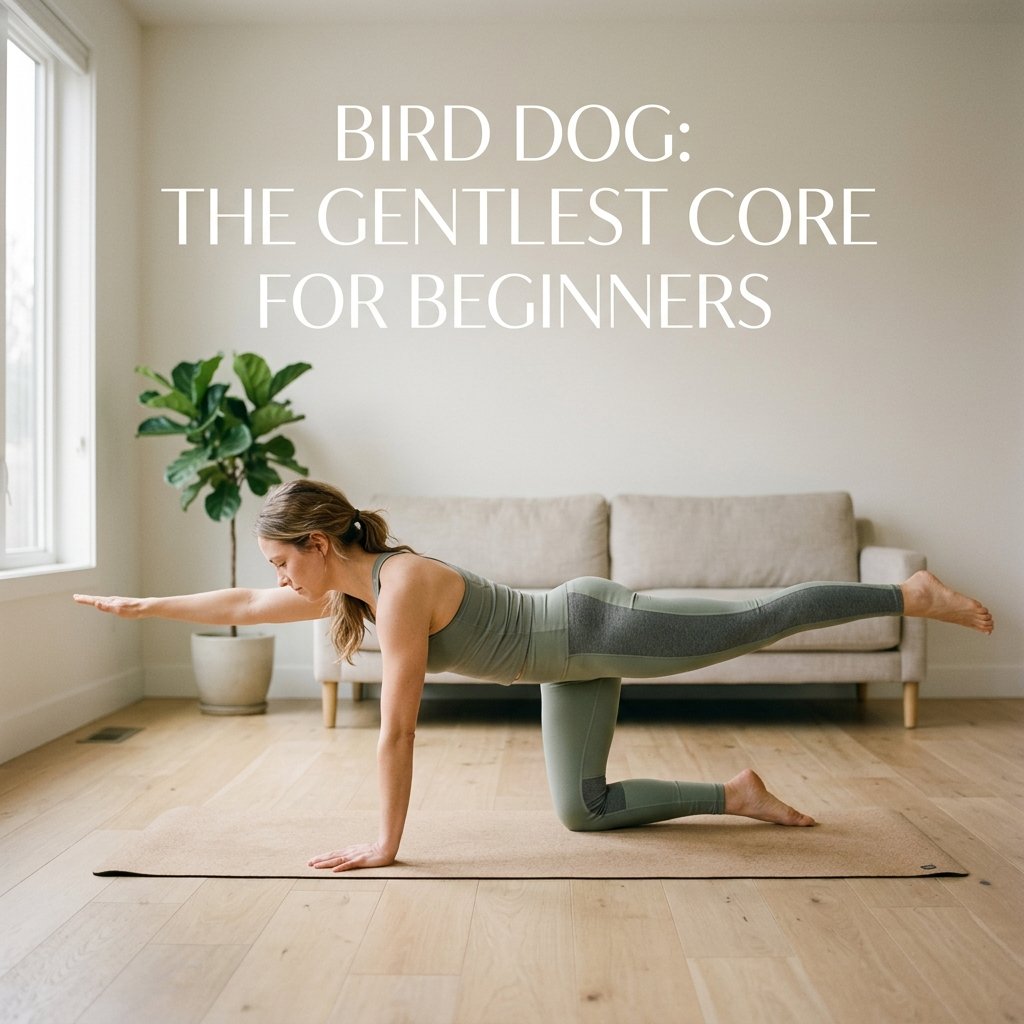
Start on your hands and knees. Extend one arm forward and the opposite leg backward at the same time, keeping your hips and shoulders square to the floor. Hold briefly, then return and switch sides.
Bird dogs train core stability and balance, and they’re a fantastic exercise for anyone dealing with lower back discomfort, since they build strength without any spinal loading. Aim for 8 reps per side.
The most common mistake is rotating the hips as the leg lifts. Move slowly enough that your hips stay level throughout.
8. Wall Sit
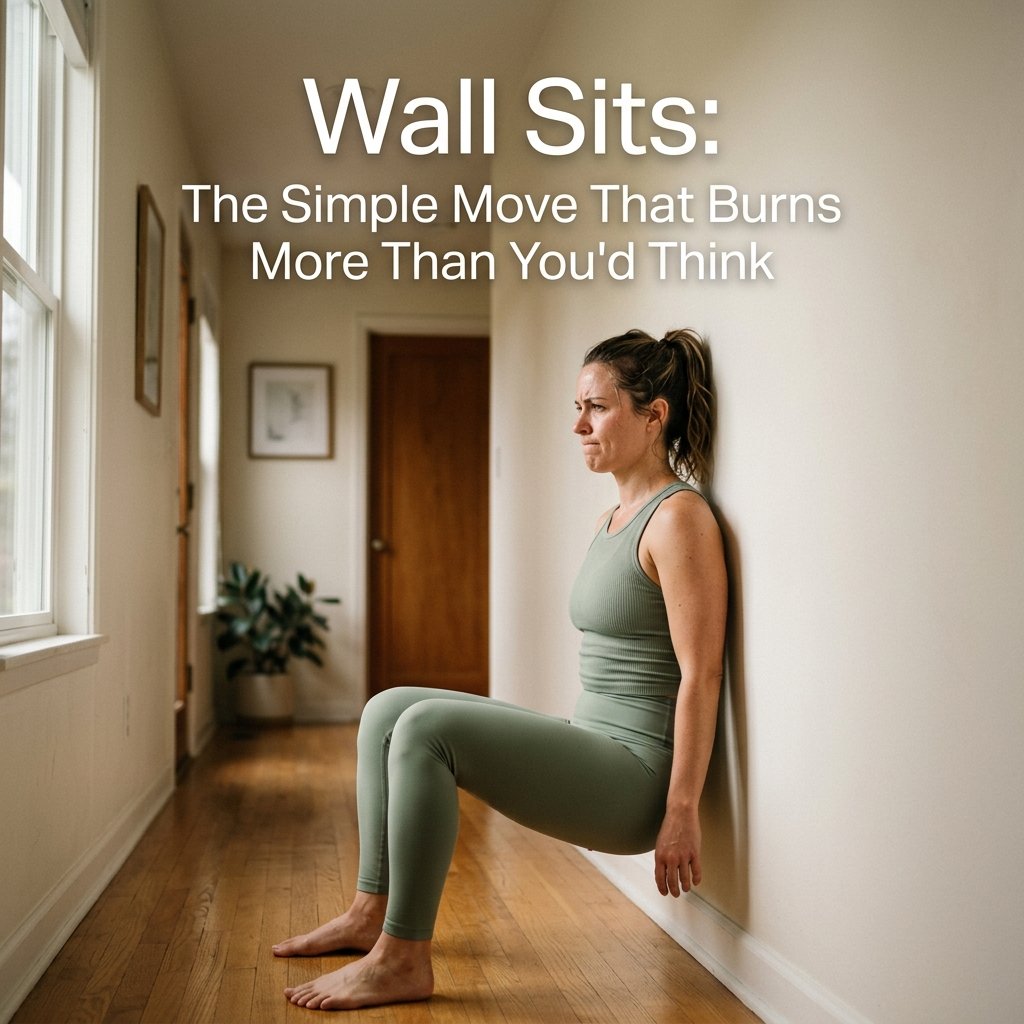
Lean your back against a wall and slide down until your knees are at roughly 90 degrees, thighs parallel to the floor, as if sitting in an invisible chair. Hold.
This is a simple but genuinely demanding isometric exercise for your quads and glutes. Beginners can start with a 20 to 30 second hold.
The main mistake is letting the knees drift past the toes, which shifts unwanted stress onto the joint. Keep your feet far enough from the wall that your shins stay close to vertical.
9. Step-Ups
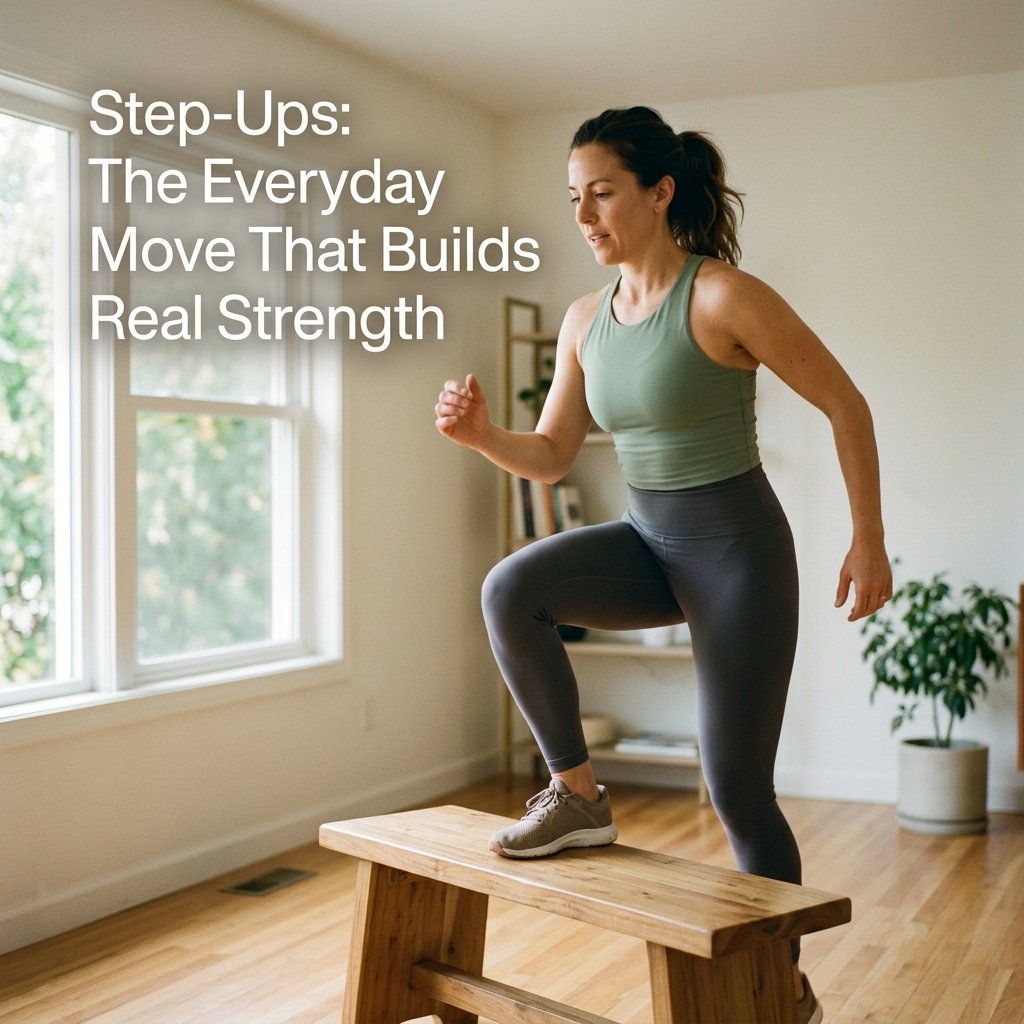
Using a sturdy step, low bench, or the bottom stair in your home, step one foot up fully, drive through that heel to stand tall, then step back down. Alternate legs.
Step-ups work your quads and glutes while also training balance and coordination, which matters more than people realize once daily life is involved, like carrying groceries or chasing after a kid. Aim for 8 reps per side.
The most common mistake is pushing off with the trailing leg instead of the working leg. Try to do most of the work through the leg that’s stepping up.
10. Jumping Jacks
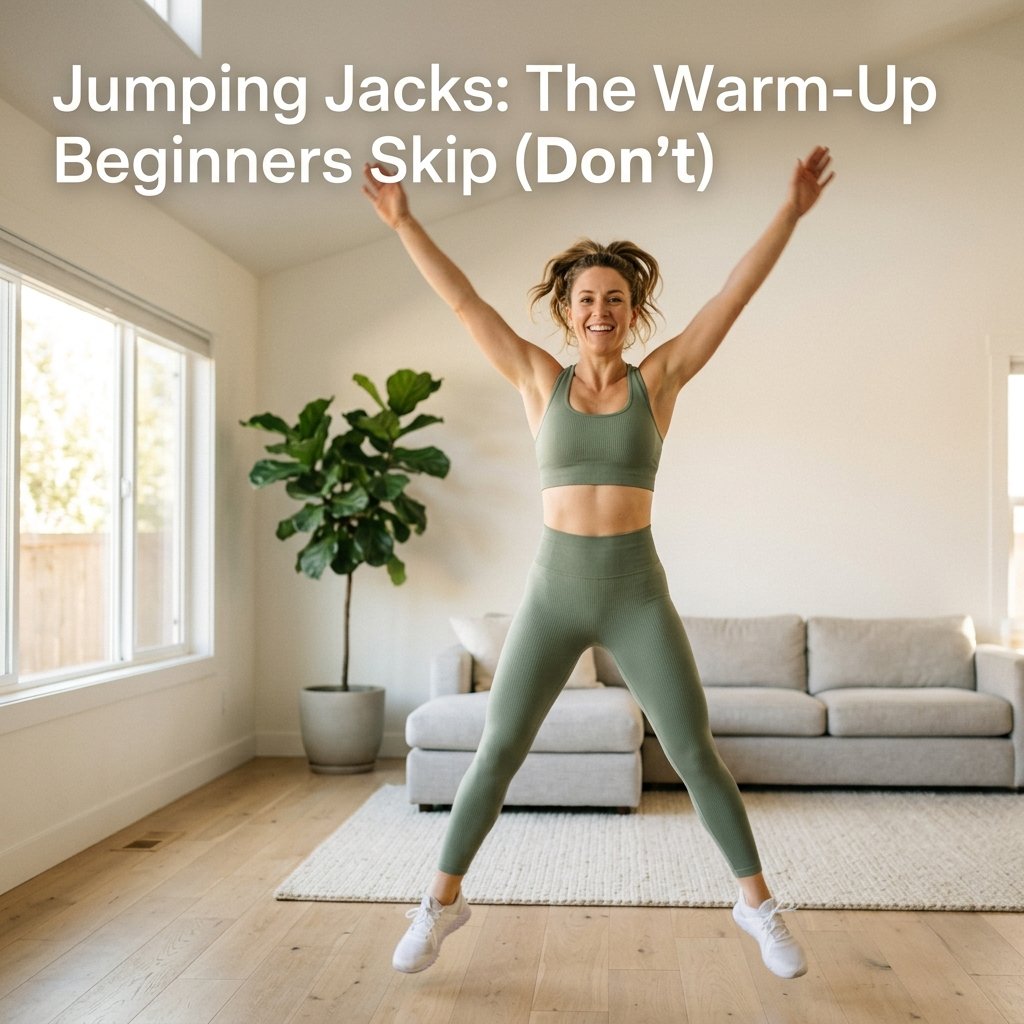
Jump your feet out wide while raising your arms overhead, then jump back to the starting position with arms at your sides. Keep a steady rhythm.
This is a full body cardio movement that raises your heart rate quickly and warms up nearly every joint in the body. Beginners can aim for 30 seconds.
The most common mistake is landing flat footed and stiff legged. Land softly with a slight bend in your knees and keep the movement controlled.
Beginner Home Workout Plan
Here’s a full routine that puts all ten exercises to use. Complete it 3 to 4 times per week, with at least one rest day between sessions.
Beginner Circuit, 3 rounds
- Bodyweight squats, 10 reps
- Push-ups, 5 to 10 reps
- Reverse lunges, 8 reps each leg
- Glute bridges, 12 reps
- Plank, 20 seconds
- Mountain climbers, 20 reps
- Rest, 60 seconds, then repeat
Once that feels manageable, rotate in bird dogs, wall sits, step-ups, and jumping jacks as a second circuit on alternating days, so your body gets variety while still building on the same foundation.
How Often Should Beginners Work Out?
Three to four sessions a week is a solid starting point for most people. Public health guidelines generally recommend adults get at least 150 minutes of moderate activity per week along with two days of strength training, and this routine covers both at once, since it combines resistance work with movements that raise your heart rate.
Rest days matter just as much as workout days. Your muscles adapt and get stronger during recovery, not during the workout itself. If you’re sore, a short walk or light stretching on your rest day is usually more helpful than pushing through another hard session.
Home Workouts for Beginners: Frequently Asked Questions
1. Can I actually get fit with no equipment at home?
Yes. You don’t need machines or dumbbells to build strength, burn calories, or improve endurance — especially as a beginner. Bodyweight moves like squats, push-ups, lunges, planks, and jumping jacks hit all the major muscle groups and spike your heart rate. The key is consistency and slowly making the exercises harder over time (more reps, slower tempo, tougher variations).
2. How long should my home workouts be?
Aim for 15–30 minutes, 3–4 days a week. That’s enough to see real change without burning out. A simple structure:
3–5 minutes warm-up (march in place, arm circles, hip circles)
10–20 minutes of main moves (squats, push-ups, lunges, plank, jacks, etc.)
2–3 minutes cool-down (slow breathing, light stretching)
If you’re brand new, even 10 focused minutes counts. Just start.
3. How many days a week should I work out as a beginner?
Three non-consecutive days is the sweet spot. Think Monday–Wednesday–Friday or Tuesday–Thursday–Saturday. Your body needs rest days to recover and get stronger. On off days, keep it light: walk, stretch, do some mobility work. Daily movement is great; hammering hard every single day is not.
4. What if I can’t do a full push-up or squat yet?
Start easier. That’s not failing — that’s training smart.
Can’t do a floor push-up? Do wall push-ups or incline push-ups on a table.
Squats feel tough? Use a chair: sit-to-stand (chair squats) until your legs get stronger.
Plank shakes too much? Drop to your knees or do a shorter hold.
Pick a version that feels challenging but lets you keep good form. Progress comes from showing up, not from suffering.
5. Do I need any space or gear at all?
Nope. Just enough room to lay down a yoga mat or towel and move your arms and legs without hitting furniture. If you want one cheap “upgrade,” grab a basic mat for comfort and grip. Optional later: a resistance band or a backpack with books for rows. But day one? You’re good with floor + body.
6. How do I know if I’m making progress?
Track simple stuff:
Track simple stuff:
More reps with the same exercise
Holding a plank longer without breaking form
Moving from wall push-ups → knee push-ups → full push-ups
Feeling less out of breath during jumping jacks or lunges
Write down your reps/holds each session. When the last 2–3 reps start feeling “somewhat hard” instead of easy, you’re getting stronger. That’s the win.
Final Thoughts
Sarah didn’t get stronger because she found a perfect program. She got stronger because six exercises fit into her actual life, and she kept showing up to her living room floor a few times a week. That’s really the entire point of this guide. The best workout isn’t the most advanced one. It’s the one you’ll still be doing in three months.
Start with the beginner circuit above. Give yourself permission to do the modified push-up, to hold the plank for only 15 seconds the first time, to feel a little clumsy during mountain climbers. That’s what week one is supposed to feel like. Come back to this page whenever you need the routine again, and let it be the thing that finally sticks.
Explore more beginner-friendly routines in our Fitness & Exercise section.
Read more practical fitness guides on our Bodylix Blog.

Fitness Specialist & Former Tactical Trainer
Bal Krishna Poudel has spent more than 19 years in law enforcement organization, and fitness has been at the center of it all. He knows physical conditioning, dynamic strength training, and everyday wellness inside and out. For close to two decades, he taught at official police training centers, getting officers ready for the physical demands of the job—building their endurance and operational fitness. These days, he coaches people in his local community on strength and fitness. At 49, he doesn’t just talk about staying active—he lives it, showing up every day to train and move. He writes for Bodylix, where he shares workouts and nutrition advice that regular readers can actually use, backed by science and built around one goal: helping people stay strong and healthy for the long haul.

7 Responses