
Disclosure: This article contains affiliate links. If you buy through these links, bodylix may earn a small commission at no extra cost to you.
A friend of mine spent three months just thinking about building a home gym. Every time she opened a shopping tab, she’d close it ten minutes later, overwhelmed. Squat racks felt too big. Treadmills felt too loud. Random YouTube bundles felt like a scam waiting to happen. She didn’t want a garage full of equipment — she wanted one solid thing that would actually get used.
That’s the story behind most people searching for inexpensive home gyms. You’re not trying to build a CrossFit box in your spare room. You want something that fits your space, your budget, and your actual life — not your Pinterest board.
My friend eventually landed on a rowing machine, specifically the OSUDA Rowing Machine, after reading through more reviews than she’d like to admit. A few weeks in, she texted me: less back stiffness from her desk job, a real sweat in twenty minutes, and — her words — “it doesn’t feel like punishment.” That’s rare for budget equipment.
If you’re weighing your options for a smart first buy, this review is for you. By the end, you’ll know whether this machine fits your space, your goals, and your wallet, plus exactly how to set it up so it earns its keep.
You may also like to read: Pre Workout Nutrition: What to Eat Before the Gym (Plus Where Thavage Pre Workout Fits In)
Inexpensive Home Gyms: Table of Contents
Why Rowing Is the Smartest Start for Inexpensive Home Gyms
Rowing gets overlooked because it looks unfamiliar. But it’s one of the most efficient exercises you can do at home, and here’s why it deserves the top spot on your list.
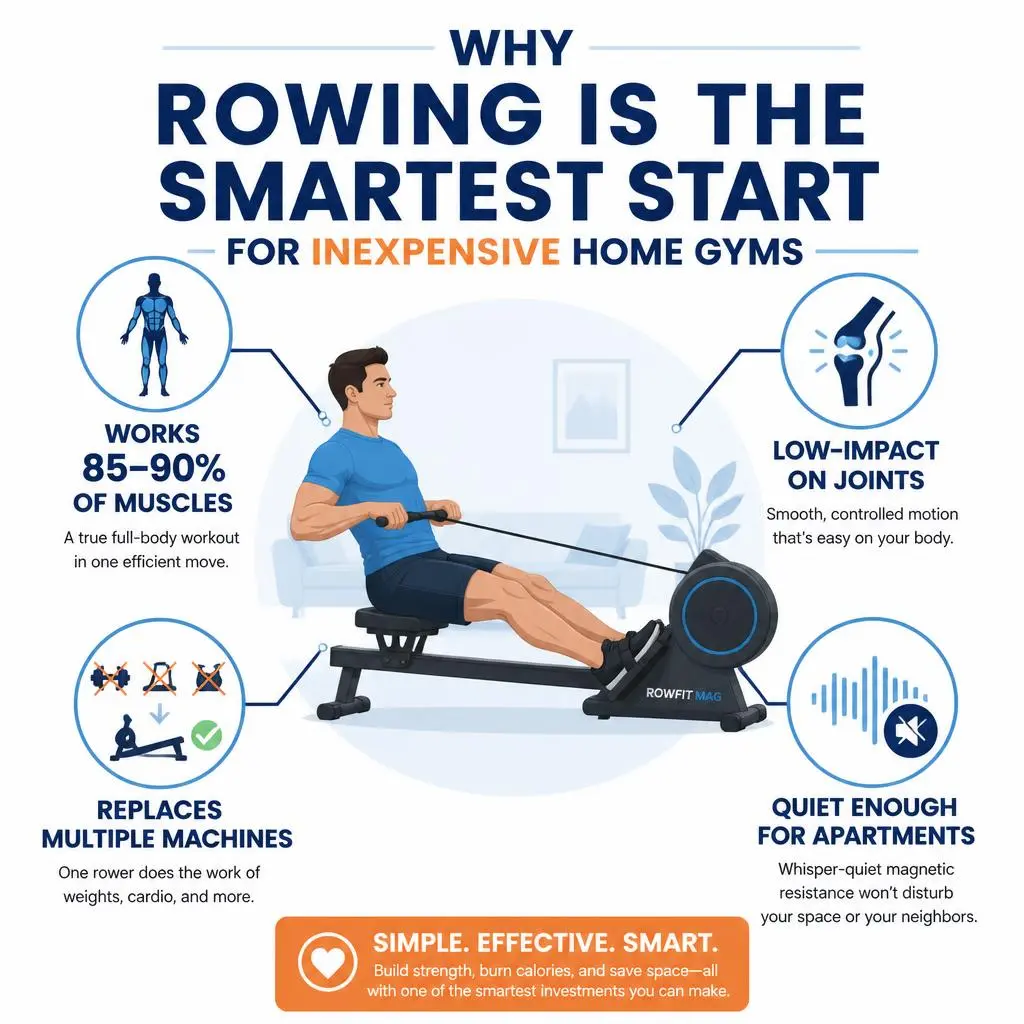
A single stroke works roughly 85–90% of your muscles — legs, glutes, core, back, shoulders, and arms, all in one fluid motion. Compare that to a treadmill, which mostly trains your lower body, or dumbbells, which need a whole routine to hit the same ground.
Rowing is also low-impact. Your feet stay planted, so there’s none of the joint pounding you get from running or jump training. That matters if you’ve got cranky knees, a bad hip, or you’re just tired of workouts that leave you sore in the wrong way.
And practically speaking: one machine replaces a cardio station, a core routine, and half a strength circuit. That’s the real math behind inexpensive home gyms — you’re not buying less equipment because you’re cheap, you’re buying smarter because one good rower does the job of three separate machines. Add in that magnetic models like this one run quiet enough for apartments, and you’ve got a genuinely realistic starting point.
OSUDA Rowing Machine at a Glance: A Smart Pick for Inexpensive Home Gyms
Here’s the quick rundown before we get into the details.
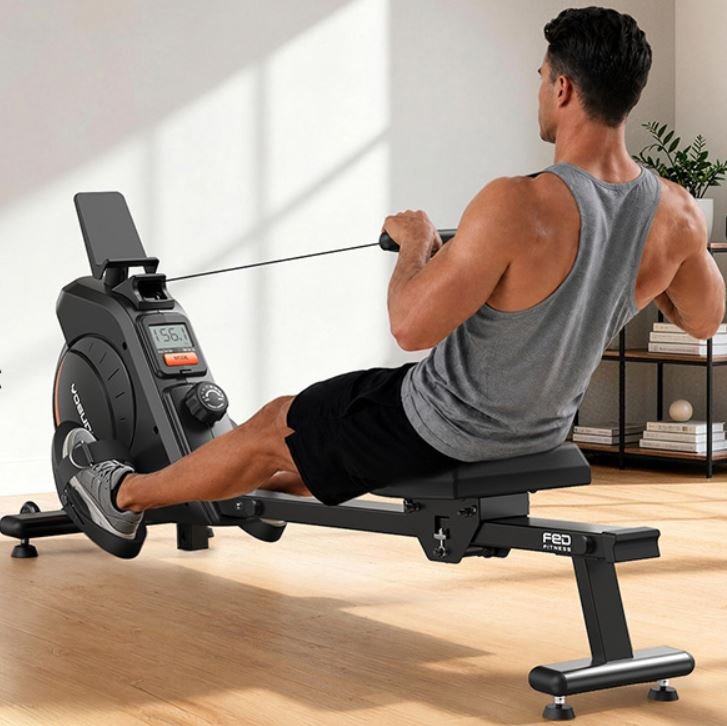
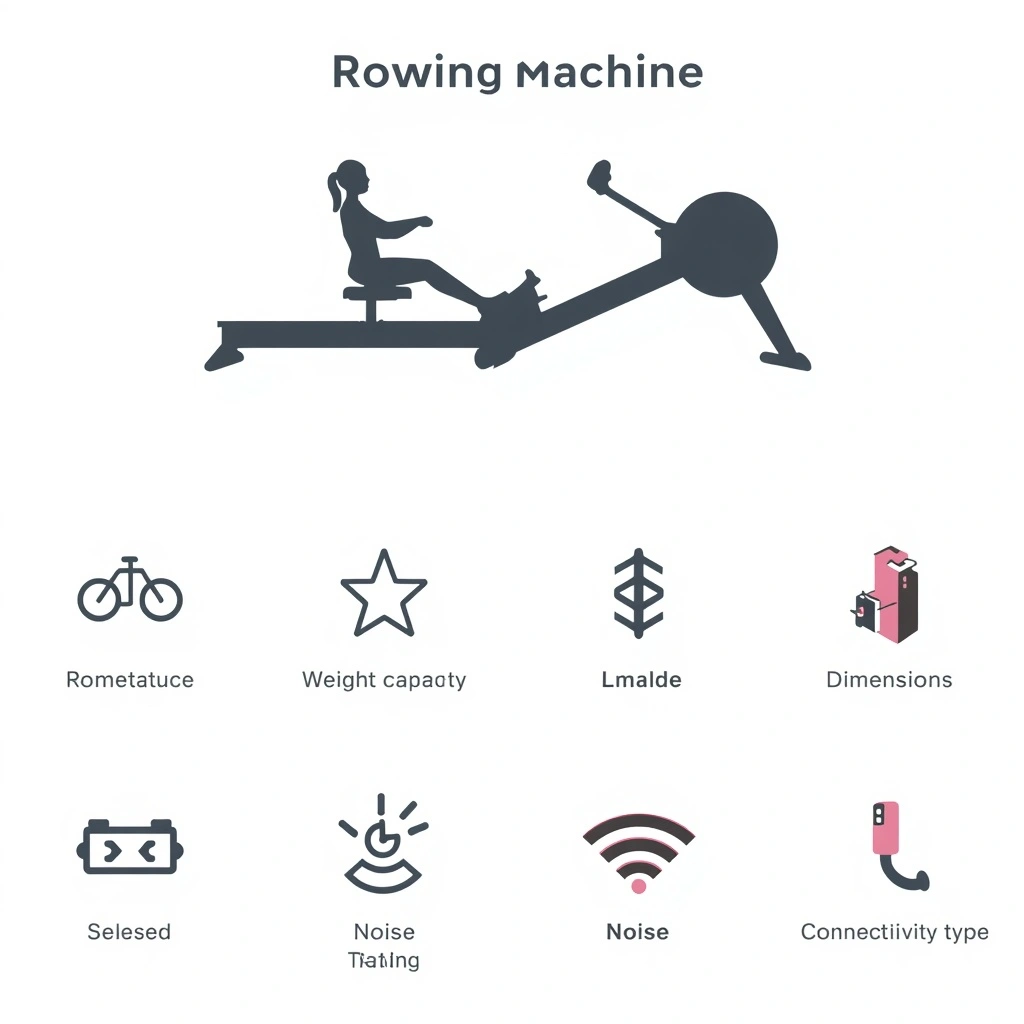
- Type: Magnetic resistance rower
- Best for: Beginners through intermediate users, small spaces, home use
- Resistance: Adjustable magnetic system with multiple levels
- Connectivity: Bluetooth with app support for guided sessions
- Display: LCD monitor tracking time, strokes, distance, and calories
- Comfort: Cushioned seat, adjustable footplates
- Storage: Foldable, upright design
- Build: Steel frame with a solid weight capacity (double-check current specs on the listing, as these get updated)
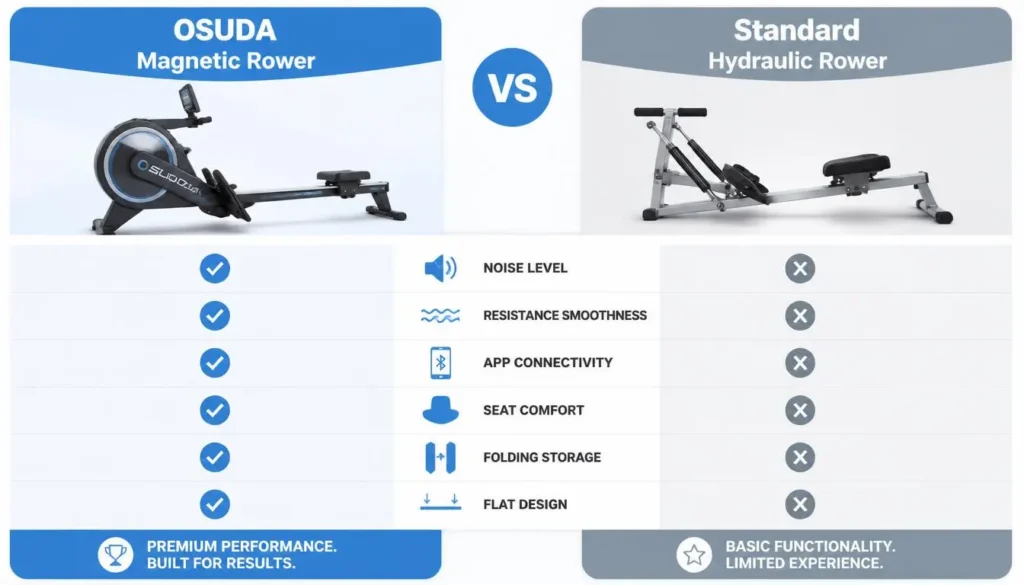
What stands out is that OSUDA packs in features you’d normally expect on a $500+ rower — app connectivity, a real LCD display, adjustable resistance — into a machine priced for people building inexpensive home gyms, not commercial ones. You can check the current price and availability of the OSUDA Rowing Machine on Amazon here.
Build Quality & Design: Does It Feel Cheap or Solid?
This is usually where inexpensive home gyms equipment falls apart, so let’s be honest about it.
The frame is steel, and it holds its position well during strokes — no unsettling wobble mid-pull, which is the first thing I check on any rower under $300. It’s not going to feel like a $900 commercial unit, but for an inexpensive home gyms, it doesn’t need to.
The rail length works comfortably for most average-to-taller users. If you’re on the shorter side, you’ll have plenty of room; if you’re pushing 6’3″ or above, it’s worth confirming the max height listed on the product page before buying.
Seat comfort is genuinely one of the better surprises here, and it’s a big deal for anyone furnishing an inexpensive home gyms on a budget. The cushioning holds up through 20–30 minute sessions without that flat, hard feeling some budget rowers develop after a few uses. The footplates adjust to fit different shoe sizes and lock your heel in place during harder pulls.
On noise: this is a quiet rowing machine for apartment living, which honestly might be the single biggest reason people choose it for their inexpensive home gyms. The magnetic resistance system doesn’t have the chain-clank or fan-whoosh you get with cheaper hydraulic or air rowers.
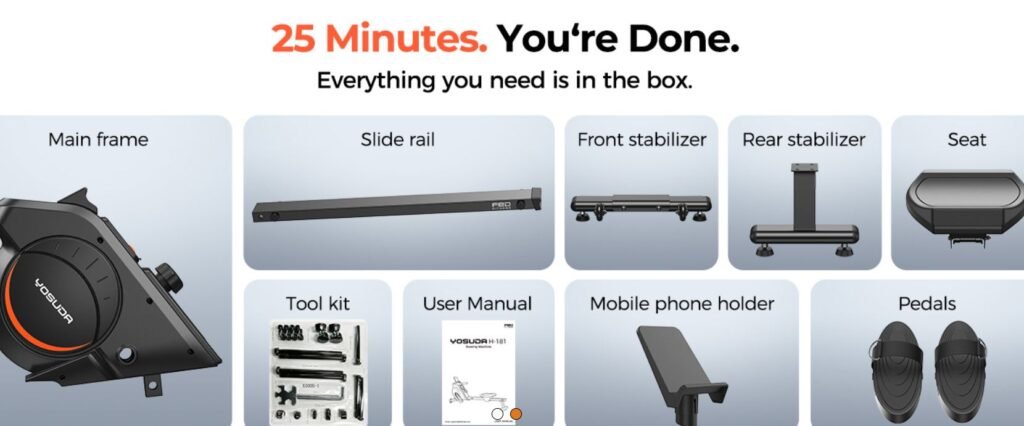
Assembly takes most people 25–40 minutes with basic tools. Instructions are clear enough to follow without hunting down a YouTube tutorial, though I’d still recommend keeping the manual nearby for the resistance knob calibration step.
Where it shows its price point: a few plastic components around the console housing feel lighter than the frame. It’s not a dealbreaker, just something to know going in — this isn’t a gym-grade machine pretending to be luxury. For an inexpensive home gyms, it’s honest budget engineering, and that’s exactly what it’s meant to be.
Resistance & Performance: From Beginners to Athletes
This is where a magnetic rowing machine review earns or loses trust, so let’s break it down properly.
The magnetic resistance system offers multiple levels, and the difference between the lowest and highest setting is noticeable — not just cosmetic. This is exactly the kind of detail that matters when you’re piecing together an inexpensive home gym: at the low end, it’s genuinely beginner-friendly, smooth, controllable, easy to learn proper rowing form without fighting the machine.
At the top end, it gets challenging enough to push intermediate users and even satisfy advanced athletes looking for a warm-up, recovery day, or supplemental cardio session. Serious competitive rowers chasing race-specific power output will eventually want an air or water rower with a heavier flywheel — that’s a different category and price point entirely. But for the vast majority of people building an inexpensive home gym, this range covers years of progress, not months.
The stroke itself feels smooth, without the jerky “dead spot” some cheaper rowers have at the catch or finish position. It engages your legs first, then core, then arms, mimicking the mechanics you’d expect on gym-standard rowers — which matters more than people realize when you’re relying on one machine to anchor your entire inexpensive home gym, since bad form on a cheap machine can translate into real strain over time.
For anyone comparing options for an inexpensive home gym, that resistance range is the real story here. Bottom line: for the price, this offers a surprisingly wide and usable resistance curve that can genuinely grow alongside you — exactly what you want from the centerpiece of an inexpensive home gym.
Tech Features: Bluetooth, App Support, and LCD Monitor
The tech here punches above its price bracket.
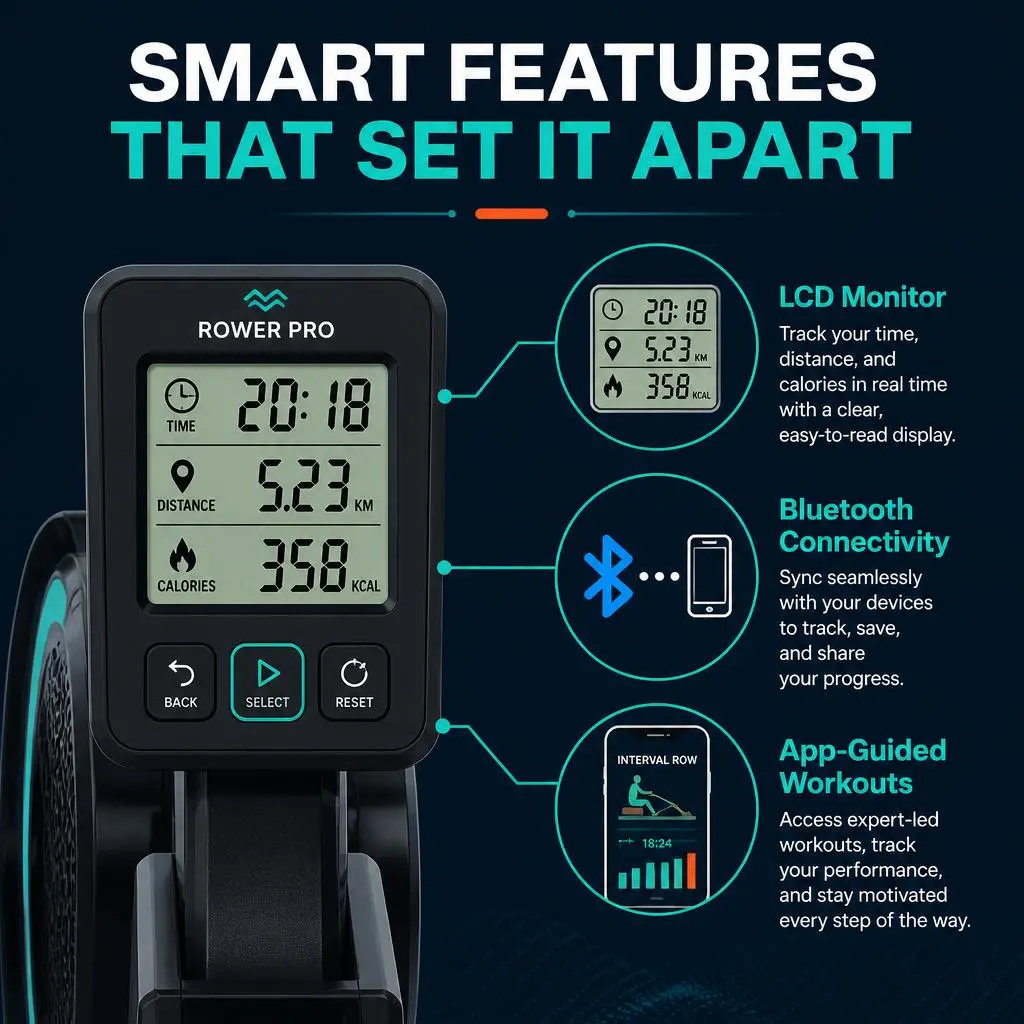
The LCD monitor displays time, distance, stroke count, and calories burned in real time. It’s large enough to glance at mid-stroke without breaking your rhythm, though it runs on manual mode by default rather than pre-programmed workout routines built into the console itself.
That’s where Bluetooth and app support come in. Pairing connects the machine to compatible fitness apps, letting you follow guided sessions, track your progress over weeks, and in some cases join virtual rowing routes. Pairing is generally straightforward — turn on Bluetooth, open the app, and it should recognize the device within a few seconds. Some users report needing to restart the app once if the first pairing attempt doesn’t take, which is a minor and common quirk with budget fitness tech, not unique to this rower.
There’s also a device holder built into the console, so you can prop up your phone or tablet to follow a class or just watch something while you row. It stays reasonably stable during moderate-intensity sessions.
For the price bracket, this level of connectivity isn’t standard — it’s what elevates the OSUDA magnetic rower above a “basic budget rower” and into something that feels current.
Comfort & Usability: Seat, Handle, Footrests, and Noise
Day-to-day comfort is what determines whether you’ll actually use a machine six months from now, so it deserves its own section.
The seat cushion holds up well through 20–40 minute sessions. Some users with less body cushioning of their own may want an added gel pad for anything past 30 minutes, but for most people it’s comfortable out of the box.
The handle has a textured grip that manages sweat reasonably well and suits both smaller and larger hands without feeling awkward either way.
Footrests adjust with secure straps, and they hold your foot in place even during harder, faster strokes — no slipping mid-session, which is a common complaint on cheaper models.
As for noise, this really is a standout. You could realistically use it early in the morning or late at night without waking anyone else in a shared space. A few users note a very light squeak developing after several weeks of heavy use, usually solved by tightening the bolts (more on that below).
If you’re rowing in a small apartment, next to a sleeping partner, or below a downstairs neighbor, this is exactly the kind of detail that makes or breaks whether equipment stays part of your routine.
Space & Storage: Perfect for Small Homes and Apartments
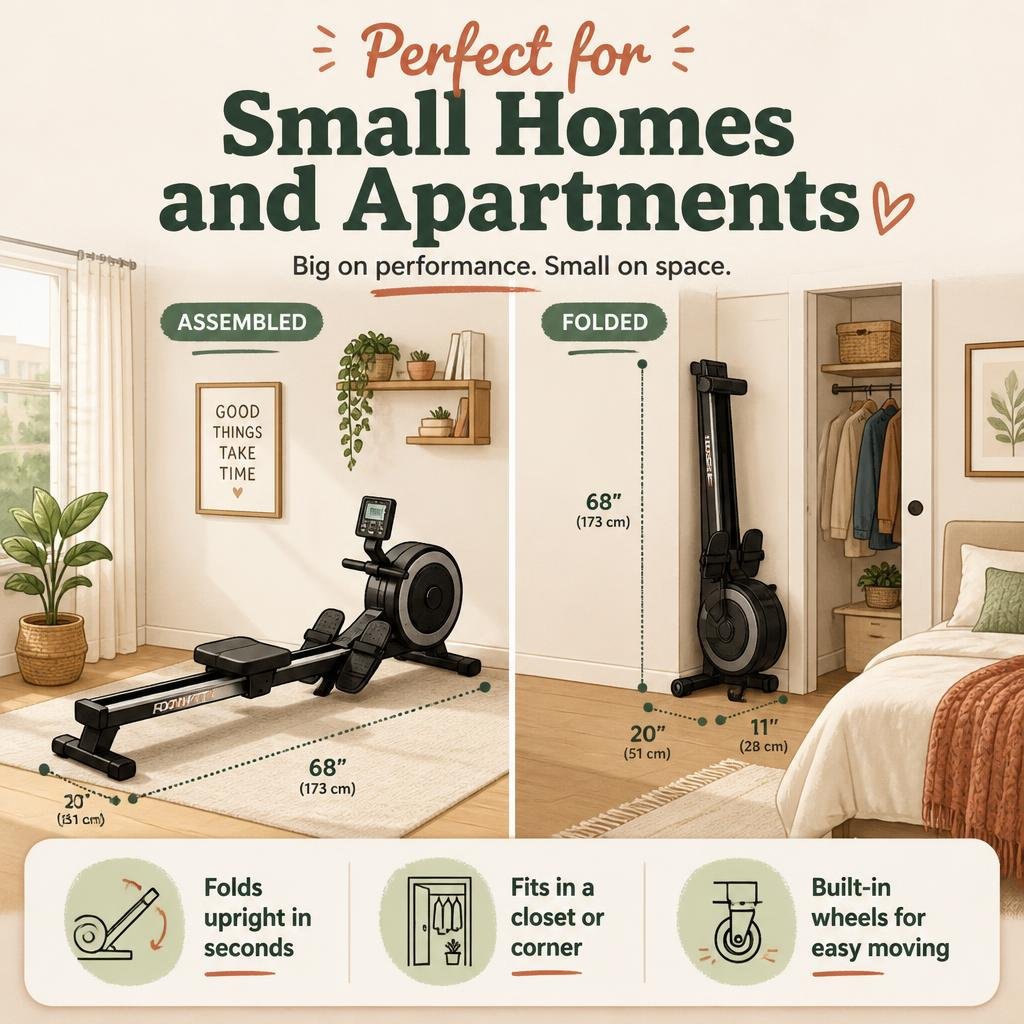
Footprint matters just as much as the workout itself when you’re short on square footage.
Assembled, the OSUDA rower has a manageable length that fits comfortably in a corner, spare room, or even a living room without dominating it. Folded, it stores upright, cutting the footprint down significantly — easy to tuck behind a door, in a closet, or under a bed with enough clearance.
Built-in wheels or handles make it simple to move around for cleaning or repositioning, which matters more than people expect once they’re actually living with a piece of equipment daily.
This compact, foldable design is honestly one of the strongest reasons it fits so well into inexpensive home gyms built in small flats, studio apartments, or shared houses where every square foot counts.
Who Should Buy the OSUDA Rowing Machine?
Let’s be direct about fit, because no machine is right for everyone.
Great for:
- Beginners wanting a safe, low-impact, full-body workout
- Anyone building a budget home gym equipment setup from scratch
- Apartment dwellers who need something genuinely quiet
- People who like app-guided sessions and basic progress tracking
You might outgrow it if:
- You’re a competitive or serious rower wanting commercial-grade resistance
- You need extreme, race-level resistance for elite interval training
- You’re significantly above average height and need an extended rail
Alternatives worth considering: if your budget stretches further, a higher-end magnetic or air rower gives you more headroom for advanced training. If space is genuinely tight, a compact hydraulic mini-rower is a smaller (though less versatile) option.
For most home users, though, this lands right in the sweet spot — a serious step up from cheap hydraulic rowers, without the price tag of commercial-grade equipment.
Setup & Maintenance Tips
A few practical notes to save you time and frustration.
Assembly:
- Budget 25–40 minutes
- Most tools needed are included in the box
- Clear floor space before you start — you’ll want room to lay the frame flat
- Don’t fully tighten bolts until everything is aligned; tighten last, once the frame sits straight
Maintenance:
- Wipe down the seat, handle, and rail after sweaty sessions — sweat is the enemy of any moving rail system
- Check bolts and screws for tightness after your first couple weeks of regular use
- Keep it on a flat, level surface to avoid wobble or uneven wear
- Periodically check the resistance knob and foot straps for wear
Low maintenance really is part of the appeal here. If you’re building inexpensive home gyms meant to stay simple and stress-free, this machine doesn’t ask much of you beyond basic upkeep.
Final Verdict: Is This the Right First Piece for Your Home Gym?
If you’re trying to figure out where to put your first dollars into inexpensive home gyms, the OSUDA Rowing Machine earns its spot on the shortlist.
Its strengths are clear: quiet magnetic resistance that won’t disturb neighbors, genuine app connectivity, a comfortable seat that holds up over real sessions, and a compact storage design that respects small spaces. It’s not pretending to be a commercial-grade machine, and it’s upfront about its limits around max height and elite-level resistance.
For most people starting out — especially beginners, apartment dwellers, or anyone tired of overpaying for gear that ends up as a clothes rack — this is a smart, honest first buy. You can check current pricing and read more user reviews for the OSUDA Rowing Machine here.
FAQ
Is the OSUDA Rowing Machine good for complete beginners? Yes. The lowest resistance settings are smooth and controllable, making it easy to learn proper rowing form before progressing to harder levels.
How noisy is this rower in a small apartment? Very manageable. As a quiet rowing machine for apartment use, the magnetic resistance system runs far quieter than hydraulic or air rowers, making early morning or late-night sessions realistic.
Can taller or heavier users use this machine comfortably? Most average-to-taller users fit comfortably on the rail. If you’re above average height or near the upper weight capacity, check the current specs on the product listing before buying.
Do I need the app, or can I use it without Bluetooth? You don’t need it. The LCD monitor tracks time, distance, strokes, and calories on its own — the app and Bluetooth are optional extras for guided workouts and progress tracking.
Is this a good choice for inexpensive home gyms compared to treadmills or bikes? For most people, yes. Rowing works far more muscle groups per session than a treadmill or bike, and it’s lower impact on your joints, which makes it a more efficient use of limited budget and space.
A Warm Closing
Your home gym doesn’t need to be fancy or expensive. It just needs to be yours — a space where you show up for yourself, even on the hard days when motivation is nowhere to be found. A machine like the OSUDA rower can be the start of that. At bodylix, we believe every small step counts, and however you begin, we’re genuinely cheering for you.
If you’re also planning your workouts, check out our guide on workouts for obese beginners at home. For more gear ideas, see our article on the best home gym equipment for small spaces.

Fitness Specialist & Former Tactical Trainer
Bal Krishna Poudel has spent more than 19 years in law enforcement organization, and fitness has been at the center of it all. He knows physical conditioning, dynamic strength training, and everyday wellness inside and out. For close to two decades, he taught at official police training centers, getting officers ready for the physical demands of the job—building their endurance and operational fitness. These days, he coaches people in his local community on strength and fitness. At 49, he doesn’t just talk about staying active—he lives it, showing up every day to train and move. He writes for Bodylix, where he shares workouts and nutrition advice that regular readers can actually use, backed by science and built around one goal: helping people stay strong and healthy for the long haul.

One Response