
Bodyweight Exercises for Beginners: 20-Minute No-Equipment Workout at Home
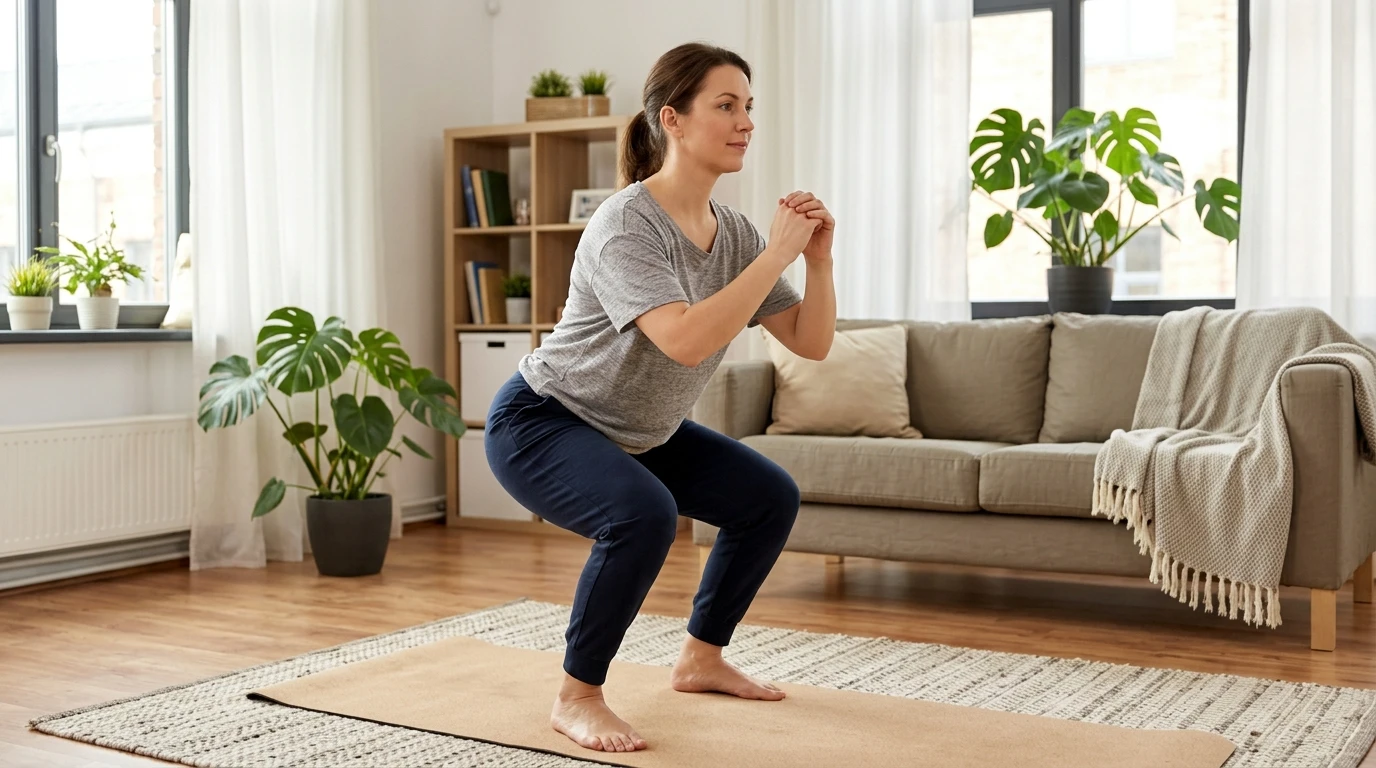
You only need 20 minutes, a little floor space, and no equipment. Build strength, move easier, and stick with it — right from home.
- Brand-new beginners
- Back after a long break
- Prefer working out at home
- Dislike crowded gyms
- Short on time or space
Quick-Start Workout
This is a true no-equipment beginner bodyweight workout. Zero dumbbells, zero bands, zero extra items. Just you and the floor.
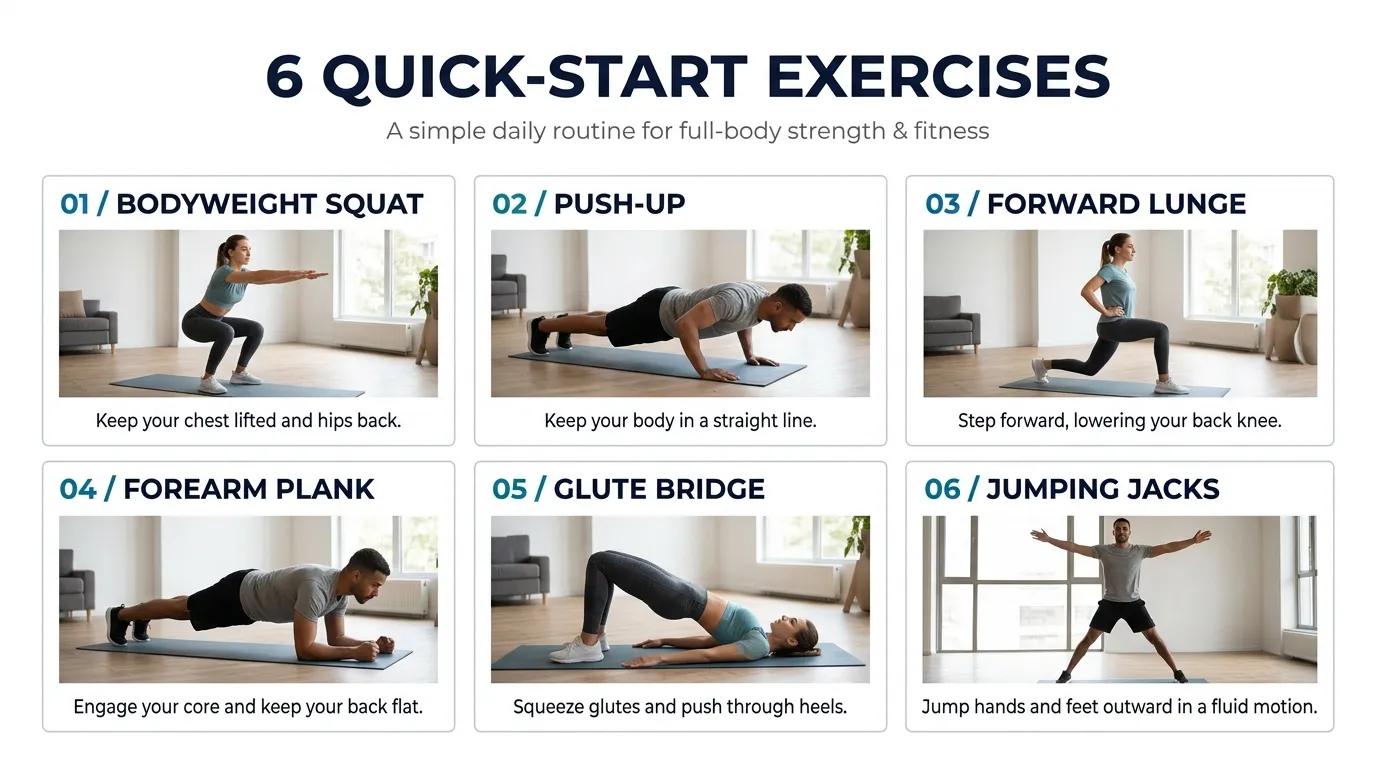
Do 2 rounds if this is your first week. Do 3 rounds when it feels doable. Rest 45–90 seconds between rounds.
| Exercise | Reps / Time | Easier Version |
|---|---|---|
| Bodyweight Squat | 10–15 | Chair Squat |
| Incline or Knee Push-Up | 6–10 | Wall Push-Up |
| Glute Bridge | 10–15 | Shorter range of motion |
| Bird Dog | 6–8 per side | Hold for less time |
| Standing March / Walking Jacks | 30 seconds | Slow March in Place |
| Plank | 15–30 seconds | Knee Plank |
Train 2–3 days per week at first. Give yourself at least one rest day between sessions.
Stop immediately if you feel sharp pain, dizziness, or deep joint discomfort. Sore muscles = normal. Sharp pain = stop.
Your Complete Beginner Bodyweight Exercise Library
Here’s exactly how to do each move — what it works, simple step-by-step form, what most people mess up, and how to make it easier or harder as you go.
Chair Squat
Works: Leg strength, sitting and standing easier
- Sit on the edge of a sturdy chair. Stand all the way up, then sit back down with control.
- Keep your chest up, weight through your heels.
- Most mess up: Dropping fast or leaning way forward.
- Easier: Use a higher chair or hold the seat for balance.
- Harder: Pause 2 seconds at the top before sitting back down.
Honestly? The chair squat was the move that stuck with me most when I started. I felt clumsy doing it at first — took me ages to get comfortable. But once it clicked? I looked forward to it. It felt quick and showed real results fast. So if any move feels awkward at first? Don’t bail. Stick with it. You’ll get there.
Bodyweight Squat
Works: Thighs, glutes, hips, deep core
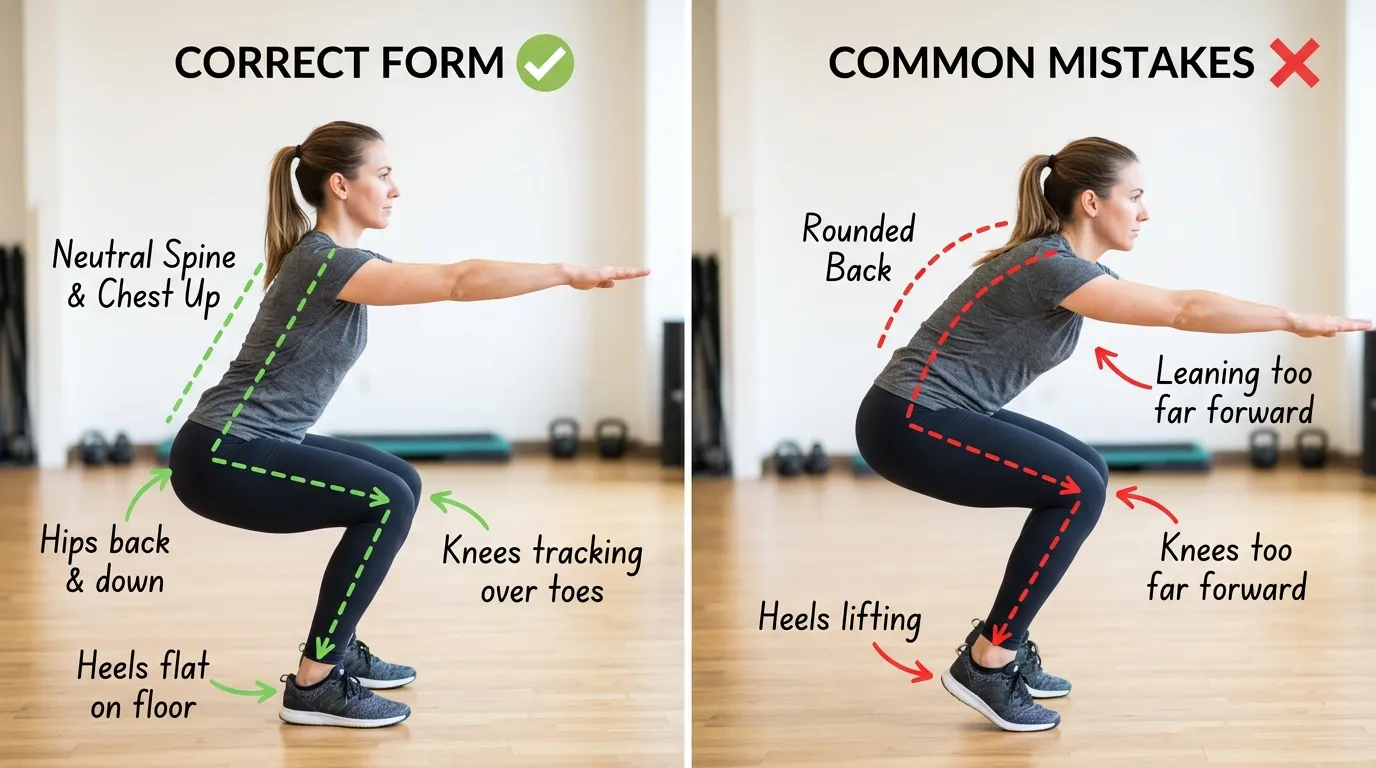
- Feet about shoulder-width, toes turned slightly out. Hips go back like reaching for a chair. Lower until thighs are nearly level, then push through heels to stand.
- Most mess up: Knees caving inward or rushing down. Go slower than you think you need to.
- Easier: Keep using the chair version until this feels steady.
- Harder: Pause 2 seconds at the bottom before pushing up.
Wall Push-Up
Works: Chest, shoulders, arms, core
- Hands on a wall at shoulder height, a little wider than your shoulders. Step back so arms are straight. Lower your chest toward the wall, then push back.
- Most mess up: Letting hips sag or locking elbows tight.
- Easier: Stand closer to the wall.
- Harder: Step farther back.
Incline Push-Up
Works: Same muscles as floor push-ups, just lighter
- Hands on something sturdy — a table, counter, solid chair. Keep your body one straight line from head to heels. Lower your chest toward the surface, then press back.
- Most mess up: Hips drooping or sticking your butt up. Stay straight.
- Easier: Higher surface = easier.
- Harder: Lower surface = harder.
Knee Push-Up
Works: Chest, shoulders, arms, core
- Hands slightly wider than shoulders, knees on the floor. Straight line from head to knees. Lower your chest toward the floor, then press up.
- Most mess up: Arching your back or rushing reps.
- Easier: Go back to incline push-ups — no shame.
- Harder: Try full push-ups once these feel easy.
Build Push-Up Strength at Home
This portable push-up board system has color-coded hand positions, resistance bands, and an ab roller — all in one compact kit. It walks you through every level so you progress steadily.
MQRW Push Up Board — Home Gym Portable Exercise Equipment
View on Amazon →Glute Bridge
Works: Glutes, hamstrings, lower-back health
- Lie on your back, knees bent, feet flat hip-width apart. Push through heels to lift hips up. Squeeze at the top, lower slowly.
- Most mess up: Arching your lower back instead of using glutes. You should feel this behind your hips, not your spine.
- Easier: Don’t lift quite so high.
- Harder: Lift one leg straight up while bridging.
Bird Dog
Works: Deep core stability, balance, back strength
- On hands and knees. Extend one arm forward and opposite leg back at the same time. Hold 1–2 seconds. Return and switch.
- Most mess up: Twisting hips or rushing. Keep hips level, move slow.
- Easier: Extend just your arm or just your leg first.
- Harder: Hold 3–5 seconds per side.
Dead Bug
Works: Deep core strength — gentle on your back
- Lie flat, arms up toward the ceiling, knees bent 90°. Lower opposite arm and opposite leg toward the floor at the same time. Return and switch.
- Most mess up: Arching your lower back off the floor. Keep ribs down.
- Easier: Smaller movements.
- Harder: Hold 2 seconds at the lowest point.
Standing Calf Raise
Works: Calves, ankle stability
- Stand tall — hold a wall or chair if you need balance. Rise up onto your toes. Lower slowly.
- Most mess up: Bouncing at the top or dropping fast. Control it down.
- Easier: Keep one foot flat on the floor the whole time.
- Harder: Do it standing on one leg.
Wall Sit
Works: Thigh endurance, leg strength
- Lean back against a wall. Slide down until thighs feel roughly parallel to the floor. Hold there.
- Most mess up: Knees pushing past your toes. Step feet forward so shins stay upright.
- Easier: Don’t slide down quite so far.
- Harder: Go lower or hold longer.
Side-Lying Leg Raise
Works: Outer hips, glutes, core stability
- Lie on your side, legs straight. Lift your top leg up, lower slowly. Flip over and do the other side.
- Most mess up: Rolling forward or backward. Stack your hips.
- Easier: Don’t lift it as high.
- Harder: Pause at the top.
Plank / Knee Plank
Works: Entire core, shoulders, glutes
- Forearms on floor. Body in one straight line. Breathe normally.
- Most mess up: Hips sagging or sticking up.
- Easier: Rest on knees instead of toes.
- Harder: Lift one leg or add shoulder taps.
If It Hurts — Swap It
| If this exercise hurts… | Do this instead |
|---|---|
| Squats (knee pain) | Chair squats or wall sits |
| Push-ups (wrist pain) | Fists on floor or wall push-ups |
| Lunges / step variations (knee pain) | Glute bridges or dead bugs |
| Plank (lower back strain) | Knee plank or bird dog |
| Jumping jacks (joint impact) | Standing marching or walking jacks |
First-Month Weekly Plan
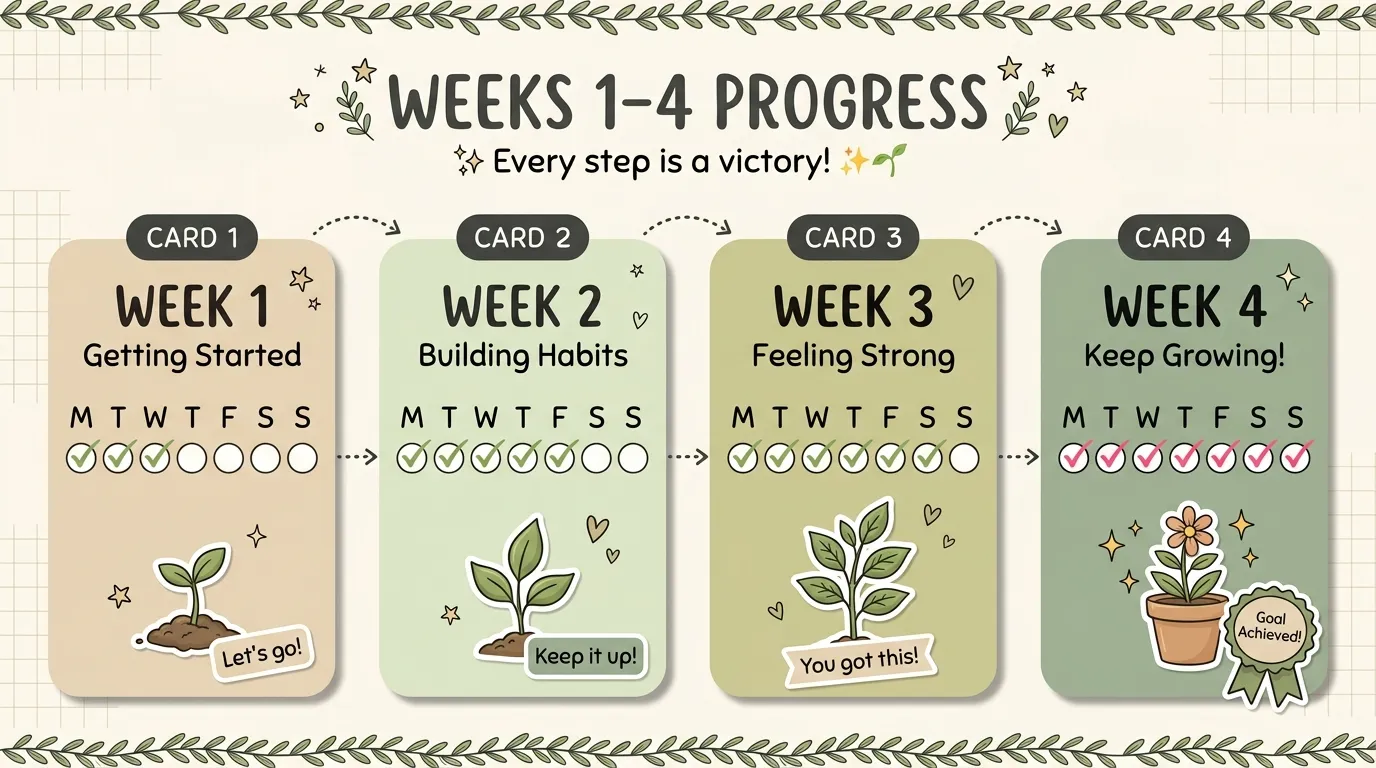
No guessing what comes next. Here’s your roadmap:
| Week | Schedule | What Changes |
|---|---|---|
| Week 1 | 2 workouts, 2 rounds each | Keep it gentle. Learn form. Build the habit. |
| Week 2 | 2–3 workouts, 2–3 rounds | Add a round when it feels easy. Reps stay the same. |
| Week 3 | 3 workouts, 3 rounds | Consistent routine. Add 1–2 reps per exercise. |
| Week 4 | 3 workouts, 3 rounds | Try harder variations. Slow down the lowering phase. |
How to Progress Without Gear
You don’t need new stuff to keep getting stronger. Just make the work slightly harder over time. Here’s exactly how:
- Add a rep or two. Last time you did 10? Try 11. That’s it.
- Slow down. Take 3 full seconds to lower yourself. Slow builds way more strength than rushing.
- Rest a little less. When rounds feel too easy, cut 10–15 seconds off your break.
- Step up a level:
- Wall push-up → incline push-up → knee push-up → full push-up
- Chair squat → bodyweight squat → pause squat
- Knee plank → standard plank → longer hold
- Pause at the hardest part. Freeze for 2–3 seconds right where it feels toughest. Instant strength boost.
You won’t notice these changes day to day. But look back in a month? You’ll wonder how you ever found this hard.
Safety & Common Mistakes
A few simple habits keep you moving without getting hurt:
- Warm up 3–5 minutes first — march in place, circle your arms, loosen your hips. Nothing fancy.
- Don’t jump into advanced moves. Nail the basics first.
- Sore muscles = normal. Sharp pain = stop.
- Don’t do hard workouts every single day. Your muscles repair and get stronger on rest days.
- Don’t compare your day one to someone else’s month one. Their journey isn’t yours.
Frequently Asked Questions
Can beginners build muscle with bodyweight exercises?
Yes — especially when you’re brand new. Your bodyweight is plenty to start with. As things get easier, slow the tempo, add reps, or pick the harder version to keep growing.
How long until I see results?
Two to three weeks and you’ll feel it — easier to stand, more energy, moves feel lighter. Visible changes usually show up around six to eight weeks if you’re consistent. Keep going even when you can’t see it yet.
Should I do bodyweight workouts every day?
No. Two or three days a week is perfect when you’re starting out — with rest days in between. Walking or gentle stretching on off days is great. Hard effort every time? That’s how you burn out or hurt yourself.
What if I can’t do a push-up at all?
Start at the wall. That’s not cheating — that’s training smart. Work your way closer to the floor gradually. Every single person who can do push-ups now started exactly where you are.
Is 20 minutes enough to make a difference?
Absolutely. Showing up consistently beats showing up occasionally for twice as long. Three times a week, 20 minutes each? That adds up to over five hours of purposeful movement a month. That’s huge.
What I’d Actually Do
Pick three exercises you don’t hate and show up for those first. Don’t try to be perfect at everything on day one. For most people that’s squats, push-ups, and planks in their easiest versions. Do them 3 times a week. Add one rep or 5 seconds to your hold when it feels easy. That’s it. It’s boring. It also works.
When movement and nutrition work together, results come faster. If you’re looking for simple, satisfying meals that support your progress without leaving you hungry, check out the 14 Day Rapid Soup Diet — delicious, filling meals designed to support healthy weight loss and steady energy alongside your workouts.
Keep exploring more on Bodylix:
- → 10 Best Home Workouts for Beginners — full no-equipment hub
- → Workouts for Obese Beginners at Home — extra-gentle, joint-friendly plan
- → Back Exercises at Home Without Equipment — strengthen posture safely
- → Simple Exercises for Beginners at Home — 6 easy moves to start today
- → 30 Day Fitness Reset — build a lasting habit over one month
Disclaimer. This article is for general education and isn’t medical advice. Results vary. Check with a doctor before starting a new exercise program, especially if you have existing health conditions or concerns.
For more practical health and fitness guides, visit bodylix.com

Fitness Specialist & Former Tactical Trainer
Bal Krishna Poudel has spent more than 19 years in law enforcement organization, and fitness has been at the center of it all. He knows physical conditioning, dynamic strength training, and everyday wellness inside and out. For close to two decades, he taught at official police training centers, getting officers ready for the physical demands of the job—building their endurance and operational fitness. These days, he coaches people in his local community on strength and fitness. At 49, he doesn’t just talk about staying active—he lives it, showing up every day to train and move. He writes for Bodylix, where he shares workouts and nutrition advice that regular readers can actually use, backed by science and built around one goal: helping people stay strong and healthy for the long haul.
