
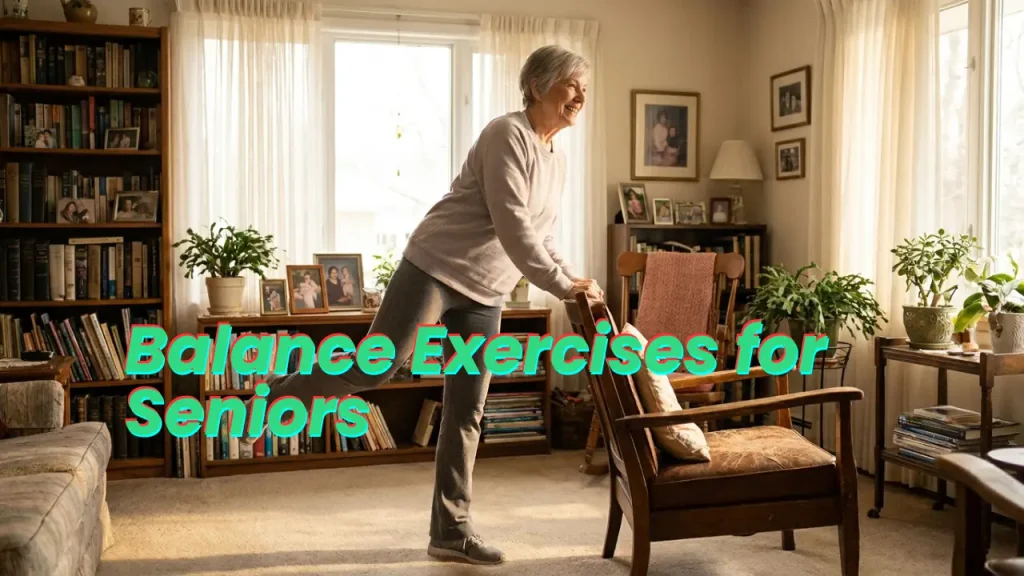
Here’s the quick version: stand on one leg while holding a chair, walk heel-to-toe across the room, shift your weight slowly from foot to foot. Do a handful of moves like that three or four times a week and most people feel steadier within a few weeks — not months, weeks.
That’s the short answer. Here’s the longer one, because “do some balance exercises” doesn’t tell you much on its own.
We hear from a lot of readers, and honestly a lot of our coaches’ own clients, that balance training is the thing everyone skips. Squats get done. Walks get done. Balance work gets pushed to “someday.” Then someone catches a foot on a rug or a loose step, and suddenly it’s not theoretical anymore.
You may also like: Workouts for Obese Beginners at Home: A Gentle, Safe Plan to Lose Belly Fat
Table of Contents
Why balance declines with age
Balance isn’t one thing. It’s three systems working together: your inner ear, your eyes, and the sensors in your muscles and joints telling your brain where your body is in space. All three tend to weaken a little with age, and leg muscle drops off too. That’s why a 70-year-old trips over the same crack in the sidewalk a 30-year-old walks past without even noticing it’s there.
And the scale of this is bigger than most people assume. According to the CDC, more than one in four adults over 65 falls each year — and fewer than half of them tell a doctor about it. Falling once roughly doubles your odds of falling again. Once you know that, balance work stops looking optional. It’s closer to brushing your teeth than to a gym hobby: skip it long enough and the damage adds up quietly.
None of this is set in stone, though. Balance is trainable at almost any age, and older adults doing structured balance programs tend to show real, measurable improvement within eight to twelve weeks. If anyone tells a 75-year-old it’s “too late to start,” they’re wrong.
Take a client one of our coaches worked with — a woman in her late 70s who hadn’t done any structured exercise in years. On day one she could barely hold a single-leg stance for three seconds without grabbing the chair. Nothing unusual there. Six weeks of consistent, gentle practice later, she was holding it for 20 seconds and walking down stairs without white-knuckling the rail. That kind of jump is common when the training is consistent, not some rare success story.
Honestly, balance exercises for seniors work more like a skill than a strength — closer to learning to type than to building bigger arms. Keep at it and your nervous system starts catching up fast: quicker to read what your feet are telling you, quicker to correct your hips, better at catching a wobble before it turns into an actual fall. That’s the whole reason a little most days beats one brutal session on a Saturday. You’re not out to exhaust the muscle here. You’re teaching the wiring. And wiring learns from reps, not from sweat.
How often should seniors do balance exercises?
Three to four sessions a week, 15–20 minutes each, is the range most physical therapists land on. Daily works too, as long as the moves stay gentle. Consistency matters more than frequency — six weeks of stopping and starting won’t move the needle much, but six steady weeks usually will.
A few things worth knowing before you start:
- Wear flat, supportive shoes. Socks on tile is how a lot of falls actually begin.
- Keep a sturdy chair or countertop within arm’s reach for everything below.
- Sharp pain or real spinning dizziness means stop. A little wobble is normal; the room spinning isn’t.
- Mornings tend to work best — reaction time and balance are both measurably a bit slower later in the day for most older adults.
9 balance exercises for seniors at home
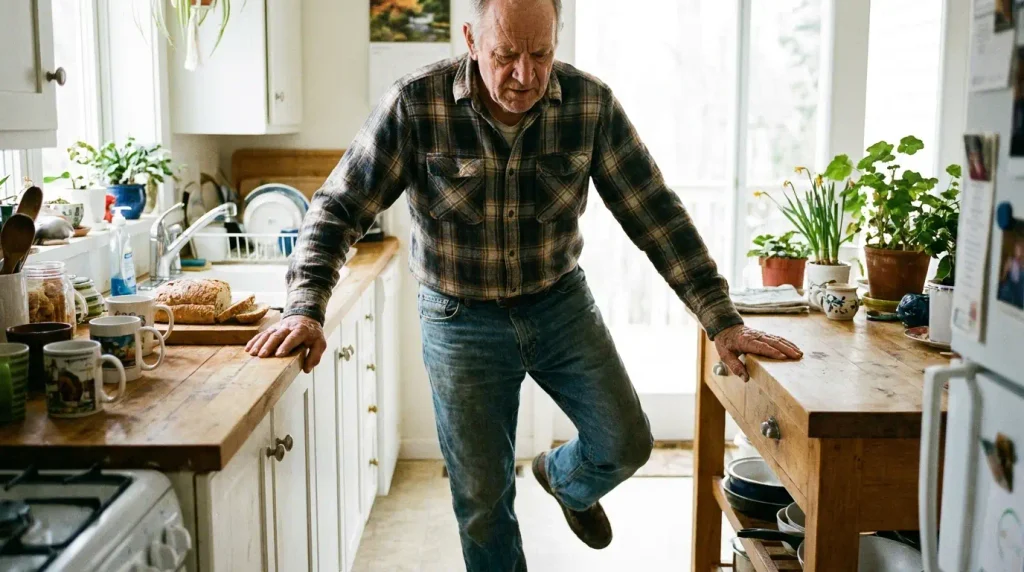
No equipment, no gym membership, nothing beyond a chair and some floor space. These go from easiest to hardest. Start at the top, and only move down once a level feels boring rather than shaky.
1. Single-leg stance. Hold the back of a chair, lift one foot a few inches, hold 10–30 seconds, switch legs. Three rounds per side. This is the foundation — almost every other move on this list builds on it.
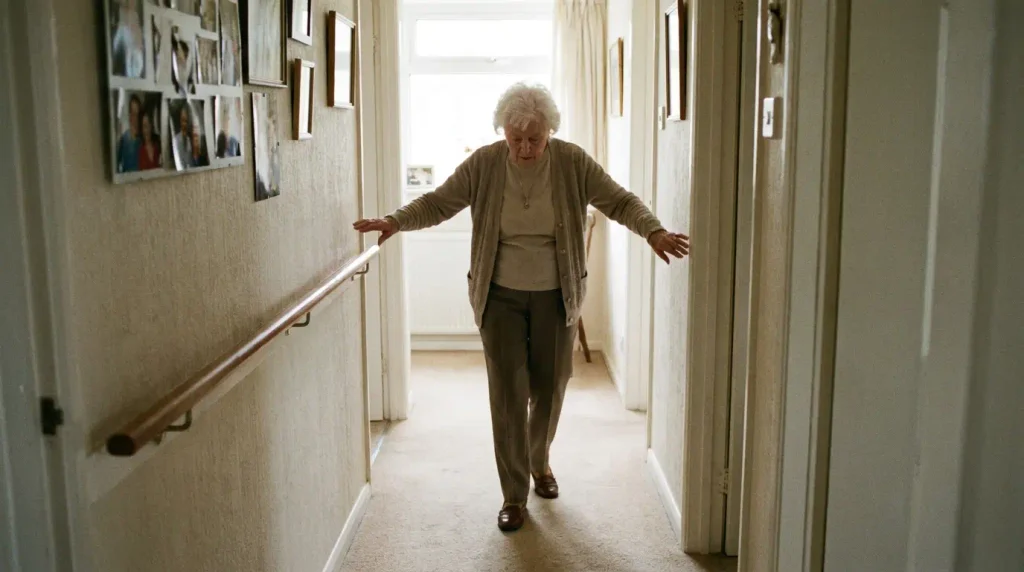
2. Heel-to-toe walk. Walk a straight line, heel of one foot touching the toes of the other, like a tightrope. Ten steps forward, then back. Wall nearby, always.
3. Weight shifts. Feet hip-width apart, shift weight slowly onto the right foot, hold two seconds, shift left. Ten each side. Sounds too easy. It isn’t, once you actually slow down and feel it happening.
4. Sit-to-stand. Stand up from a chair without using your hands if you can, then sit back down under control. Ten reps. This builds the leg strength balance actually runs on — you can’t balance well on weak legs, period.
5. Clock reach. Picture a clock face on the floor around you. Reach one foot out to 12, then 3, 6, and 9, tapping lightly and returning to center each time. Five rounds per foot.
6. Marching in place. Lift knees to hip height, alternating, for 30 seconds. Add arm swings once it feels stable. Simple move, but it trains hip stability that a lot of other exercises just assume you already have.
7. Side leg raises. Holding a chair, lift one leg straight out to the side, lower slowly. Ten reps per leg. Builds the outer hip muscles that stop you tipping sideways — an underrated cause of falls.
8. Standing on a cushion. Once single-leg stance feels solid on flat ground, try it on a folded towel or thin cushion instead. The unstable surface forces your ankle and foot muscles to work harder.
A dedicated balance pad (like this one ) gives a bit more resistance than a folded towel and holds its shape better over time
9. Tai chi weight transfer. Wide stance, shift your weight slowly forward onto the front foot, then back onto the rear one, moving like you’re wading through water. This comes straight out of tai chi, and it’s one of the better balance exercises for seniors around — the slow, controlled pattern is exactly what trains proprioception.
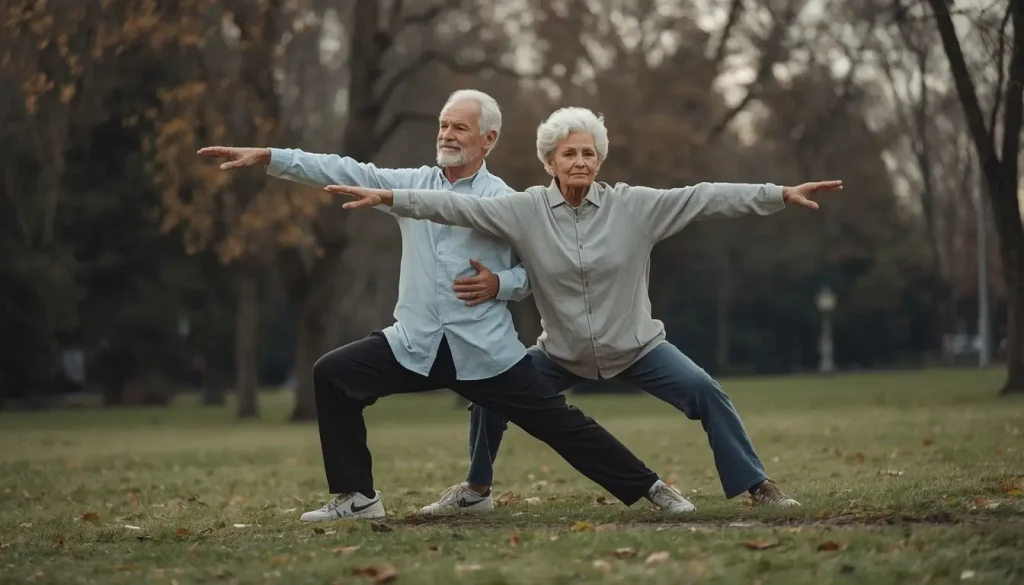
Short on time? Do 1, 3, and 4. Those three cover single-leg stability, weight control, and leg strength, and they’re what our coaches hand to anyone brand new to this.
Balance exercises for seniors to prevent falls: the safety rules
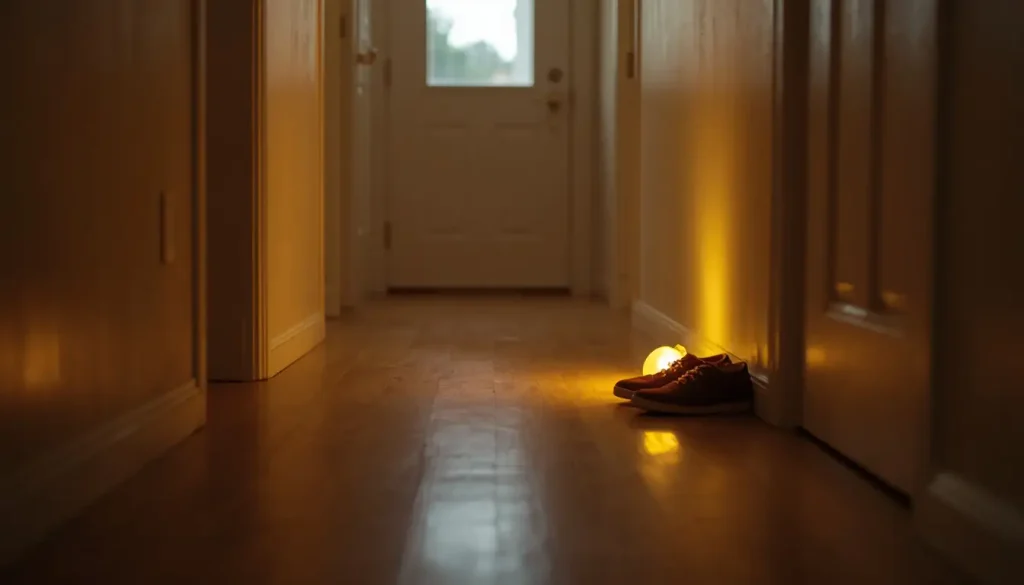
The exercises above only help if you do them safely — this is where people either build real confidence or scare themselves off after one bad wobble.
Never train alone in a room with hard corners or sharp furniture nearby. If you’re on medication that causes dizziness (some blood pressure drugs do this), check with your doctor first, and have someone else in the house while you train. And go slow — jumping from “can barely hold single-leg stance for five seconds” to “standing on a cushion” in a week is how people quit, not how they improve.
There’s a fourth rule that gets left out of most guides: lighting matters more than people think. A dim hallway or a poorly lit stairwell turns a manageable balance challenge into a real hazard, especially since older eyes take longer to adjust. Train in a well-lit room. Keep your footwear consistent too — practicing barefoot and then wearing slick-soled shoes outside means you’ve trained for a surface you don’t actually walk on. If bare floors are a problem in your home, non-slip grip socks solve it without needing actual shoes indoors.
Somewhere between 28% and 45% of older adults experience a fall each year, often tied to these natural age-related balance changes. The encouraging part is what happens on the other side of consistent training — it slows the decline, and for plenty of people it reverses it. That’s not a marketing line. It’s what shows up again and again in research on structured balance programs.
Should balance training be paired with strength work?
Yes — and this is where a lot of home routines fall short. Balance work does best alongside basic leg and core strength training, not in place of it. Weak quads and hips will make even good balance technique fail the moment it’s tested for real: stepping off a curb, catching yourself on a moving bus, standing up from a low couch. Two strength sessions a week (chair squats, wall push-ups, calf raises) paired with three balance sessions is roughly what physical therapists prescribe in fall-prevention programs, and it’s a solid target for most seniors.
We see this pattern constantly: someone does balance work faithfully, skips strength training, then can’t figure out why stairs still feel unsteady. They’re not two separate problems. Same problem, two angles.
When to see a doctor about balance
Sudden balance problems, a spinning room rather than a wobble, a fall that’s already happened, or dizziness paired with chest pain, slurred speech, or numbness — none of that waits for a home routine. Get urgent care. For balance that’s declining gradually and mildly, a physical therapist can run a real assessment and build something tailored to your specific weak points, which no article, including this one, can actually do for you.
FAQ
What is the single best balance exercise for seniors?
Single-leg stance, no contest. It directly trains the stabilizing muscles in the ankle, knee, and hip that most falls expose, and it scales from ten seconds holding a chair all the way up to genuinely advanced — with zero equipment needed. If you only ever do one of the balance exercises for seniors on this list, make it this one.
How long does it take to improve balance as a senior?
Most people notice a real difference in four to eight weeks of steady practice, three to four times a week. Full functional improvement — fewer stumbles, more confidence on stairs — usually shows up closer to the eight-to-twelve-week mark. Balance exercises for seniors aren’t a quick fix, but they’re a fast one by fitness standards.
Can balance exercises for seniors really prevent falls?
Yes. Structured balance exercises for seniors to prevent falls sit among the most well-supported strategies in fall-prevention research, right alongside strength training and clearing hazards at home. Nothing erases the risk completely, but this measurably lowers it.
What balance exercises for seniors at home need no equipment at all?
Single-leg stance, weight shifts, sit-to-stands, and marching in place. All four need nothing but a chair and a few square feet of floor, which makes them the easiest place to start with balance exercises for seniors at home.
Is tai chi or yoga better for senior balance?
Both work, and the better one is whichever you’ll actually keep doing. Tai chi’s slow, continuous movement is especially good for proprioception; yoga adds more strength and flexibility on top. A lot of seniors doing balance exercises end up combining the two rather than picking one.
Do balance exercises for seniors help with fear of falling?
Often, yes, and this matters more than people expect. Fear of falling makes people move less, which weakens muscles further and actually raises fall risk. Balance exercises for seniors that are visibly working — where you can feel yourself getting steadier — tend to break that cycle better than reassurance ever does.
Can balance exercises for seniors be done sitting down?
To some extent, yes, and it’s worth knowing for anyone recovering from an injury or managing a condition that limits standing. Seated versions — ankle circles, seated marching, weight shifts while seated with feet planted — still train some of the same signals between feet, hips, and brain. They’re a reasonable starting point, but standing balance exercises for seniors work better once it’s safe to progress, since a lot of real-world balance happens on your feet, not in a chair.
The bottom line
You don’t need a gym membership or a trainer standing over you for any of this. What you actually need is a chair, a few minutes a handful of times a week, and enough patience to get through the wobbly early days without giving up. Start now with single-leg stance and sit-to-stands — nothing fancier than that. Once those start to feel boring rather than shaky, that’s your cue to move on to the harder stuff. And yeah, boring is the goal. Boring means it’s working.
A quick note: this is general information, not medical advice. If you’ve already had a fall, deal with ongoing dizziness, or have a diagnosed balance condition, run any new routine by a doctor or physical therapist first. Reviewed for accuracy by the Bodylix fitness content team.
Sources: CDC, Facts About Falls (cdc.gov/falls); ELDERGYM clinical resource on elderly balance exercises.
Discloures: This article contains affiliate links. We may earn a small commission at no extra cost to you.
Read Also: 15 Best Foods for Weight Loss Over 40 (That Actually Work)
