
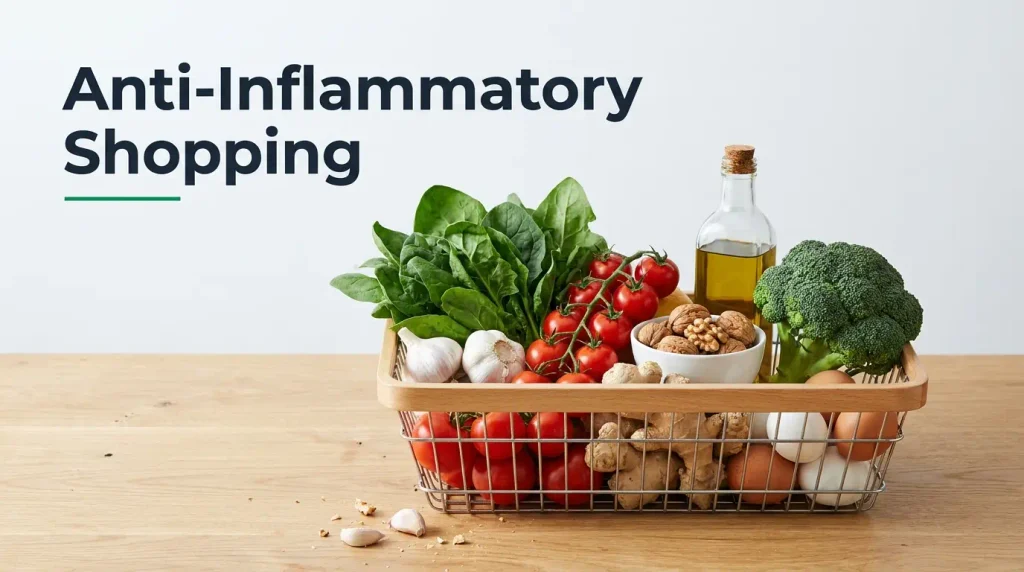
Anti inflammatory shopping is simple in theory. More produce, healthy fats, and whole foods. Less sugar, refined oil, and processed meat. That’s it. That’s the whole idea.
The hard part isn’t knowing this. It’s standing in an aisle with a cart half full and no clue what actually belongs in it. We hear this from the Bodylix community constantly: people read the articles, nod along, and then freeze at the store because nobody ever hands them a real list. So here’s one. A full anti-inflammatory grocery list, the foods worth skipping, and a shopping approach that works whether you’re pushing a cart through a supermarket or haggling at a Kathmandu sabji bazaar.
You may also like: 10 Best Home Workouts for Beginners You Can Do Without Equipment
Table of Contents
What anti inflammatory shopping list actually means
Chronic, low-grade inflammation isn’t the swelling you get from twisting an ankle. It’s quieter than that. It builds for years without announcing itself, and diet is one of the biggest levers you have over it. Houston Methodist puts it plainly: a diet heavy in unhealthy fats, added sugars, and sodium plays a major role in driving that kind of inflammation. Flip that logic around and you get the whole point of anti inflammatory shopping list: buy more of what lowers that load, buy less of what raises it.
This isn’t some passing wellness fad either. EatingWell’s 2025 food trends report clocked a 16% jump in reader interest in anti-inflammatory eating over the previous year. And it’s stuck around. People are figuring out this was never about cutting entire food groups. It’s about which version of a food ends up in your cart. White rice or brown? Vegetable oil or olive oil? Sausage, or grilled fish? Small swaps. Repeated weekly. They add up faster than people expect.
Here’s an opinion, stated plainly: most guides oversell the superfood angle. One handful of blueberries will not undo three fast-food dinners. It won’t. What actually moves the needle is the pattern of your weekly grocery list, not a miracle ingredient you toss in once and forget about.
Harvard Health Publishing has made a similar point for years. The anti-inflammatory diet isn’t really a diet with a start date and an end date. It’s more of a template you keep coming back to (plants, healthy fats, whole grains) rather than a rigid meal plan you follow for six weeks and abandon. That’s honestly why “anti inflammatory shopping list” is the more useful phrase. A diet implies a finish line. Shopping is just something you already do every week. You’re only changing what lands in the cart.
So why bother building a whole habit around this? Chronic inflammation has been linked to heart disease, type 2 diabetes, certain cancers, and joint conditions like arthritis. One bag of chips doesn’t cause diabetes, to be clear. But the accumulated pattern, cart after cart, month after month, either works for your body or against it. There’s not much middle ground over a long enough timeline.
The full anti inflammatory grocery list
Here’s the anti-inflammatory grocery list, broken into sections so you can walk the store (or the bazaar) in order instead of doubling back four times because you forgot the ginger.
Produce — fill half your cart here:
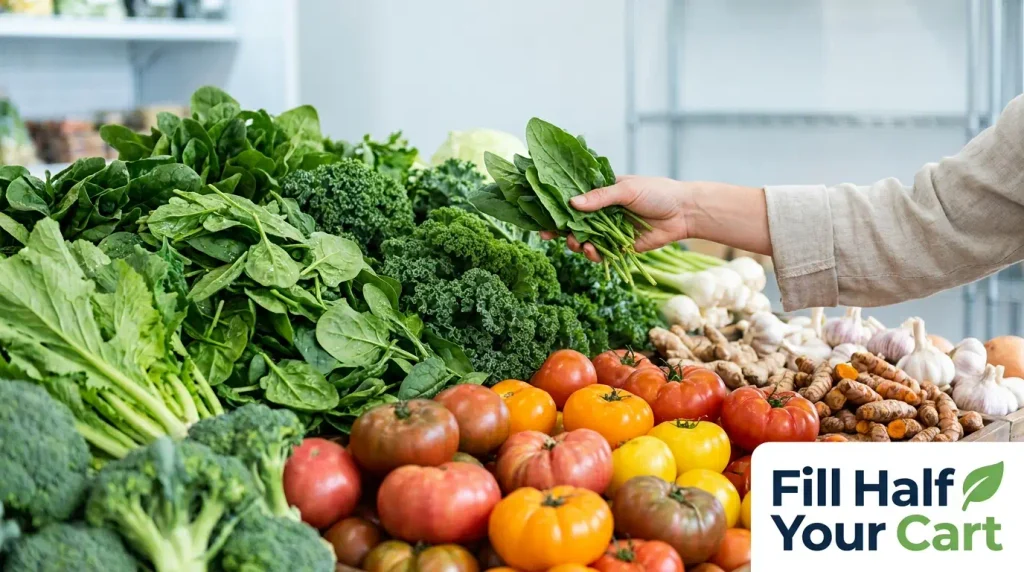
- Leafy greens: spinach, kale, mustard greens (saag works great)
- Berries, or a seasonal stand-in like pomegranate if berries aren’t local or affordable
- Broccoli, cauliflower, and other cruciferous vegetables
- Tomatoes, especially cooked — lycopene actually increases with heat
- Onions and garlic. Cheap, everywhere, doing more work than they get credit for
- Fresh ginger and turmeric root, not just the powdered jars
Proteins:
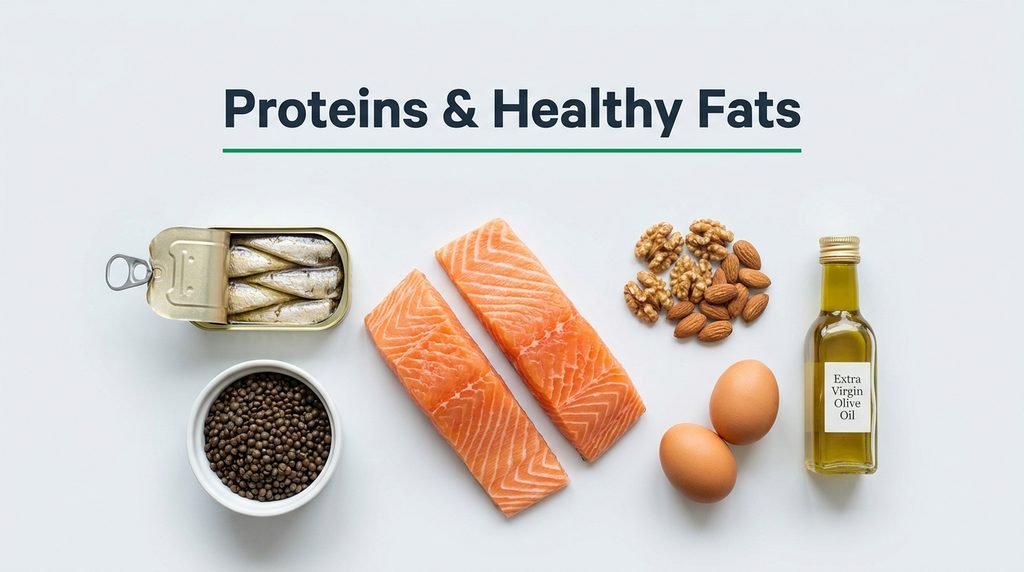
- Fatty fish: salmon, sardines, mackerel, or local river fish where you can get it
- Eggs, in moderation
- Lentils and beans. Dal is doing more for you here than most people give it credit for
- Skinless chicken instead of red or processed meat
- Walnuts and almonds, a decent protein-and-fat combo when you’re not eating meat that meal
Fats and oils:
- Extra virgin olive oil
- Mustard oil, used traditionally across Nepal for generations and genuinely fine in moderation
- Avocado, when the price makes sense
- Ghee in small amounts. Traditional. Not the villain some diet blogs make it out to be
Pantry and spices:
- Turmeric powder — pair it with black pepper, which boosts absorption
- Cinnamon
- Green tea or black tea, unsweetened
- Whole oats, quinoa, or brown rice in place of refined grains
- Dark chocolate, 70% cacao or higher, in small doses
That’s the backbone of any anti-inflammatory grocery list. Notice what’s missing: nothing exotic, nothing that needs a specialty shop three towns over. That’s on purpose.
Inflammatory foods to avoid (and why)

You can’t really talk about anti inflammatory shopping list without naming the inflammatory foods to avoid. Otherwise you’re just stacking good stuff on top of a bad pattern instead of actually replacing it.
- Refined grains. White bread, excess white rice, pastries. Processing strips out the fiber and nutrients that would otherwise make these anti-inflammatory, and they spike blood sugar fast.
- Processed and red meat. Bacon, sausages, deli meat, hot dogs. High in saturated fat and sodium. The processing itself seems to matter as much as the meat does.
- Sugary drinks and added sugar. Soda, sweetened tea, packaged juice. Probably the single easiest cut you can make, with the biggest payoff for the least effort.
- Fried foods and reused frying oil. Common at street stalls, common at home too. High heat plus cheap, recycled oil is a double hit.
- Omega-6-heavy vegetable oils, in excess. Canola, safflower, sunflower, and peanut oils aren’t villains outright. Your body needs some omega-6. But research points to a balance with omega-3s, not an overload of one and a shortage of the other.
- Trans fats. Check for “partially hydrogenated oil” on labels. Rare in home cooking these days, still common in packaged snacks and bakery goods.
Here’s a take we’ll stand behind: skip the “anti-inflammatory” branded snack packs entirely. Half of them are ultra-processed junk with a pinch of turmeric sprinkled on for the marketing angle. Read the ingredient list, not the front of the box. That’s the real test, every time.
How to shop smart, aisle by aisle
Picture this. Fifteen minutes on the clock, a half-formed list in your notes app, and a store that rearranged its shelves again since last month. Annoying, but workable.
Start at produce and build outward, filling roughly half your basket before you even touch anything packaged. Then hit proteins, checking for fresh fish or lean cuts before defaulting to whatever’s stacked on the endcap. Oils and pantry staples come next, and this is where reading a label actually pays off. “Vegetable oil blend” and “cold-pressed olive oil” sit two feet apart on the shelf. They are not the same thing, not even close.
If you shop at a local sabji bazaar instead of a supermarket, you’re already ahead. Fresh, unpackaged produce and local greens are about as close to ideal anti inflammatory shopping list as it gets. No label to squint at. Usually cheaper too.
Reading labels without losing your mind. You don’t need a chemistry degree for this. Three checks cover most of it. Is sugar, or one of its aliases (corn syrup, dextrose, maltose), sitting in the first three ingredients? Does “partially hydrogenated” show up anywhere? Is sodium per serving over 400mg for something you’d realistically eat a full portion of? Two yeses out of three, put it back on the shelf. Takes about ten seconds once you’ve done it a handful of times. Stops feeling like a chore fast.
One more thing, and it’s a small one: don’t let anyone talk you out of the frozen aisle. Frozen vegetables and fruit get flash-frozen near peak ripeness, which sometimes means they’ve held onto more nutrients than “fresh” produce that spent a week in transit before it hit the shelf.
Budget-friendly swaps that still work
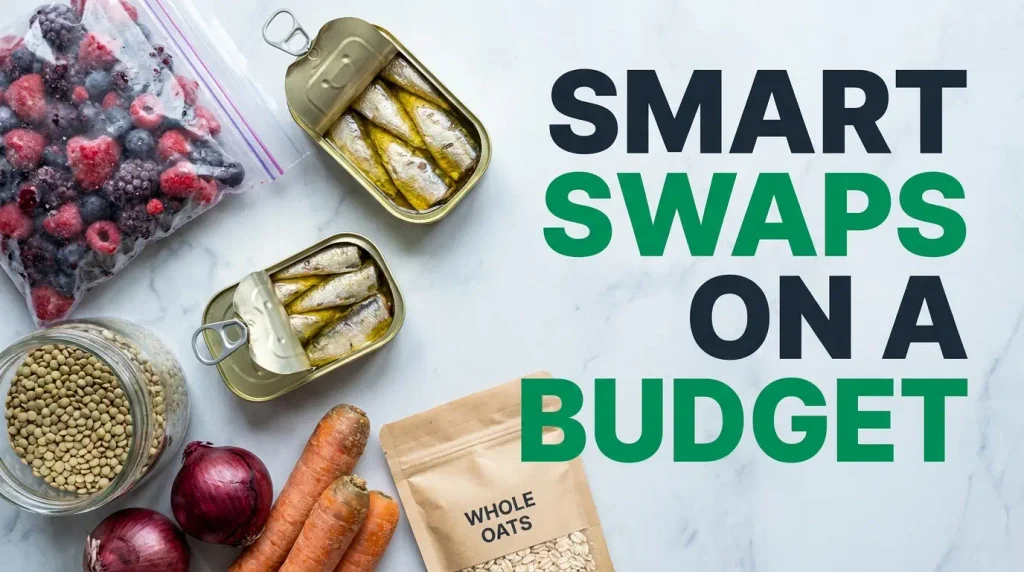
Anti inflammatory shopping list doesn’t have to torch your grocery budget. Frozen berries work just as well as fresh in a smoothie. Cost less, last longer, no argument there. Canned sardines or mackerel deliver roughly the same omega-3s as fresh salmon, at a fraction of the price. Dried lentils and beans beat canned on cost per serving if you’ve got ten spare minutes to soak them the night before. And seasonal, local produce beats imported “superfoods” almost every single time. A Nepali winter carrot is doing real work. It just doesn’t have a marketing team behind it.
Worth buying online: our picksSome anti-inflammatory staples are worth ordering online instead of hunting them down locally, either because quality varies wildly in stores or because a good version just sits in the pantry longer. These aren’t filler picks. They’re also some of the most-searched items in this space right now, for good reason.
Loose-leaf green tea. Skip the bagged stuff loaded with flavoring syrups. Plain loose leaf gets you the polyphenols without the sugar hiding in there. Shop on Amazon
Extra virgin olive oil, cold-pressed, dark bottle. Look for a harvest date, not just an expiry date. That’s the freshness signal that actually matters. Shop on Amazon
Wild-caught canned salmon or sardines. Roughly the same omega-3 profile as fresh fillets, a fraction of the price, and it won’t go bad forgotten in the back of your fridge. Shop on Amazon
Turmeric curcumin with black pepper (piperine). The piperine actually matters here. Turmeric alone absorbs poorly without it. Shop on Amazon
Chia seeds or ground flaxseed. Stir into oats or yogurt. Flax needs to be ground, not whole, or it just passes through undigested. Shop on Amazon
Raw walnuts, bought in bulk. Cheaper per ounce than the little snack-size bags, and they’ll keep for months in the freezer. Shop on Amazon
Bodylix is a participant in the Amazon Associates program. We may earn a commission on qualifying purchases made through these links, at no extra cost to you. We only link to categories we’d genuinely recommend to a friend.
Sample one-week shopping list
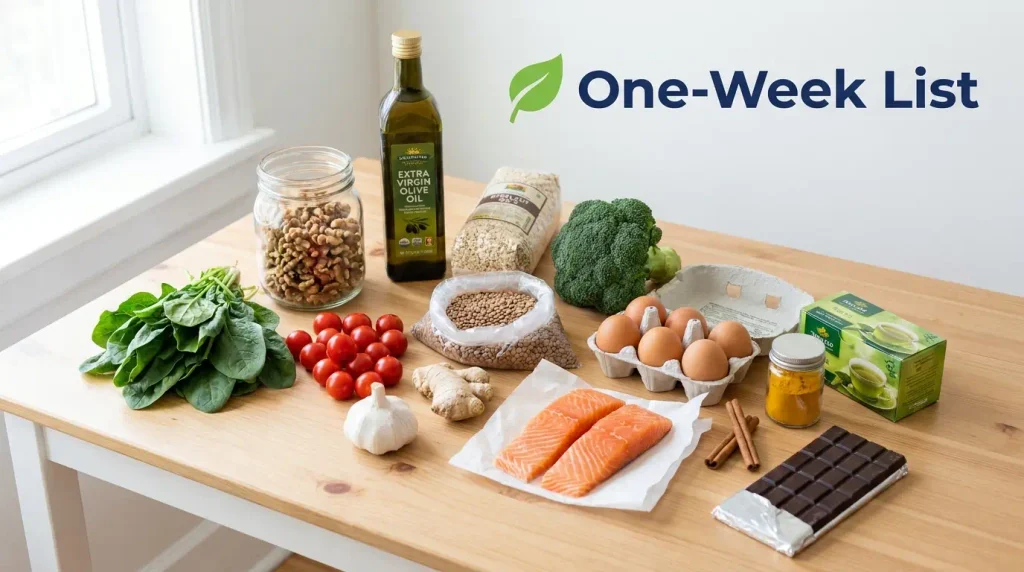
Here’s a trimmed version you can screenshot before you walk out the door: spinach, tomatoes, garlic, ginger, one seasonal fruit, broccoli, lentils, two servings of fatty fish, eggs, walnuts, olive oil, oats, turmeric, cinnamon, green tea, and a small block of dark chocolate.
Sixteen items. Covers produce, protein, fat, and pantry in one pass. Swap things in and out based on what’s actually fresh that week. A rigid list is the fastest way to talk yourself out of following it.
FAQ
What is anti inflammatory shopping list?
Choosing groceries (produce, proteins, fats, pantry staples) that lower chronic inflammation rather than trigger it, while limiting refined sugar, processed meat, and low-quality oils.
What’s the number one food to cut for inflammation?
Added sugar, especially from drinks. Easiest single change, fastest payoff, and it hides in more packaged food than most people expect.
Is mustard oil anti-inflammatory or inflammatory?
Used traditionally and in moderation, it’s not a major driver either way. The bigger culprit is reused frying oil at high heat, no matter which oil you started with.
Can I eat anti-inflammatory on a tight budget?
Yes, genuinely. Frozen produce, canned fish, dried legumes, and seasonal local vegetables cost less than “clean eating” marketing implies, and they do the same nutritional job.
How fast will an anti-inflammatory diet actually work?
Some people feel an energy shift within one to two weeks. Measurable changes in inflammatory markers usually take several weeks to months of consistent eating. Not a three-day fix, not close.
Do I need supplements, or is food enough?
Food first, always. Whole turmeric root, oily fish, and walnuts outperform most supplement claims. A curcumin or fish oil capsule can fill gaps. It’s a backup plan, not the foundation.
One challenge before you go
Don’t overhaul your whole pantry this week. That never sticks. Pick three items off the avoid list, swap in three from the Anti inflammatory shopping list or grocery list above, and hold that for a month. Just one month. Reassess after. It’s a smaller change, sure, but it’s one you’ll actually keep. That beats a perfect list you abandon by day ten.
Reviewed by the Bodylix nutrition team. This article is for general information and isn’t a substitute for personalized medical or dietary advice. Talk to a doctor or registered dietitian about your specific health situation, especially if you have an existing condition.
Related on Bodylix: 15 Best Foods for Weight Loss Over 40 (That Actually Work) | High Protein Meals for Muscle Building: 12+ Easy Meal Ideas | Pre Workout Nutrition: What to Eat Before the Gym (Plus Where Thavage Pre Workout Fits In)
Sources: Houston Methodist On Health, Cleveland Clinic, GoodRx, EatingWell 2025 Food & Nutrition Trends Report