
A high fiber diet plan means eating 25 to 38 grams of fiber a day from whole foods — lentils, beans, oats, vegetables, and fruit — instead of the 15 grams most people actually get. Pair it with enough protein and you’ve got a high protein high fiber diet for weight loss that keeps you full for hours, not forty minutes. That combo, not some extreme cut, is what actually makes people stick with a diet long enough to see results.
Honestly, that’s the whole article in two sentences. Everything below is the “how.”
Table of Contents
What Is a High Fiber Diet Plan, Really?
A high fiber diet plan is exactly what it sounds like: you build most of your meals around foods that are naturally loaded with fiber, instead of foods that have had the fiber stripped out during processing. That’s it. No powders required, no “detox” involved.
Here’s the part most guides skip. Fiber isn’t one thing. There’s soluble fiber, which dissolves in water and turns gel-like in your gut — think oats, beans, apples. And there’s insoluble fiber, which doesn’t dissolve and basically adds bulk that moves things along — think whole wheat, nuts, the skin of vegetables. A real high fiber diet plan uses both, because they do different jobs. Soluble fiber slows digestion and blunts blood sugar spikes. Insoluble fiber keeps you regular and reduces bloating over time.
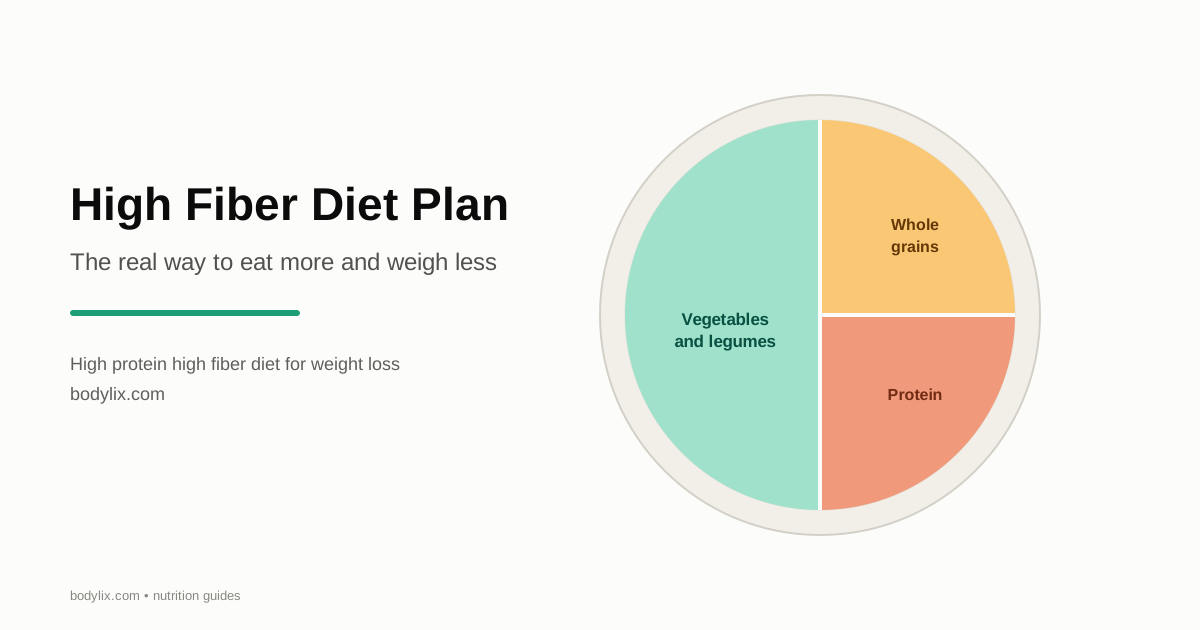
Picture the typical plate: white rice, a small piece of chicken, maybe two spoonfuls of vegetables shoved to the side. Now flip it. Vegetables and legumes take up half the plate, a fist-sized portion of whole grain sits next to them, and protein rounds it out. Same amount of food on the plate, completely different amount of fiber going in. That’s the entire shift.
Most people don’t need a rigid meal plan photocopied from a magazine. They need a repeatable pattern — and that’s what we’re building here.
You May like : Anti Inflammatory Shopping List: The Grocery List That Actually Works
Why Fiber Does More Than “Help Digestion”
Ask someone what fiber does. They’ll say “keeps you regular.” Fine. That’s maybe 20% of the story. The rest is where a real high fiber diet plan actually earns its keep.
Fiber slows down how fast food leaves your stomach. Simple as that. Oatmeal with berries at breakfast, you’re fine past 11 a.m. Cornflakes, and you’re back in the snack drawer by 10. Not willpower. Physics. Slower digestion means a steadier blood sugar curve — fewer spikes, fewer crashes, none of that shaky “I need sugar right now” panic an hour after eating.
There’s a cholesterol angle too, and it’s not fluff. Soluble fiber grabs cholesterol-loaded bile acids in your gut and drags them out. That’s a big reason high-fiber eating patterns keep showing up linked to lower LDL over time — the American Heart Association’s eating plan recommends 25 to 30 grams of fiber a day from food for exactly this reason. The current U.S. Dietary Guidelines set the bar at roughly 14 grams of fiber per 1,000 calories eaten, and honestly, that formula makes more sense than slapping one flat number on every human being alive.
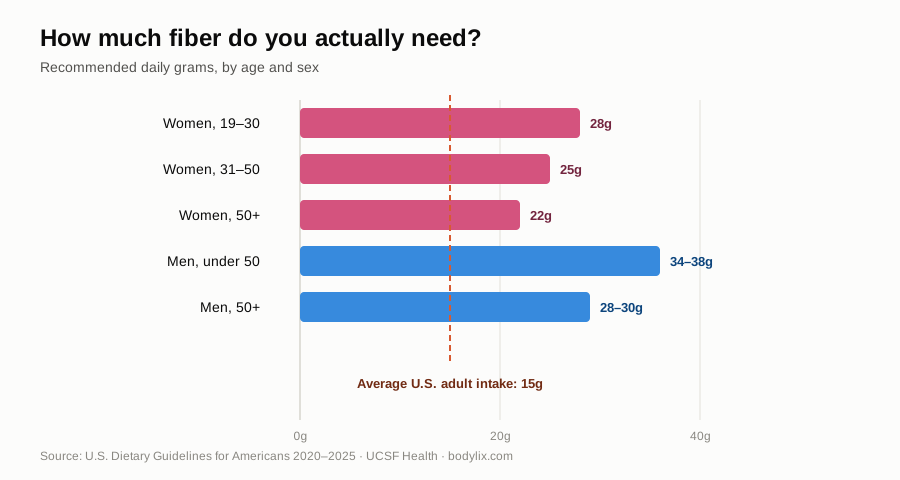
Here’s the stat that made our team sit up: average fiber intake in U.S. adults sits around 15 grams a day — about half of what’s recommended. Half. And nobody feels that gap the way they’d feel a missed coffee. No headache, no crash, no obvious signal. It just leaks out sideways — sluggish digestion, hunger that shows up way too early, weight that won’t budge even when the calorie math looks “fine” on paper. A high fiber diet plan doesn’t fix a dramatic problem. It fixes a quiet one that’s been running in the background for years.
How Much Fiber Do You Actually Need Per Day?
There’s no single magic number. Never trust anyone who gives you one. What matters is the range: adults generally need somewhere between 25 and 38 grams of fiber a day, depending on age and sex. Want it simpler? The Academy of Nutrition and Dietetics uses 14 grams of fiber per 1,000 calories as a rule of thumb. Eating 2,000 calories a day? You’re aiming for about 28 grams. Not exact. Close enough to build a plan on.
| Group | Daily fiber target |
|---|---|
| Women, 19–30 | ~28g |
| Women, 31–50 | ~25g |
| Women, 50+ | ~22g |
| Men, under 50 | ~34–38g |
| Men, 50+ | ~28–30g |
Or skip the math — use our fiber calculator to get your exact number.
Now the part people skip, then regret. Don’t jump from 15 grams to 35 overnight. Don’t. Your gut bacteria aren’t ready for that ambush, and the payback is gas, bloating, and a day you’ll want to forget by lunchtime. Add 5 grams every few days instead. Drink more water while you do it. That’s it — that one boring habit is what separates a sustainable high protein high fiber diet for weight loss from a diet you quit by Thursday, blaming fiber for a mess your own pacing caused.
Does a High Protein High Fiber Diet for Weight Loss Actually Work?
Short answer: yes, and the research on this is more solid than most diet trends get.
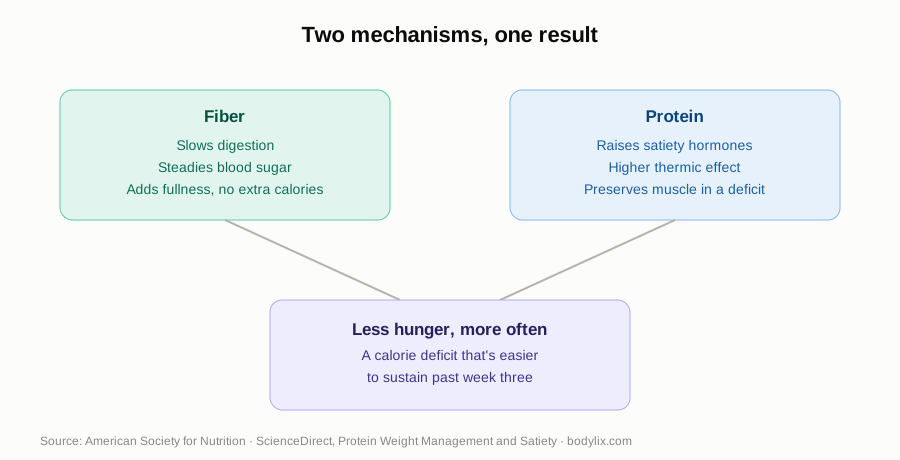
Fiber fills your stomach with volume and slows digestion. Protein does something different — it raises satiety hormones and has a higher thermic effect, meaning your body burns more calories just digesting it. Put them together and you’re attacking hunger from two angles instead of one, which is exactly why a high protein high fiber diet for weight loss tends to outperform diets that lean on just one or the other.
The data backs this up. In a controlled study, adults consumed a high-protein, high-fiber shake before breakfast and lunch for 12 weeks, and researchers found this combination led to greater weight loss than a lower-protein, lower-fiber version with the same calories, along with better cholesterol numbers. Separately, in a year-long trial comparing protein levels, the higher-protein group lost significantly more weight than the lower-protein group — about 9.4 kg versus 5.9 kg over the same period.
Fiber alone isn’t nothing, either. In a randomized trial comparing the two approaches directly, women following a high-protein plan lost slightly more weight and body fat than women on a high-fiber, high-carbohydrate plan, though both groups lost meaningful weight and improved their blood pressure and cholesterol. Read between the lines and the real finding isn’t “protein beats fiber.” It’s that both work, and stacking them works better than picking a side.
We’d honestly push back on one popular idea here — the notion that you need to choose between a “high protein diet” and a “high fiber diet,” like they’re rival camps. Most high-protein diets that flop long-term flop because they’re low in fiber, which makes them boring, constipating, and hard to sustain past week three. Add the fiber back in and the same protein target suddenly feels sustainable.
Your 7-Day High Fiber Diet Plan Framework
Forget rigid recipes for a second. Here’s the framework we’d actually hand someone starting out — a repeatable pattern, not a script.
Every day, aim for:
- 3 fiber “anchors” — one at each meal (lentils, beans, oats, whole fruit, or a big pile of vegetables)
- A palm-to-fist size protein source at each meal (eggs, paneer, chicken, fish, tofu, dal)
- At least 3 liters of water, more if you’re increasing fiber fast
- One “flex” meal where you eat what’s convenient, without guilt
Roughly how the week should feel:
- Days 1–2: Swap white rice for a 50/50 mix of rice and a fiber source like added lentils or extra vegetables. Small change, doesn’t feel like a diet yet.
- Days 3–4: Add a fiber-forward breakfast — oats, chia, or fruit with nuts — instead of just tea and biscuits.
- Days 5–6: Bump protein at lunch and dinner so each meal has a clear protein anchor, not just a garnish of meat.
- Day 7: Review. Did digestion feel off? Did hunger drop between meals? Adjust portions before repeating the cycle.
Best High Fiber Foods to Keep on Hand
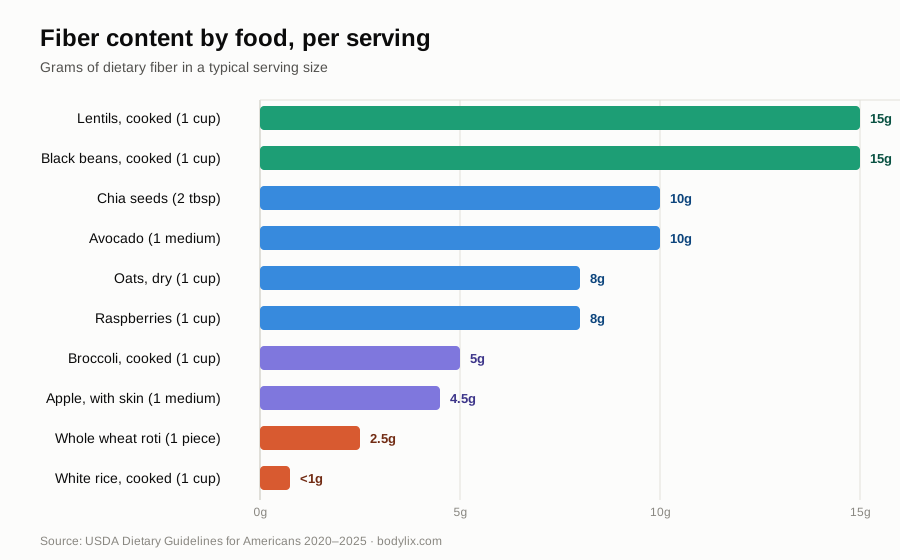
Not all “healthy” foods pull their weight on fiber. Here’s what actually does, with rough fiber content per typical serving:
| Food | Serving | Fiber (approx.) |
|---|---|---|
| Lentils (dal), cooked | 1 cup | 15g |
| Black beans / rajma, cooked | 1 cup | 15g |
| Chia seeds | 2 tbsp | 10g |
| Oats, dry | 1 cup | 8g |
| Avocado | 1 medium | 10g |
| Raspberries | 1 cup | 8g |
| Broccoli, cooked | 1 cup | 5g |
| Apple, with skin | 1 medium | 4.5g |
| Whole wheat roti | 1 piece | 2–3g |
| White rice, cooked | 1 cup | <1g |
Two things worth pointing out. First, beans and lentils per half cup carry roughly 5 to 7 grams of fiber, which is why researchers studying weight loss diets keep circling back to legumes — a bean-based, high-fiber approach paired with fiber supplementation in some studies produced meaningfully greater weight loss than standard diet-only approaches. Second — and this is the honest bit — white rice, the base of most meals here in Nepal, contributes almost nothing to your fiber count. That’s not a reason to cut it. It’s a reason to make sure the dal, the tarkari, and the saag on the same plate aren’t an afterthought.
Which, conveniently, is exactly how a traditional rice-and-lentils plate is built in many cultures when it’s not rushed: rice as the base carb, lentils for protein and fiber, a vegetable curry and leafy greens adding more fiber and micronutrients, a side pickle for flavor. Done properly, it’s basically a built-in high fiber diet plan that predates the term by a few centuries. The trick is portion balance — less rice, more lentils and vegetables, not the reverse — which is exactly what a solid high fiber diet plan for beginners comes down to in practice.
A Sample High Protein High Fiber Day, Meal by Meal
Numbers below are approximate and will shift with your exact portions — use them as a shape, not gospel.
Breakfast: Oats (1 cup dry) cooked with milk, topped with chia seeds and half a banana. Two boiled eggs on the side. Roughly 14g fiber, 25g protein. Prep time: 8 minutes.
Mid-morning: A small bowl of roasted chana (chickpeas) or a handful of almonds. About 6g fiber, 7g protein.
Lunch: Dal bhat tarkari (rice,lentils and curry)— 1 cup dal, 1 cup rice, a generous serving of seasonal vegetables, and a side of saag(leafy greens). Add a boiled egg or a piece of grilled chicken if you’re training. Around 18g fiber, 22–30g protein depending on the protein add-on.
Afternoon snack: An apple with the skin on, plus a spoon of peanut butter. About 5g fiber, 4g protein.
Dinner: Grilled fish or paneer with a large mixed vegetable stir-fry and a small portion of brown rice or whole wheat roti. Roughly 9g fiber, 30g protein.
Add it up and you land around 50 grams of fiber and 90-plus grams of protein — well past the minimum fiber target and solidly in high-protein territory for most body weights. That’s not a starvation plan. It’s a full day of eating that happens to be a genuinely high protein high fiber diet for weight loss, built from food that’s already sitting in most Nepali kitchens.
Mistakes People Make Starting a High Fiber Diet
Going from 15g to 40g in one day. Worth repeating — it’s the top reason people quit in week one. Bloating isn’t proof the diet is “working.” It’s proof you moved too fast.
Forgetting water. Fiber needs water to do its job. Skip it and insoluble fiber can make constipation worse, not better.
Treating fiber supplements as a shortcut. A fiber powder isn’t a bad tool, but it skips the vitamins, minerals, and satiety that come from the actual food. Use it as a backup, not a replacement for beans and vegetables.
Cutting carbs and fiber together. A lot of low-carb approaches accidentally gut fiber intake too, since beans, oats, and fruit all carry carbs. If weight loss is the goal, a high protein high fiber diet for weight loss beats a low-fiber, low-carb one for most people, simply because it’s easier to stick with past the first month.
No protein anchor at breakfast. Tea and a couple of biscuits is not a meal. It’s a snack pretending to be one, and it sets up a hunger spiral by 10 a.m.
Tools Worth Owning (and Ones You Can Skip)
You don’t need a cupboard full of gadgets to run a high fiber diet plan. You need three things that actually earn their shelf space, and the discipline to skip the rest.
Digital kitchen scale
Spec badge: Compact · Auto shut-off · Grams and ounces
Affiliate-disclosure: This post contains affiliate links. If you buy through one, Bodylix may earn a small commission at no extra cost to you. We only recommend things we’d actually put in our own kitchen.
A scale is the fastest way to stop guessing what “1 cup of lentils” actually looks like. Weigh it twice and your eyes recalibrate for good — after that, you rarely need the scale at all.
| Pros | Cons |
|---|---|
| Removes portion guesswork in under a week | One more thing to wash |
| Cheap — usually under $15–20 | Batteries needed |
| Works for fiber and protein tracking | Small screen, less readable for older eyes |
Who it’s for: Anyone starting a high protein high fiber diet for weight loss who keeps under- or over-estimating portions. Who should skip it: Anyone who’s already comfortable eyeballing a fist-sized protein portion or a cupped handful of grains.
Check current price on Amazon →
Glass meal-prep containers
Spec badge: Microwave-safe · Stackable · Airtight lid
Batch-cooked dal and vegetables genuinely last 3–4 days in the fridge when they’re sealed properly. This is less about the container and more about removing the daily friction that makes people quit a diet plan by day 10.
| Pros | Cons |
|---|---|
| Keeps batch-cooked dal and tarkari fresh longer | Heavier than plastic, can chip |
| No plastic leaching into hot food | Costs more upfront than plastic sets |
| Reheats straight in the microwave | Takes more cupboard space |
Who it’s for: Anyone batch-cooking dal, legumes, or vegetables for the week. Who should skip it: Anyone cooking fresh every single meal — nice to have, not essential.
Check current price on Amazon →
Plain psyllium husk or fiber supplement
Spec badge: Unflavored option available · Mixes in water or milk · No added sugar (check label)
Not a replacement for real food — a backup for the days your dal and vegetables don’t happen. Useful on genuinely busy days; not something to lean on long-term.
| Pros | Cons |
|---|---|
| Closes the gap on low-fiber days fast | No vitamins or minerals like whole food has |
| Cheap per serving | Needs plenty of water or it backfires |
| Easy to dose precisely | Some brands add sugar — check the label |
Who it’s for: Anyone who’s honest that some weeks won’t hit 25–30g of fiber from food alone. Who should skip it: Anyone already comfortably hitting their fiber target through meals — food first, always.
Check current price on Amazon →
Skip entirely: fiber gummies, “detox teas,” and pre-packaged high-fiber snack bars priced at five times what a bowl of dal costs for a fraction of the nutrition. If you’re comparing two supplement brands and can’t decide, check the ingredient list before the price tag — the cheap one and the “premium” one are usually identical.
FAQ
How much fiber should I eat per day for weight loss?
Aim for 25 to 38 grams daily, adjusted for your calorie needs — roughly 14 grams per 1,000 calories eaten. Combine that with adequate protein for the strongest satiety effect and best results for weight management.
Can I start a high fiber diet plan and still eat rice?
Yes. Rice itself has almost no fiber, but pairing it with dal, vegetables, and legumes — like a traditional dal bhat plate — builds a genuinely high-fiber meal around it. No need to cut rice entirely.
Is a high protein high fiber diet for weight loss safe long-term?
Generally yes for healthy adults, when built from whole foods. People with kidney issues or digestive conditions should check with a doctor before raising protein or fiber significantly, since both can affect existing conditions differently.
How fast will I see results on a high fiber diet plan?
Digestion and hunger levels often improve within 1–2 weeks. Visible weight changes typically take 4–8 weeks of consistent eating, since fiber’s main role is making a calorie deficit easier to sustain, not creating one by itself.
Do I need a fiber supplement, or is food enough?
Whole food is enough for almost everyone. Supplements can help close a small gap, but they skip the vitamins, minerals, and fullness that come from eating actual lentils, vegetables, and fruit.
Our Honest Take
If you take one thing from this: stop thinking about fiber as a health checkbox and start treating it as your main weight-loss tool, sitting quietly next to protein instead of behind it.
Here’s what we’d actually suggest. Don’t start with a supplement. Don’t start by cutting rice. Start by adding one legit fiber anchor to each meal this week — dal at lunch, oats at breakfast, an extra vegetable side at dinner — and layer in a protein source at each one too. That’s the entire high protein high fiber diet for weight loss in practice. No app, no product, no extreme rules. Just a plate that looks different than it did last month.
Give it three weeks before judging it. Most people quit high fiber eating around day 4, right when the bloating from moving too fast peaks — which is exactly the point where it starts working, if you slow the ramp-up down and stick with it.
Reviewed by the Bodylix nutrition team. This article is for general information and isn’t a substitute for personalized medical or dietary advice. Results vary by individual. If you have a digestive condition, kidney disease, or another health concern, talk to a doctor or registered dietitian before making major changes to your protein or fiber intake.
Sources: U.S. Dietary Guidelines for Americans 2020–2025 (dietaryguidelines.gov); American Heart Association Eating Plan (via UCSF Health); Academy of Nutrition and Dietetics; American Society for Nutrition; ScienceDirect — Protein, Weight Management, and Satiety; NCBI PMC — Comparison of High Protein and High Fiber Weight-Loss Diets in Women.
For more practical fitness guides, visit : High Protein Meals for Muscle Building: 12+ Easy Meal Ideas | Pre Workout Nutrition: What to Eat Before the Gym (Plus Where Thavage Pre Workout Fits In) | 15 Best Foods for Weight Loss Over 40 (That Actually Work) |
