
How to Stay Fit at Home Without a Gym: Complete Beginner’s Guide
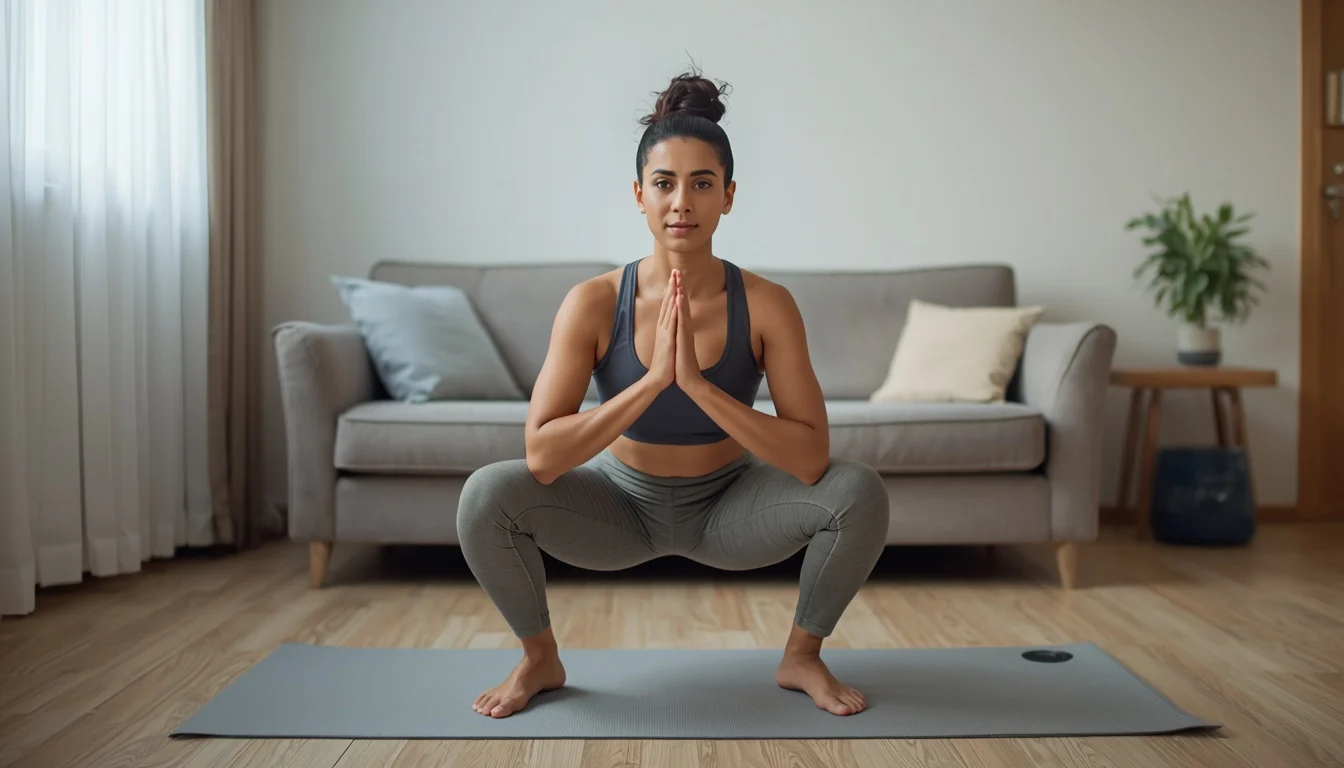
If you’ve been wondering how to stay fit at home without gym fees, a commute, or a crowded floor, here’s the short answer. Do a handful of bodyweight moves, add some cardio, eat sensibly, rest properly, and repeat for weeks. Twenty to thirty minutes a session is plenty.
That’s not a watered-down version of real training. The World Health Organization’s adult guidelines ask for at least 150 minutes of moderate activity a week, with extra benefits up to about 300, plus muscle-strengthening work on two or more days. Nothing in there says “machine.”
So why train at home? Four reasons come up again and again. You save money, because memberships add up fast. You skip the commute, which for plenty of people eats more time than the workout itself. Your schedule is yours, so 6 a.m. and 9:30 p.m. both work. And nobody sees your first wobbly push-up.
This guide covers no-equipment home workouts you can start tonight, a plan you can copy, simple food and water habits, and how to keep going once the first week’s excitement fades.
Fitness at home for beginners works best when it’s boring in a good way. Same few moves. Same time of day. Slowly harder.
How to start working out at home
Ten minutes of setup now saves you a dozen excuses later. If you’re figuring out how to start working out at home, do these three things first.
Pick one goal for now
Weight loss, strength, endurance: you can want all three, but choose one for your first eight weeks. Weight loss leans on more cardio and better food habits. Strength means slower reps and more push-ups. Endurance means longer, easier sessions. Most beginners get a bit of everything just by showing up, so don’t agonize over it.
Then write the goal down in one line, something like “three workouts a week for eight weeks.” A goal you can check off beats “get fit,” which never actually ends.
Make a small spot
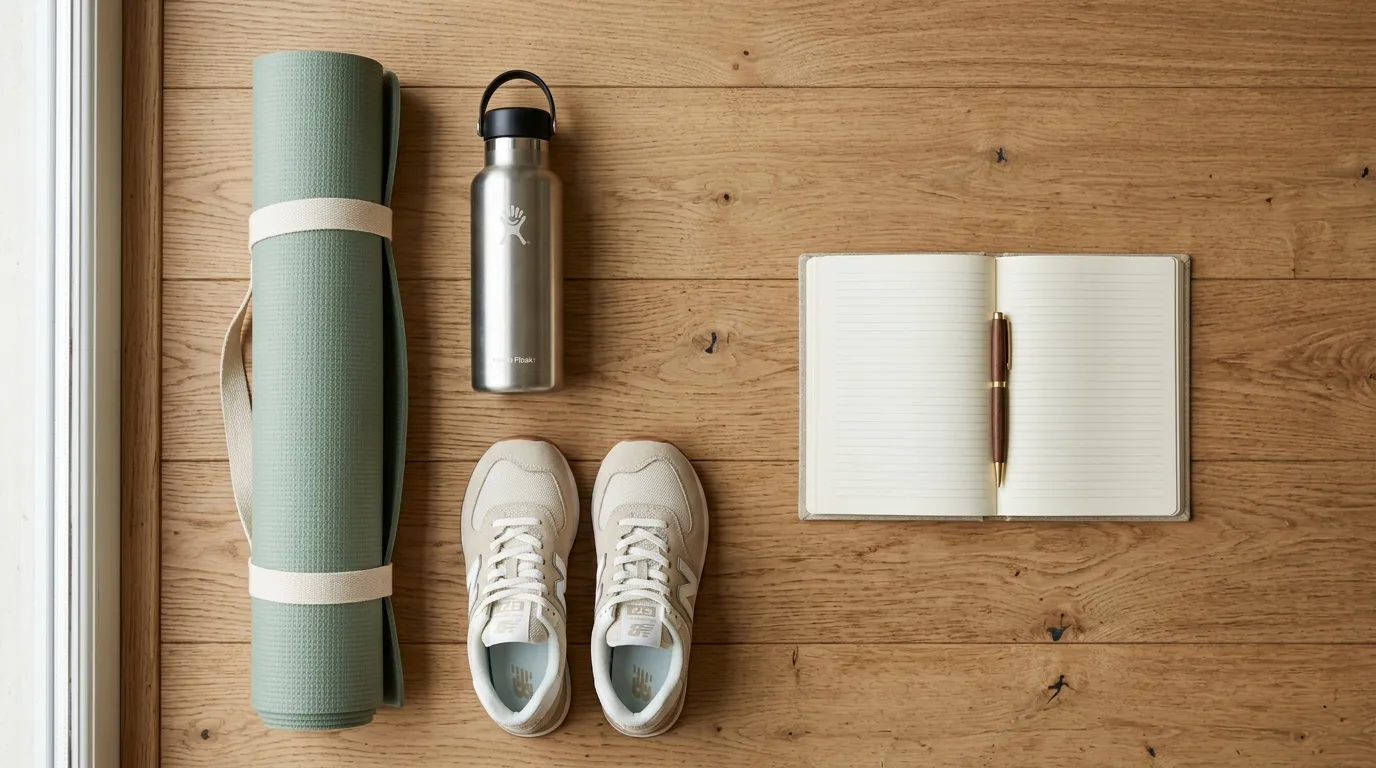
You need about two metres by one. A corner of the bedroom, a patch of rooftop, the gap beside the sofa. Lay down a yoga mat or a folded blanket and clear anything you’d trip over. On tile or polished wood, a non-slip exercise mat is a cheap fix for sliding hands and feet (pick below).
Ventilation matters more than people expect. In Nepal’s hot pre-monsoon months, open a window or point a fan at yourself, or you’ll be done in ten minutes for the wrong reason.
Choose a time you’ll actually keep
Morning or evening? Whichever you’ll repeat. Morning sessions get done before the day grabs your attention. Evenings can feel great after a stressful day, but they’re easier to skip. If you’re a night owl forcing yourself up for 6 a.m. workouts, you’ll quit by week three. Pick the slot your real life already has room for.
Non-slip exercise mat
A folded blanket works, so this isn’t a must-buy. A non-slip mat earns its keep on smooth floors, where hands and feet slide during push-ups and planks.
| Pros | Cons |
|---|---|
| Helps stop hands and feet sliding on smooth floors | A blanket does the same job on carpet |
| Gives knees and wrists something softer than the floor | Needs somewhere to store it |
Bodyweight exercises for beginners
Five moves cover nearly your whole body: push-ups, squats, lunges, planks and burpees. They’re the core of any set of bodyweight exercises for beginners, and the table shows what each one hits and how to make it easier.
| Exercise | Targets | Reps / Sets | Beginner modification |
|---|---|---|---|
| Push-ups | Chest, shoulders, arms, core | 3 × 8-12 | Do them on your knees |
| Squats | Legs, glutes, hips | 3 × 12-15 | Hold a chair for balance |
| Lunges | Legs, balance | 3 × 10 per leg | Hold a wall |
| Plank | Full core stability | 3 × 20-45 sec | Drop to your knees |
| Burpees | Full body plus cardio | 3 × 6-10 | Skip the jump |
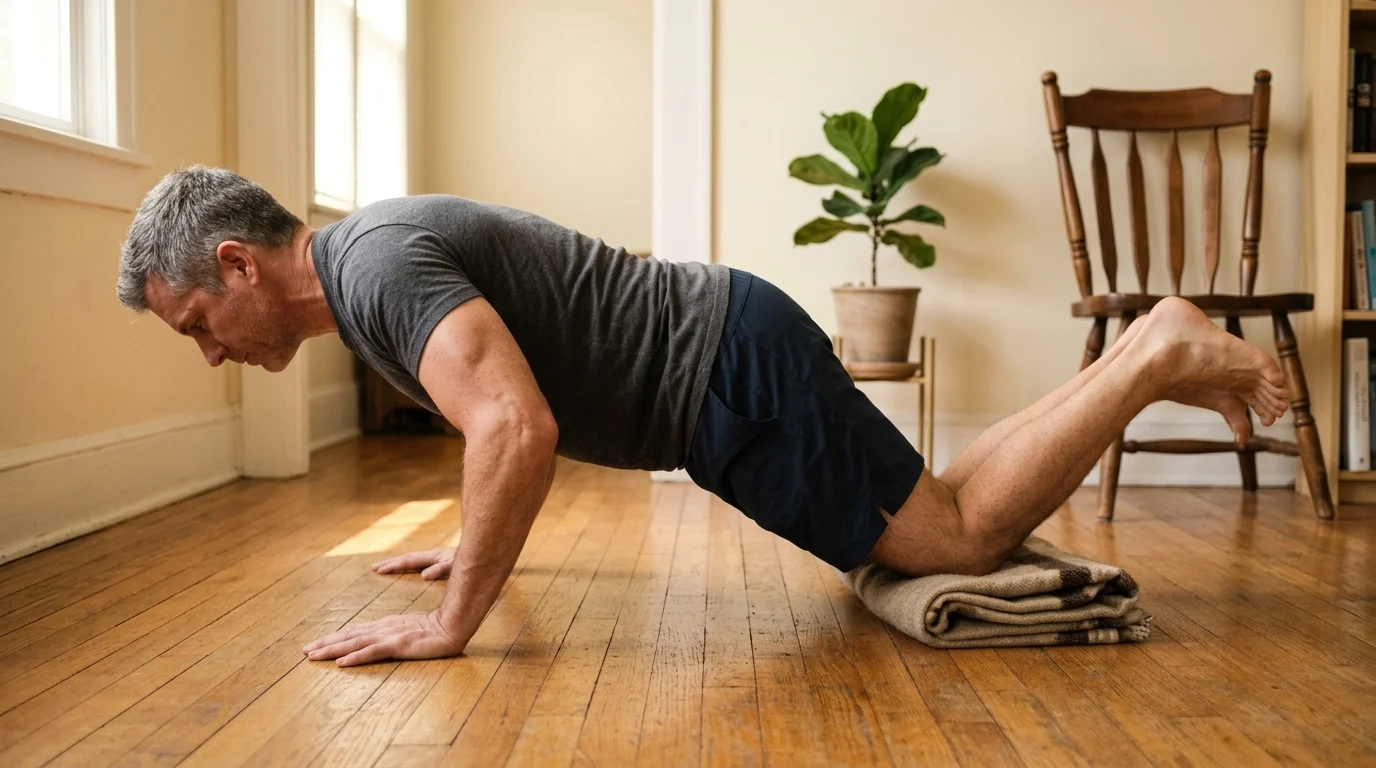
Rest 45 to 60 seconds between sets. Go slowly on the way down: a three-second lowering phase makes a squat feel far harder, and it costs nothing. Keep your body in one line on push-ups and planks, push your hips back on squats, and take a long enough step on lunges that your front knee stays over your ankle.
Say you can only manage three knee push-ups on day one. Fine. Four next week, five the week after, and you’ve got a real result.
Start with two sessions a week, leave a day between them, and add a third once you finish tired but not wrecked. Push-ups and squats leave your back out, so our guide to back exercises at home without equipment fills that gap with prone raises and bird dogs.
This is also how you stay fit without equipment for years, not just your first month.
Can you build muscle at home with no equipment?
Yes, as long as the work keeps getting harder. That’s progressive overload, and it’s the whole trick. To build muscle at home no equipment is needed beyond your own body, but you do have to nudge the difficulty: add two reps, slow the tempo, or move to a tougher version. Knee push-ups become full push-ups. Chair-assisted squats become unassisted ones, then single-leg lowers to a chair.
Your muscles can’t tell whether the resistance came from iron or from you.
We’d skip burpees for your first two weeks. They’re exhausting, and they’re the move that convinces plenty of beginners they hate exercise. Add them once squats and push-ups feel easy.
Home cardio exercises that need no gear
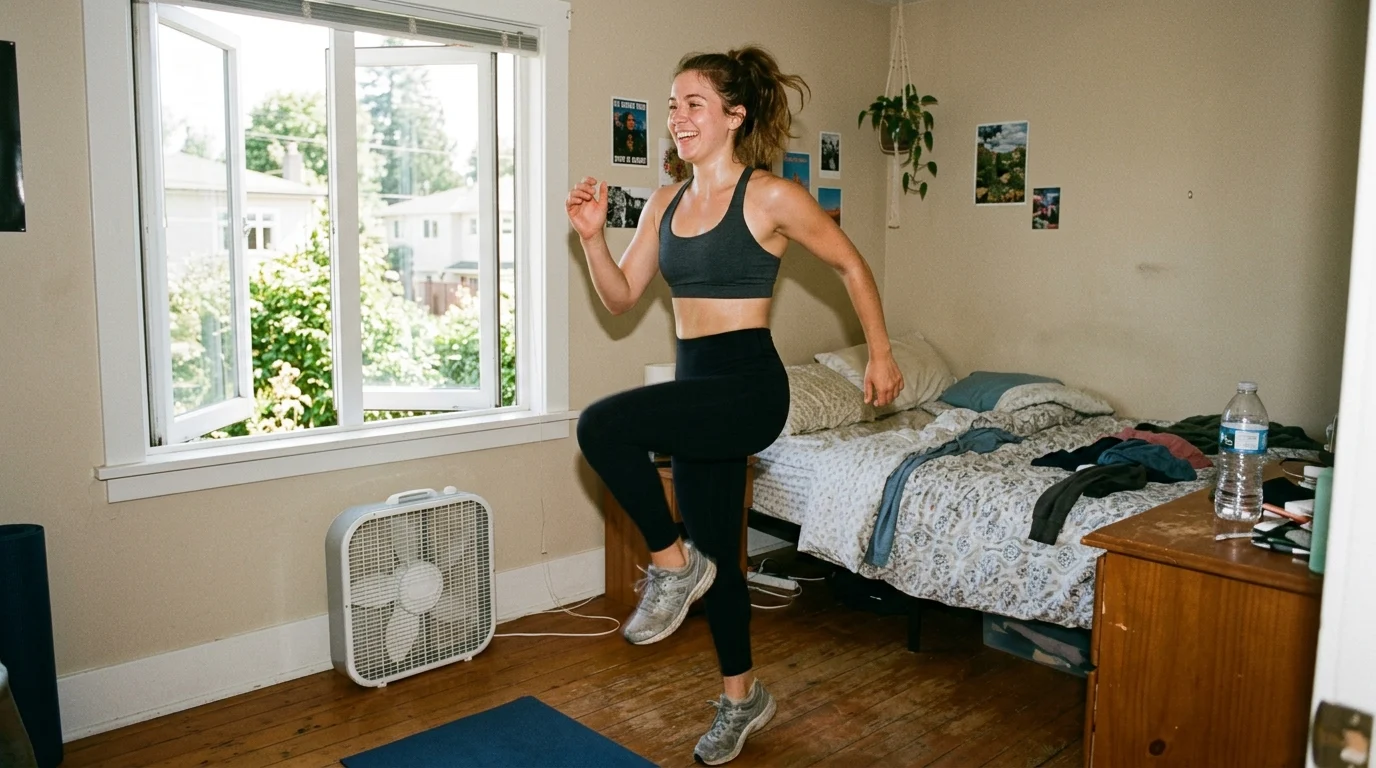
Dance around the kitchen while the dal simmers and your heart rate is already up. Anything that gets you breathing harder counts as cardio, and the classic home cardio exercises are jumping jacks, high knees and mountain climbers. All three work in a space the size of your mat.
Daily movement counts too. Walk briskly for 20 minutes after dinner. Take the stairs, or run up and down the ones to your terrace a few times. If jumping bothers your knees, step the jacks out one foot at a time and march instead of hopping.
A 10-minute HIIT you can try today
- Warm up for three minutes with marching, arm circles and a few easy squats.
- Pick one move: jumping jacks, high knees or mountain climbers.
- Work for 30 seconds at a hard but controlled pace.
- Rest for 30 seconds.
- Repeat for 10 rounds. That’s 10 minutes, and you can swap moves every round.
If ten rounds is too much, do five this week and add one each session. Most guides oversell HIIT for beginners, and two sessions a week is plenty.
Interval timer: 10 rounds, 30 seconds on, 30 seconds off
0:30
A simple on-screen timer for the HIIT steps above. Skip it if you have a watch or phone timer you like better.
A weekly home workout plan you can copy
Here’s a home workout routine that fits an ordinary week, with strength on Monday and Thursday, cardio on Tuesday and Friday, and real rest in between. Treat it as a weekly home workout plan you can paste into your notes app today.
| Day | Focus | Time |
|---|---|---|
| Monday | Full-body strength | 20-30 min |
| Tuesday | Cardio and core | 15-20 min |
| Wednesday | Rest, gentle yoga or stretching | 10 min |
| Thursday | Strength with variety | 20-30 min |
| Friday | Cardio and active movement | 15-20 min |
| Saturday | Long walk or a fun activity | 30+ min |
| Sunday | Rest and recovery | None |
On strength days, spend five minutes warming up, then run a circuit of squats, push-ups, lunges and a plank for two or three rounds. Thursday is your variety day: swap in glute bridges, chair dips or slow mountain climbers so your body isn’t doing the same thing twice a week.
Try this Monday circuit: ten squats, eight push-ups (knees are fine), ten lunges per leg and a 20-second plank. Rest a minute, then go round again. Two rounds in week one, three by week four.
Add up the table and you land at roughly 110 to 140 minutes, so reaching the 150-minute mark means a daily walk or two on top. If you’d rather run a stricter three-session split, our 3 day a week full body workout lays one out (some moves use dumbbells or bands, so swap in bodyweight versions).
Don’t skip Wednesday. It looks like the filler day, but it’s what keeps Thursday from feeling like punishment.
A home fitness schedule has to survive real life. If Tuesday gets eaten by a family function, slide the session to Wednesday. Don’t double up on Thursday to “make up” for it. Stick the plan on your wall or fridge, and tie each session to something you already do, like right after you switch off your morning alarm.
Do you need any equipment?
No. The honest answer to how to stay fit at home without gym equipment is that you start with none. A floor and a chair cover everything above.
If you do want something, three cheap options help. Resistance bands add pull-based exercises that bodyweight work lacks, like rows. Water bottles or a backpack stuffed with books make squats and lunges harder once your body weight stops being a challenge (a one-litre bottle weighs about a kilo). A jump rope gives you cardio in a tiny space, though it’s rough on knees and low ceilings.
If you buy only one, make it bands. A resistance band set is what we’d grab first. But wait until week four, at least. Gear is easy to buy and hard to use, and a pile of equipment is just another thing to feel guilty about.
Resistance band set
Bands add the one thing bodyweight work lacks: pulling. Rows and pull-aparts give your back and shoulders real work.
| Pros | Cons |
|---|---|
| Adds pulling exercises like rows | Not needed in your first few weeks |
| Small enough to keep in a drawer | Worn bands can snap, so check them before each use |
Diet and exercise at home
Workouts get the credit, but food decides how well they pay off. Diet and exercise at home work together, and neither needs a fancy plan.
How much protein do you actually need?
Protein helps your muscles repair after training. The International Society of Sports Nutrition’s position stand says 1.4 to 2.0 grams per kilogram of body weight a day is enough for most people who exercise regularly. For a 65 kg person, that works out to roughly 90 to 130 grams. If you have kidney problems, talk to a doctor before raising your protein.
Don’t stress over the exact number. Just include protein at every meal. Dal, eggs, curd, paneer, soy chunks, chicken and fish all count. A plate of dal bhat with an egg and some greens is a perfectly good training meal. Want more ideas? Bodylix has a list of high protein meals for muscle building.
A simple portion guide
No scales needed. Use your hand as a rough rule: a palm of protein, a fist of rice or other carbs, two handfuls of vegetables, and a thumb of oil or ghee. Adjust up if you’re hungry and down if you’re stuffed.
Water
Drink steadily through the day instead of chugging a litre after your workout. In summer heat you’ll need more. A rough check: pale yellow urine usually means you’re doing fine. Skip sugary drinks, and skip detox teas and protein powders until your regular meals are sorted.
Rest, recovery and staying consistent
You get stronger while you rest, not while you train. Training breaks muscle down a little, and recovery and rest days are when your body rebuilds it.
Sleep does the heaviest lifting here. The American Academy of Sleep Medicine and the Sleep Research Society recommend at least seven hours a night for adults aged 18 to 60, a figure the CDC repeats in its sleep reporting. Seven to eight is a sensible target if you’re training. Cut sleep to five hours and no workout plan will save you.
Track more than the scale. Take a photo every two weeks in the same spot and the same light. Notice your energy in the afternoon. Notice whether your jeans feel different, or whether you can do two more push-ups than last month. Those are real wins, and the scale often misses them. If you want a ready-made sheet, Bodylix has a free 30-day fitness habit tracker you can print (it asks for your email).
Picture this: you train hard six days in a row, wake up wrecked on day seven, and quit. Now picture three short sessions a week for three months. The second person wins every time. Consistency beats intensity, and it isn’t close.
Common mistakes to avoid
Most beginners trip over the same four things.
- Doing too much too soon. Two weeks of daily hour-long sessions usually ends in sore joints and a skipped week, so start with 15 to 20 minutes.
- Skipping the warm-up (five minutes of leg swings, arm circles and easy squats is all it takes).
- Measuring yourself against someone’s highlight reel. Their year-three body says nothing about your week two.
- Quitting early. As a rough rule, visible changes start showing around four to six weeks, sometimes later. Energy and mood can pick up sooner, though that varies a lot from person to person.
Quick answers
Can I build muscle without equipment?
Yes. Muscles respond to any hard effort, not just barbells. The trick is progressive overload: gradually make the work harder by adding reps, slowing each rep down, or moving to tougher versions, like going from knee push-ups to full ones. Keep eating enough protein and sleeping well, and your strength will climb.
How long should I exercise daily?
Twenty to thirty minutes is enough for most beginners, and you don’t need to train every day. Three to five short sessions a week, plus regular walking, covers the basics. If you only have ten minutes, do ten minutes. Short workouts you’ll repeat beat long ones you’ll skip.
Will I lose weight working out at home?
You can, but exercise alone rarely does the whole job. Weight loss mostly comes down to eating a bit less than you burn over several weeks. Pair your workouts with steady, sensible meals, enough protein and good sleep. Aim for slow progress, and check with a doctor if you have a health condition.
What if I have zero motivation?
Commit to five minutes. Put on your shoes, do one easy round of squats and a plank, and stop if you really want to. Most days you’ll keep going once you’ve started, because starting is the hard part. On the days you don’t, five minutes still counts.
What I’d actually do
If I were starting from zero tomorrow, I’d ignore the full weekly plan for the first week. I’d pick one exercise, probably squats, and do one set right after brushing my teeth. That’s it.
The plan is useful, but a habit has to exist before a schedule can sit on top of it. After 14 days of doing something small every day, adding Monday’s strength circuit feels natural instead of heavy. You already have everything you need right now: a floor, a body, and ten spare minutes.
When the 14 days are up and you want some structure, the Bodylix 30 Day Fitness Reset is a calisthenics plan built on the same bodyweight moves.
Bodylix 30 Day Reset Program
If you’d rather follow a structured month than build your own, this is our $27 option. It uses the same bodyweight approach as this guide.
| Pros | Cons |
|---|---|
| Takes the planning off your plate | Costs $27, while this guide is free |
| Built on the same moves you’ve just read about | Asks for a full 30 days of effort |
Now for the challenge. Pick one move from the table, do it today, and come back in two weeks with how it went. And tell us in the comments: what’s your favorite home move?
Disclaimer. This article is for general education and isn’t medical advice. Check with a doctor before starting a new exercise program, especially if you have an injury, a heart or joint condition, or you’re pregnant or returning after illness. Results vary from person to person.
Sources
- World Health Organization. “Physical activity,” adult recommendations.
- Bull FC, et al. “World Health Organization 2020 guidelines on physical activity and sedentary behaviour.” British Journal of Sports Medicine.
- CDC. “1 in 3 adults don’t get enough sleep,” 2016 (archived release).
- American Academy of Sleep Medicine. “How much sleep do I really need?”
- Jäger R, et al. “International Society of Sports Nutrition Position Stand: protein and exercise.” J Int Soc Sports Nutr, 2017.
For more practical health and nutrition guides, visit bodylix.com

One Response