
Creatine Benefits for Women: What the Research Actually Shows
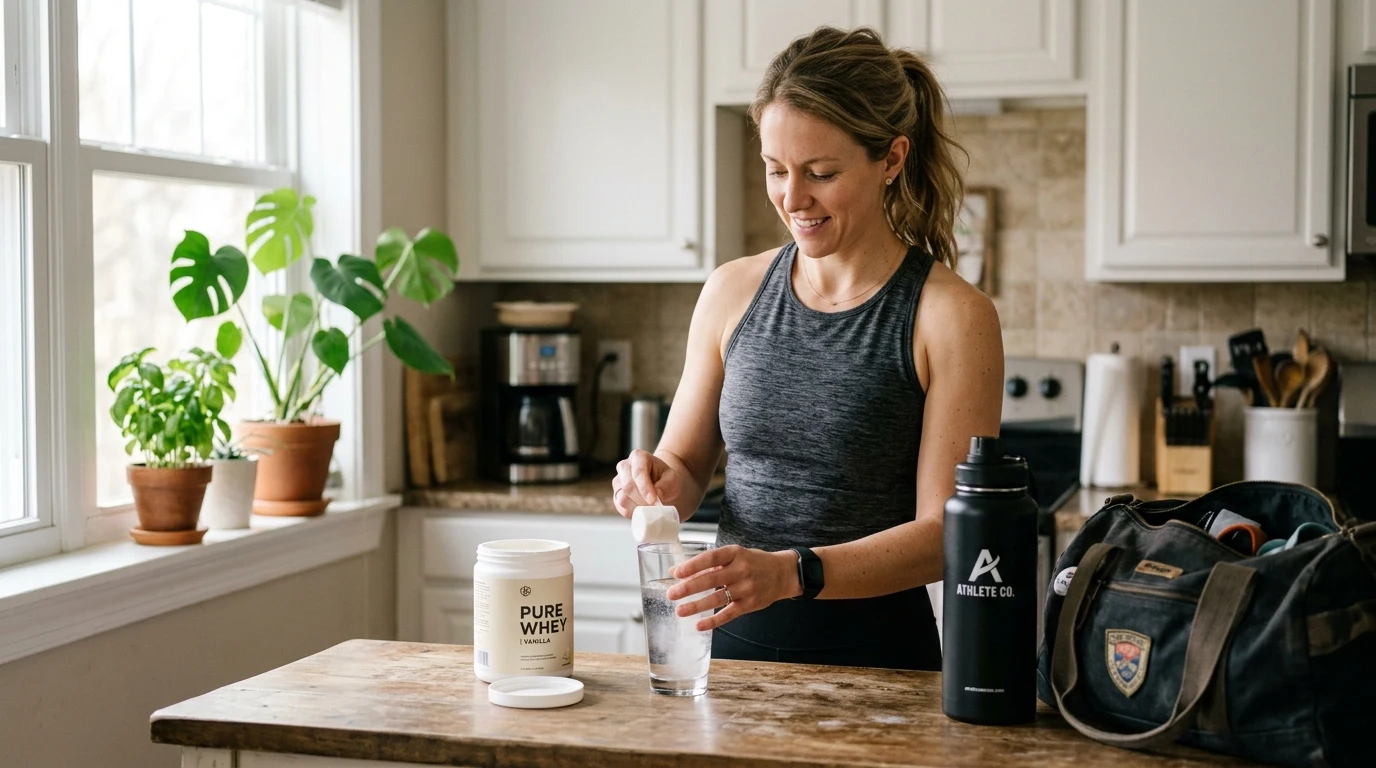
Creatine benefits for women don’t get nearly the airtime they deserve. Most of the early research used young men, most of the marketing still does, and plenty of women quietly decide the stuff isn’t for them. Creatine is one of the most studied supplements out there. It helps you train a little harder, it may support mood and mental energy, and the scary stories about it mostly fall apart when you check them.
What are the main creatine benefits for women?
The main creatine benefits for women are better strength and power in training, more work done before fatigue sets in, and possible support for mood and brain energy. Creatine is a compound your muscles use to refuel fast during short, hard efforts. Supplementing tops up what your body already stores.
Here’s the shortlist, from firmest evidence to shakiest:
- Strength and power. The best-supported benefit, and usually the first one you notice.
- Training quality, meaning you hold your output across repeated hard sets.
- Mood and mental energy. Promising, early, and no replacement for proper treatment.
- Possible support at certain life stages, like pregnancy and after menopause, though that research is thin.
The benefits of creatine women notice first are physical. A 2021 review in Nutrients by Smith-Ryan and colleagues says creatine supplementation among pre-menopausal women appears effective for improving strength and exercise performance. The same review also calls creatine research in females understudied. Both things are true at once.
So the benefits of taking creatine for women that hold up best are strength and muscle. Most creatine benefits for women outside the gym are still promising rather than proven. We’d bank on the first and treat the rest as a bonus. If you also want your food dialed in, run your numbers through our protein calculator.
Why creatine benefits for women start from a lower baseline
Picture a man and a woman of the same age sharing the same lunch. She’s likely starting from a lower creatine baseline, and that’s the main reason the benefits of creatine for females get so much attention from researchers.
Smith-Ryan’s review reports that women have 70 to 80% lower endogenous creatine stores than men. “Endogenous” just means what your body makes and holds itself. The International Society of Sports Nutrition (ISSN) adds that on a normal diet of about 1 to 2 grams of creatine a day, muscle stores sit roughly 60 to 80% full. Supplementing can raise muscle creatine by around 20 to 40%, which is why the benefits of taking creatine for women are worth studying.
Strength and training: the creatine benefits for women with the best proof
This is where the evidence is strongest, and where the benefits of creatine for females are easiest to measure.
The ISSN position stand says studies have consistently shown creatine supplementation raises muscle creatine, which may explain the improvements in high-intensity exercise performance and training adaptations. Smith-Ryan’s review lands in the same place, so the creatine benefits for women in training are well backed: it works best for short, high-intensity efforts like lifting, sprints, and intervals.
You’re on your fourth set of goblet squats. The first two felt fine, the third got grindy, and now the last reps are sliding. That’s the exact moment creatine is meant to help. It won’t turn you into a different athlete, but the benefits of creatine women feel in the gym come from a bit more in the tank across repeated hard sets, and over months those small gains stack.
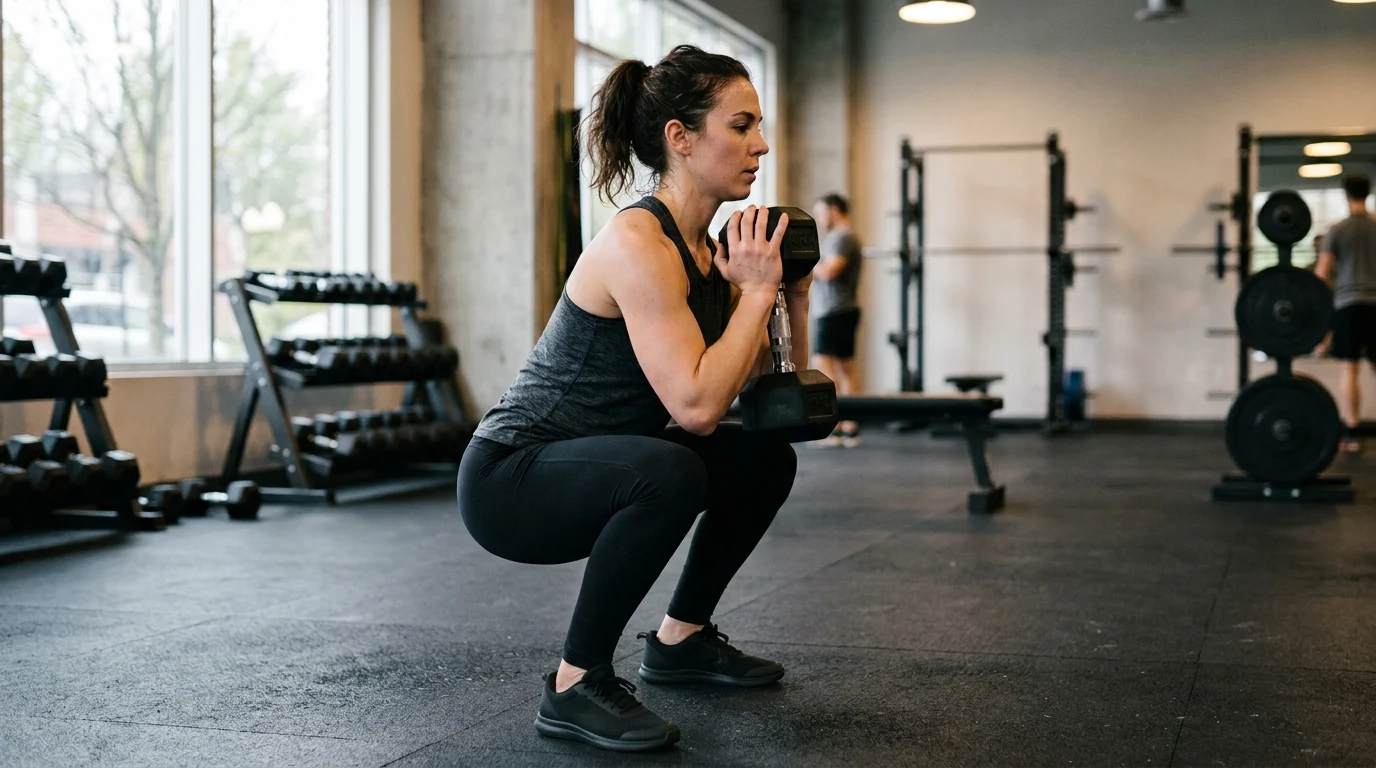
One catch: patience. Taking 3 to 5 grams a day raises muscle stores over about three to four weeks, according to the ISSN, so don’t judge it after a few sessions.
We’d rather see you add creatine to a decent program than hope it rescues a bad one. It won’t. If you’re skipping sessions or never adding weight, fix that first. No gym nearby? Our guide on how to stay fit at home without a gym is a solid place to begin.
30-Day Fitness Reset
Want a plan to train through your first month on creatine? Our 30-day Reset program is $27.
Grab the $27 30-Day ResetCan creatine help your brain and mood?
Possibly, and this is the part that surprises people.
Creatine plays a role in brain energy too, so the benefits of creatine for females may reach past muscle. Smith-Ryan’s review says pre-clinical and clinical evidence points to positive effects on mood and cognition, possibly by restoring brain energy levels. The authors even suggest creatine may be more effective in females.
The best-known human trial is Lyoo and colleagues, published in 2012 in the American Journal of Psychiatry. They enrolled 52 women with major depressive disorder in an 8-week double-blind trial. Everyone took the SSRI escitalopram, and some also got 5 grams of creatine a day (25 women) while others got a placebo (27 women). The creatine group improved more on the HAM-D depression scale as early as week 2, and the difference held at weeks 4 and 8.
Now the fine print: one small trial, in women with diagnosed depression, with creatine added under medical supervision. It does not mean creatine treats depression, and it definitely doesn’t mean you should add it to your antidepressant on your own.
Treat these creatine benefits for women as a reason to be curious, not a reason to skip therapy or medication. If you’re struggling, a doctor or therapist comes first. Creatine, if you use it, is a side dish.
Creatine benefits for women at every life stage
Your needs at 22 aren’t your needs at 55, and research on creatine benefits for women is slowly starting to reflect that.
Smith-Ryan’s review argues that hormone-related changes affect how the body handles creatine, so supplementation may be particularly relevant during menses, pregnancy, postpartum, and during and after menopause. It also says the effect of the menstrual and reproductive cycle on creatine needs deserves more study.
| Life stage | What the research suggests | How solid is it? |
|---|---|---|
| Reproductive years | Appears effective for strength and exercise performance | Best studied of the three |
| Pregnancy and postpartum | Creatine may matter more, based on hormone-related changes | Early. Doctor first. |
| Perimenopause and menopause | Creatine plus resistance training slowed hip bone loss in one 52-week trial. Creatine alone for two years (3 g a day) did not improve bone or lean mass. | Early. Works best with lifting. |
Menopause findings come from the 2021 Antonio review (see sources).
To be clear, we’re not telling anyone who’s pregnant or breastfeeding to start creatine. If that’s you, get your doctor’s okay before you buy a tub. For everyone else, the takeaway is simple: the benefits of taking creatine for women probably don’t stop at the gym, and the benefits of creatine for females may shift as hormones change. The research on life stages is still thin.
Weight, kidneys, hair: do the side-effect worries hold up?
Let’s take the worries one at a time, because they come up every single time someone asks about the benefits of creatine women actually get.
Will I gain weight or get bulky?
Smith-Ryan’s review calls the fear of weight gain largely unfounded in women. One honest wrinkle. The Antonio review notes that a loading phase of about 20 grams a day typically adds 1 to 3 kg, mostly water. At lower daily doses, longer studies often show no change in total body water relative to muscle. The same review found creatine doesn’t increase fat mass. Water, not fat, and one more reason we shrug at loading.
Is it safe for my kidneys?
For healthy people, the evidence is reassuring. The ISSN wrote that there is no compelling evidence creatine negatively affects kidney function in healthy or clinical populations. The Smith-Ryan review cites a systematic review that found no adverse effects on the gut, kidneys, liver, or cardiovascular system in women. If you already have a kidney condition, though, that’s a doctor conversation, not a blog-post conversation.
What about hair loss?
This myth has a very thin origin story. It traces back to a small 2009 study of male college rugby players in South Africa. After a week of loading at 25 grams a day, their DHT rose 56%, and it stayed 40% above baseline after 14 days at 5 grams. DHT is a hormone linked to some pattern hair loss. But the study measured hormones, not hair, the levels stayed within normal clinical limits, and the result hasn’t been replicated. The Antonio review found that no study has reported hair loss in humans from creatine.
The hair worry strikes us as overblown, especially for women, though we’d never say never. If you notice shedding, talk to a doctor about the usual causes first.
How should women take creatine to get the benefits?
Take 3 to 5 grams of creatine monohydrate a day, every day, with whatever meal or drink suits you. That’s the ISSN range for building muscle stores, and the simplest way to collect the benefits of taking creatine for women.
- Choose plain creatine monohydrate. It’s the form the research is built on.
- Take 3 to 5 grams daily. A small flat scoop usually covers it, but check your tub.
- Loading is optional. A short high-dose phase gets you there faster, while the lower daily dose takes about three to four weeks.
- Take it on rest days too. Stores build over time, so the daily habit does the work.
- Pick a time you won’t forget. Consistency beats timing.
- Give it a month before you judge the benefits of creatine women usually report.
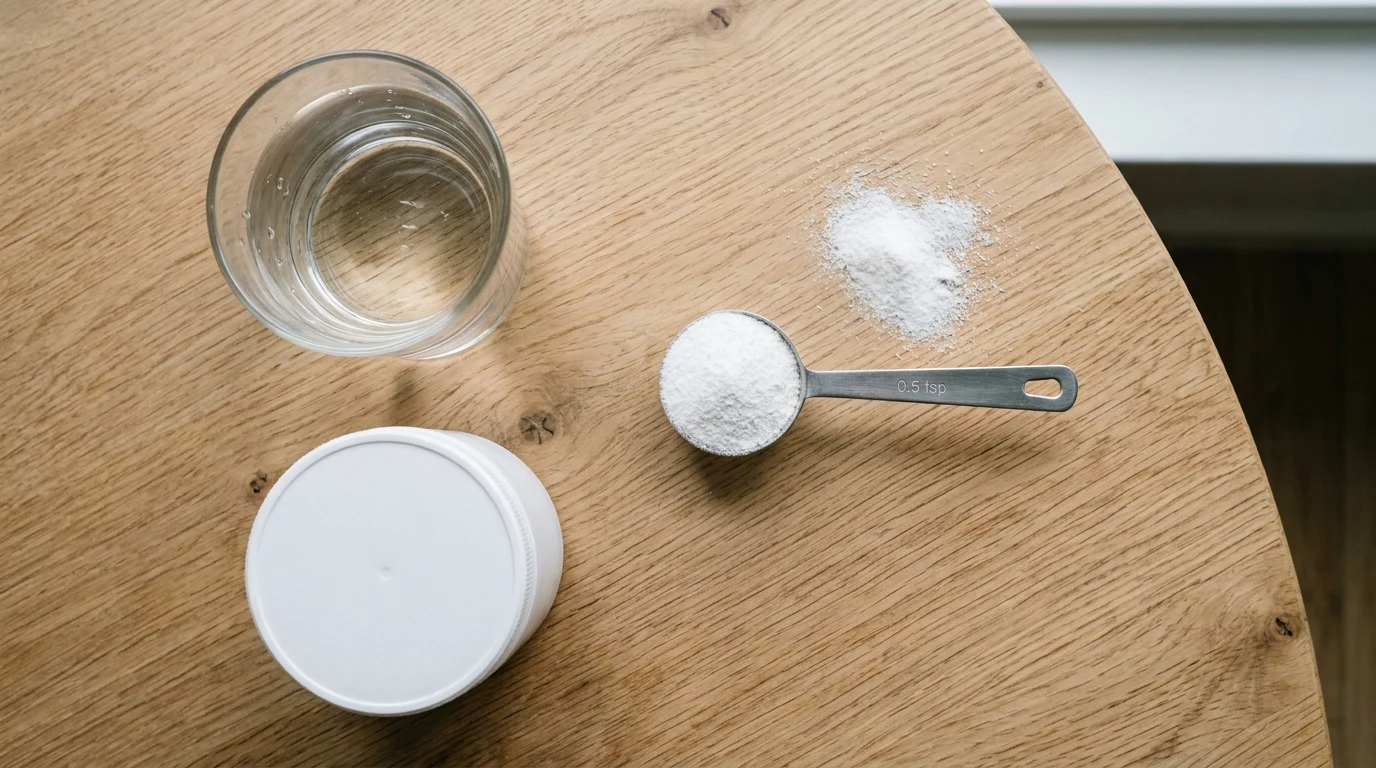
Buying tip: look for a sealed tub, a batch number, and third-party testing, especially if you’re buying in Nepal, since fake or diluted products turn up in many markets. These numbers are general guidance for healthy adults.
Optimum Nutrition Creatine Monohydrate Powder
If you’d rather not dig through brands, this is a straightforward place to start. It’s a creatine monohydrate powder, the form the studies above are built on. Check the Amazon listing for serving size, ingredients, and any third-party testing before you buy, and confirm delivery to your location.
| Pros | Cons |
|---|---|
| Creatine monohydrate, the form the research used | A general product, not made specifically for women |
| A recognizable brand, so it’s easy to compare against other tubs | Size and price vary by listing, so check the live page |
| Easy to dose against the 3 to 5 gram range once you check the scoop size | We haven’t confirmed third-party testing on this listing, so look for it yourself |
Food or supplement: where creatine benefits for women come from
Meat and fish, mostly. That matters for creatine benefits for women who eat little of either.
A regular diet supplies about 1 to 2 grams a day, according to the ISSN. If your plate is mostly dal, rice, and vegetables with meat a few times a month, which is how a lot of people eat across Nepal for religious, budget, or taste reasons, your food intake is probably on the low side.
Could you hit 3 to 5 grams from food alone? The Antonio review puts meat at about 0.7 grams of creatine per 6 oz serving. That works out to roughly four to seven servings a day. Not realistic, and that’s why supplements exist. If you want more protein from food in the meantime, our list of low-calorie high-protein foods helps.
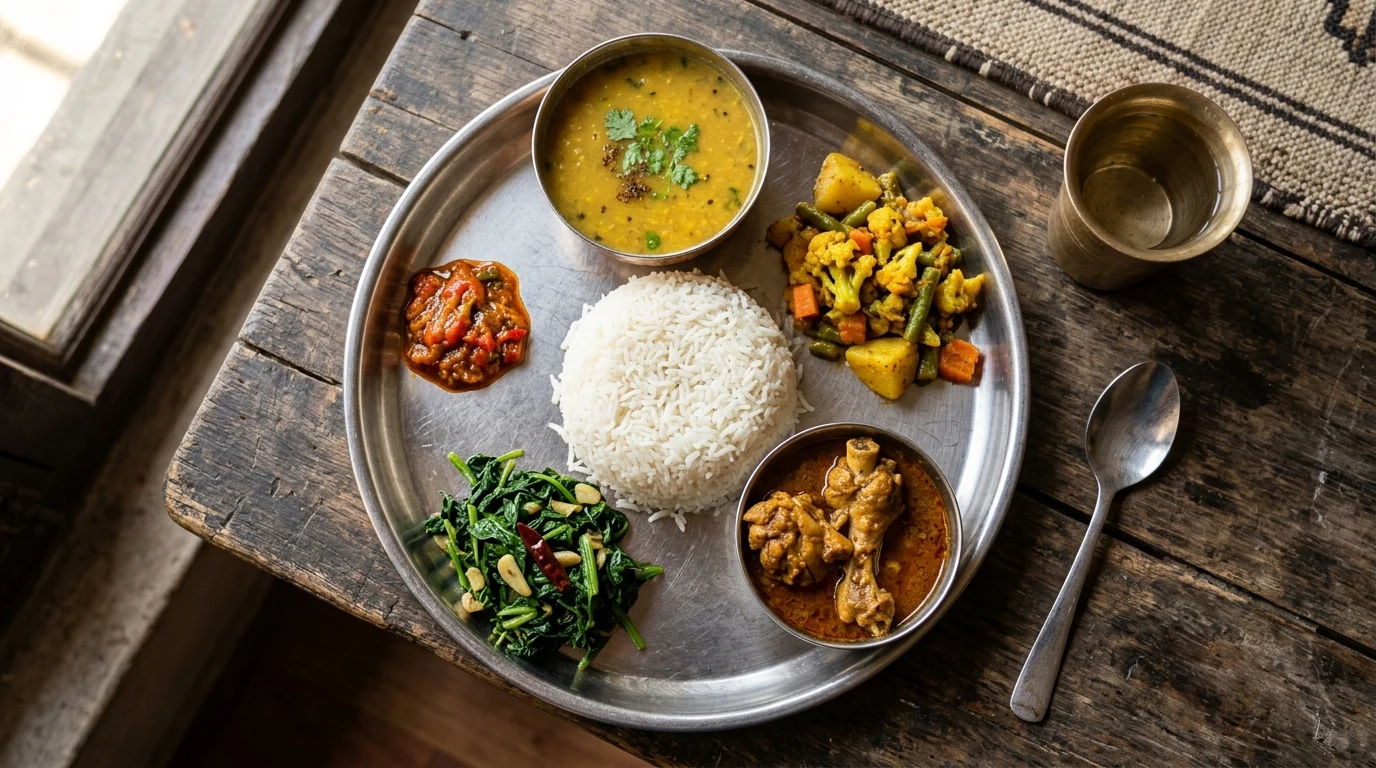
For plant-heavy eaters, the benefits of creatine for females may be easiest to spot, since there’s more room to top up. Eating mostly plant-based on a tight budget? Our plant-based diet on a budget guide covers the staples, and a high-fiber diet plan plus our fiber calculator keep the rest of your plate in order.
Quick answers
Is creatine safe for women?
For healthy women, yes, based on the research so far. A systematic review cited by Smith-Ryan and colleagues found no adverse effects on gut, kidney, liver, or heart function in women, and the ISSN found no compelling evidence of kidney harm in healthy people. With kidney disease or regular medication, ask your doctor first.
Will creatine make me bulky?
Very unlikely. Creatine pulls water into muscle cells, so the scale can creep up a little early on. That’s water, not fat, and it isn’t bulk. Building visible muscle takes years of heavy training and plenty of food. Most women just notice their lifts feeling a bit stronger.
Does creatine cause hair loss in women?
There’s no good evidence that it does. The worry comes from one small 2009 study of male rugby players that measured the hormone DHT and never measured hair. The result hasn’t been replicated, and a 2021 expert review found no study reporting hair loss from creatine. If thinning bothers you, see a doctor.
How much creatine should a woman take per day?
Most research uses 3 to 5 grams of creatine monohydrate a day. The International Society of Sports Nutrition says that range raises muscle stores over roughly three to four weeks, while a short loading phase is faster but optional. A doctor can adjust the amount if you have a health condition.
Can I take creatine while pregnant or on antidepressants?
Talk to your doctor first, for both. Researchers think creatine may matter during pregnancy, but the evidence is early. The one antidepressant trial involved supervised creatine alongside an SSRI. Neither is a green light to self-experiment. Your doctor knows your history and can weigh the real risks.
What I’d actually do
If I were starting tomorrow, I’d buy one tub of plain creatine monohydrate, take a small scoop every morning with breakfast, and stop reading about it for a month.
I’d skip anything marketed “for women” at a higher price, because the creatine benefits for women come from the monohydrate, not the packaging.
Then I’d run a quick test. Pick your main lift, write down your last hard set today, and compare it in four weeks. You’ll either see something or you won’t. And if you’re pregnant, on medication, or living with a health condition, make that doctor call before day one.
Disclaimer. This article is for general education and isn’t medical advice. Results vary from person to person. Talk to a doctor or registered dietitian before starting any supplement, especially if you’re pregnant or breastfeeding, have kidney or other health conditions, or take medication, including antidepressants.
Sources
- Smith-Ryan AE, Cabre HE, Eckerson JM, Candow DG. “Creatine Supplementation in Women’s Health: A Lifespan Perspective.” Nutrients, 2021;13(3):877.
- Kreider RB, et al. “International Society of Sports Nutrition position stand: safety and efficacy of creatine supplementation in exercise, sport, and medicine.” J Int Soc Sports Nutr, 2017;14:18.
- Antonio J, et al. “Common questions and misconceptions about creatine supplementation: what does the scientific evidence really show?” J Int Soc Sports Nutr, 2021;18:13.
- Lyoo IK, et al. “A randomized, double-blind placebo-controlled trial of oral creatine monohydrate augmentation for enhanced response to a selective serotonin reuptake inhibitor in women with major depressive disorder.” Am J Psychiatry, 2012;169(9):937-945.
- van der Merwe J, Brooks NE, Myburgh KH. “Three weeks of creatine monohydrate supplementation affects dihydrotestosterone to testosterone ratio in college-aged rugby players.” Clin J Sport Med, 2009;19(5):399-404.
For more practical health and nutrition guides, visit bodylix.com
