
Intermittent Fasting Macros: How to Calculate Your Protein, Carbs, and Fats
Why Macro Tracking Matters When Intermittent Fasting
Fasting by itself doesn’t melt fat. I know, that’s not what the thumbnails say. But if you’ve ever skipped breakfast for a month, been cranky around 11am every day, and watched the scale refuse to move, you already half know it. What you eat inside the window still runs the show, and that’s what intermittent fasting macros are: the split of protein, carbs, and fat across the food you actually get to eat.
Quick definition: macros are the three nutrients that carry calories, namely protein, carbohydrate, and fat. A 16/8 schedule is only a timetable, and it says nothing about the plate.
Take two people on the same 16 hours without food. One eats around 140 g of protein and lifts three times a week. The other has tea until noon, then a huge heap of rice and a packet of noodles at seven. By month three they won’t look anything alike.
So what does the research say about fasting itself? Honestly, it’s mixed. In a 2020 randomized trial in JAMA Internal Medicine, adults with overweight or obesity ate inside an 8-hour window for 12 weeks and didn’t lose meaningfully more weight than a group eating three regular meals. A measure of lean mass also differed between the two groups, which is worth keeping in mind if muscle is the goal. A smaller 2016 study followed 34 resistance-trained men for eight weeks. On an 8-hour window, eating the same calories as the comparison group, they lost more fat mass while their muscle and strength held steady as they kept lifting. If there’s a pattern, it’s that total food and training count for more than the clock.
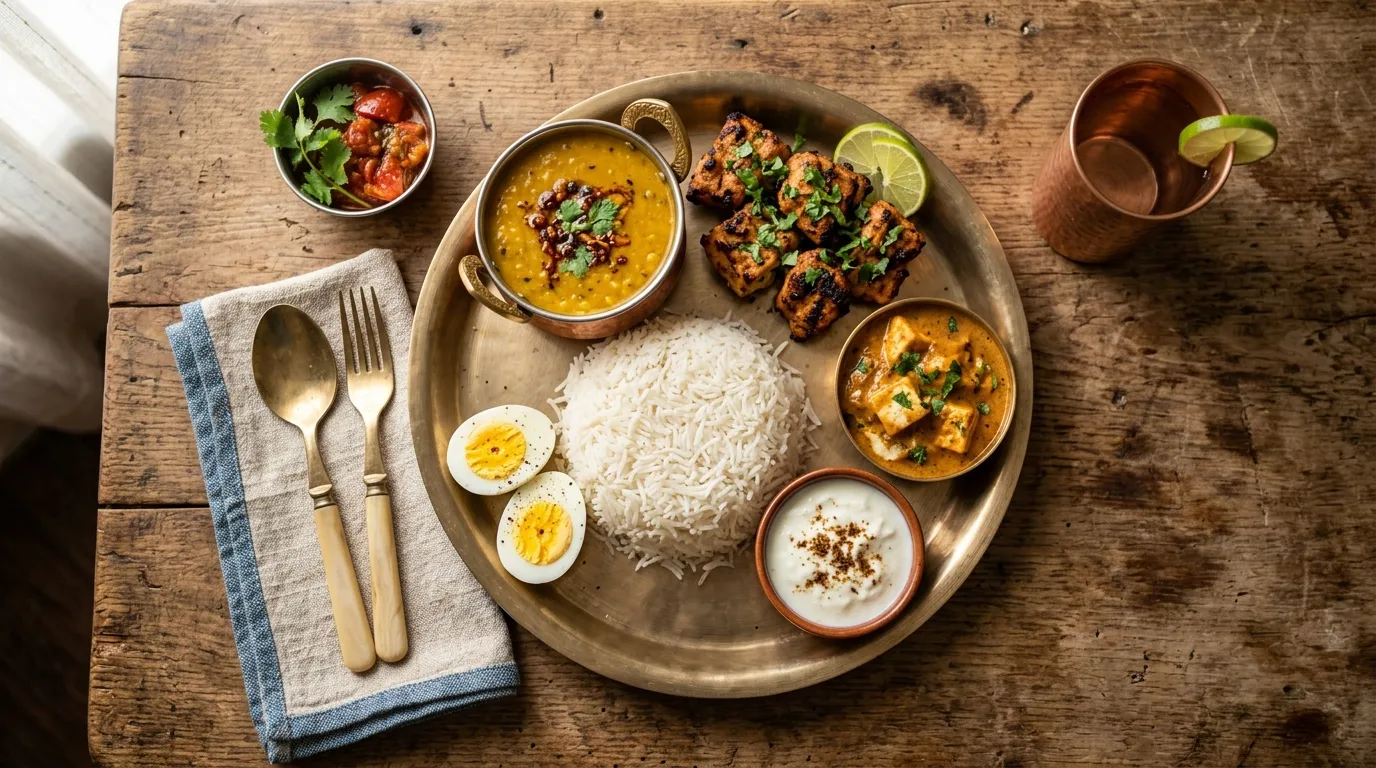
Short windows also make your intermittent fasting macros harder to hit, which surprises people. Fewer meals leaves less room for protein, and a starving 1pm lunch usually turns into carbs, carbs, and more carbs. Take a normal dal bhat plate. Lovely food, but unless you add egg, chicken, paneer, or soya, it often stays under 20 g of protein.
Most fasting guides spend 90 percent of their words on the window and 10 on protein. We’d flip that ratio. It’s also why an intermittent fasting calories calculator is only half the job.
How to Calculate Your Ideal Macro Split for 16/8 Intermittent Fasting
Grab your phone. Five bits of arithmetic, maybe ten minutes. Any intermittent fasting calories calculator you find online is doing exactly this behind its pretty buttons, so it’s worth seeing the working once.
What you’re building: a daily calorie target, split into a protein number, a fat number, and carbs from whatever’s left. That is what intermittent fasting macros look like on a 16/8 plan.

First, find your maintenance calories
Most calculators start with the Mifflin-St Jeor equation from 1990. Men: 10 x weight (kg) + 6.25 x height (cm) – 5 x age + 5. Women: the same, but finish with -161 instead of +5. That’s your resting burn, roughly what you’d use lying around all day.
Multiply by an activity factor next. Use 1.2 if you sit most of the day, 1.375 for light activity, 1.55 if you train moderately a few days a week, and 1.725 for hard training most days. Be honest, because almost everybody picks a level too high. Even then the answer can be out by a couple of hundred calories, so call it a decent guess. If you can’t be bothered with the arithmetic, a 16/8 intermittent fasting calculator will do this part for you. Just check what it assumed for activity.
Then choose a deficit you won’t hate
Roughly 15 to 20 percent under maintenance is the usual range for fat loss. Push harder and the bill shows up in your training, your mood, and eventually your muscle. Already lean? Go smaller.
We’d start your intermittent fasting macros at a 15 percent deficit, every time. You can always tighten up later, whereas a deficit that’s too harsh on day one is how people quit in week three.
Protein comes next
Of all your intermittent fasting macros, this is the one doing most of the work for muscle. A large 2018 meta-analysis of resistance-training trials found that extra protein stopped adding muscle beyond about 1.6 g per kg of body weight per day. Some researchers go higher, up to around 2.2 g per kg, and in a deficit plenty of coaches lean toward that upper half.
Pick 1.8 g per kg to begin with. At 75 kg, that’s 135 g. If you think in pounds, 0.8 g per lb lands in nearly the same place, and the Bodylix protein calculator works that way.
Then break it up. A 2018 review in the Journal of the International Society of Sports Nutrition put the target at about 0.4 g per kg per meal across at least four meals, which is 30 g a sitting at 75 kg. Four feedings fit into eight hours more easily than you’d think: two proper meals, something in between, and a late top-up.
Fat is the easy one
Of the three intermittent fasting macros, fat is the easiest to set. It keeps meals filling and helps your hormones work normally, so don’t slash it. The Dietary Reference Intakes from the US Institute of Medicine give adults an acceptable range of 20 to 35 percent of calories from fat. Settle on 25 to 30. Multiply your calories by that percentage, then divide by 9, because a gram of fat carries 9 calories.
Carbs get what’s left
To finish your intermittent fasting macros, take your target calories, subtract the protein calories (grams x 4) and the fat calories, and divide what remains by 4. Done. If you lift, put your biggest serving of carbs in the meal after training.
Fiber belongs in your intermittent fasting macros too, because a short window can quietly wreck it. The Dietary Guidelines for Americans suggest about 14 g per 1,000 calories, as the Mayo Clinic notes, so roughly 29 g on a 2,080-calorie day. Use the Bodylix fiber calculator for your own number and the high fiber diet plan for what it looks like on a plate.
Calorie & Macro Calculator Framework for Weight Loss
Say you’re 75 kg, 170 cm, 28, and lifting four days a week. Run those through this intermittent fasting macros framework and you get the left column below. The right column is someone smaller and less active, so you can see how far the answers move. Every intermittent fasting weight loss calculator is doing some version of this table, just with nicer buttons.
Calories per gram
| Nutrient | Calories per gram |
|---|---|
| Protein | 4 |
| Carbohydrate | 4 |
| Fat | 9 |
Two worked examples
| Step | Person A (male) | Person B (female) |
|---|---|---|
| Stats | 75 kg, 170 cm, 28 yrs | 60 kg, 160 cm, 32 yrs |
| Resting burn | 1,678 kcal | 1,279 kcal |
| Activity factor | 1.55 (moderate) | 1.375 (light) |
| Maintenance | 2,600 kcal | 1,759 kcal |
| Deficit | 20% | 15% |
| Target calories | 2,080 kcal | 1,495 kcal |
| Protein (1.8 g/kg) | 135 g | 108 g |
| Fat | 58 g (25%) | 50 g (30%) |
| Carbs (the rest) | 255 g | 154 g |
Rounded, obviously. Person A’s carbs: 2,080 minus 540 (protein) minus 520 (fat) leaves 1,020 calories, and 1,020 divided by 4 is 255 g. Treat these intermittent fasting macros as starting points.
Now put your own stats into any decent 16/8 intermittent fasting calculator and you should land somewhere near figures like these. If the tool hands you something wildly different, look at the activity setting first. That’s nearly always the culprit.
Reading the results without fooling yourself
A good intermittent fasting weight loss calculator will also give you a weekly rate. Take it loosely. The old rule that 3,500 calories equals a pound of fat is a rough guide at best, partly because your body adapts as you shrink. Weigh yourself every morning if you like, but only trust the weekly average, because the daily number is mostly water and last night’s salt.
No change after two or three weeks? Trim 100 to 150 calories, or just walk more. Dropping faster than about 1 percent of your body weight a week and dragging in the gym? Eat a bit more.
The window itself needs no special inputs. An intermittent fasting calories calculator doesn’t know or care when you eat, only how much.
One more thing. If you have a history of disordered eating, skip the counting and talk to a registered dietitian first. For some people, tracking does more harm than good.
Example Meal Plans & Eating Window Strategies for High Protein Intake
Half past five. Two hours left in the window and you’re 40 g short on protein. Everyone’s been there, and this section exists to keep you out of that spot.
Pick a window you can actually keep
Noon to 8pm suits most people with a normal job, since it fits a late lunch and a proper dinner, which makes intermittent fasting macros easy to spread over three feedings. If you’ve already used a 16/8 intermittent fasting calculator, you have your calories; this part is about timing. Train early? Try 10am to 6pm so the first meal lands soon after the session. And if dinner is the meal the whole family sits down to together, as in most Nepali homes, don’t fight it. Build the window around that meal, even if it means a later start.
A sample day for high-protein intermittent fasting macros (about 140 g)
| Time | What you eat | Approx. protein |
|---|---|---|
| 12:00 | 3-egg vegetable omelette, 2 rotis, a glass of milk | 32 g |
| 3:00 | 1 cup dahi, a handful of roasted chana, a banana | 15 g |
| 6:00 | Chicken curry (150 g), rice, dal, saag | 55 g |
| 7:30 | Paneer bhurji (100 g) and a scoop of whey in water | 40 g |
Protein figures are approximate, so check labels. Scale the rice, roti, and oil to hit your own calories. A Etekcity digital kitchen scale makes the first two weeks of portioning far less of a guessing game.
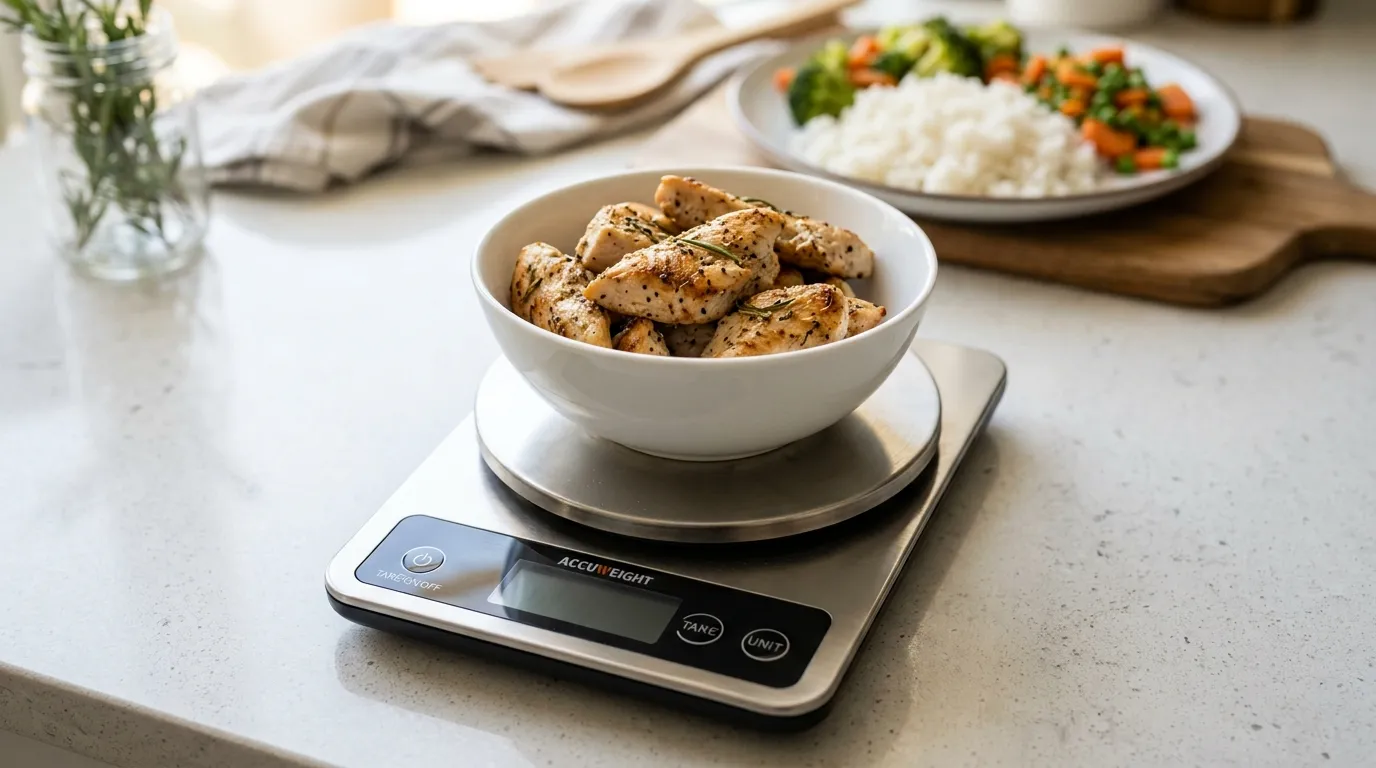
Etekcity Digital Food Kitchen Scale
Weigh your chicken, rice, and paneer for the first two weeks and your eye learns what 150 g actually looks like. After that most people can ease off. It’s a measuring tool, nothing more, so it can’t tell you anything about your health.
| Pros | Cons |
|---|---|
| Takes the guesswork out of portions | Only helps if you actually use it |
| Cheap way to make your protein numbers more honest | Check the model’s weight limit and units before buying |
| Useful for a couple of weeks, then optional | Weighing every meal gets old fast |
If you don’t eat meat
Soya chunks, tofu, paneer, dal, dahi, peanuts, and eggs if you eat them. About 50 g of dry soya chunks gives you roughly 25 g of protein, which is a lot for the price. In our view they’re the best-value protein in the Nepali kitchen: cheap, quick, and they soak up masala better than most meats. Just don’t eat them as your only protein, day after day. For more ideas, see our guide to low calorie high protein foods.
Breaking the fast without a crash
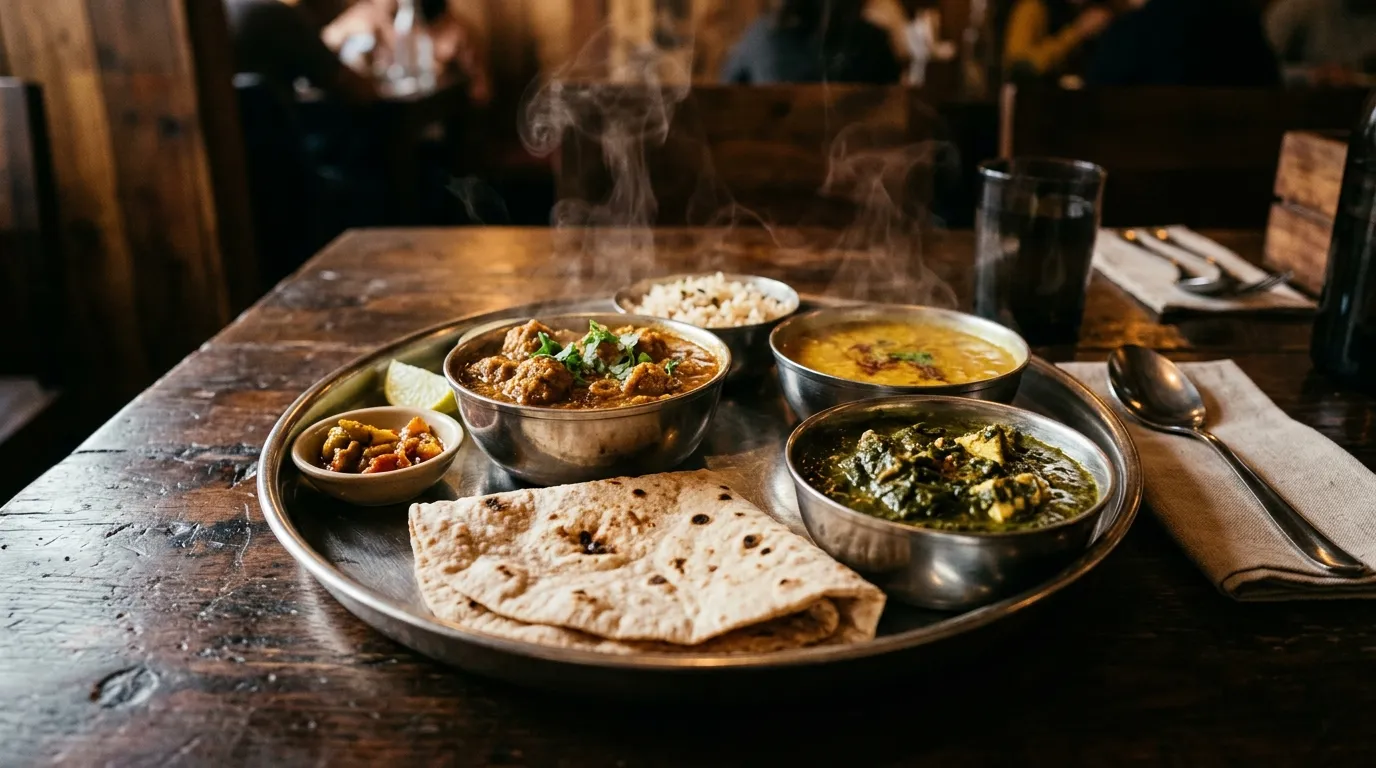
Protein first, because it anchors your intermittent fasting macros for the day. A big bowl of rice on an empty stomach followed by a sleepy 3pm is a classic. Black coffee or unsweetened tea is generally fine during the fast for most people. Milk tea with two spoons of sugar, though? That counts as food.
Whey Protein Powder
A scoop in water is the easiest way to close a protein gap late in your window, like the 7:30pm slot in the sample day. It won’t replace real meals, and protein per scoop differs between brands, so read the label before you plug it into your numbers.
| Pros | Cons |
|---|---|
| Quick way to close a protein gap | Protein per scoop varies, so check the label |
| No cooking, no fridge needed | Dairy-based, so not for anyone avoiding milk |
| Handy when the window gets tight | Doesn’t replace whole food |
Where Most People Slip Up
Dinner-heavy days are the big one. Everything else is small.
- Saving most of the food for one giant evening meal, then wondering why protein is stuck at 70 g.
- Trusting the first number an intermittent fasting calories calculator gives you, then never checking it against the scale.
- Dropping the weights because someone said cardio burns more. That’s how lean mass quietly walks out the door.
- Forgetting to recalculate after you lose 4 or 5 kg. An intermittent fasting weight loss calculator will show your maintenance has dropped.
- Treating festival weeks like Dashain as a separate planet.
None of it is dramatic, which is exactly why a quick weekly look at your intermittent fasting macros catches it early.
Quick answers
What should my intermittent fasting macros be?
Depends on your size, but a decent first guess goes like this: eat roughly 15 to 20 percent under maintenance, aim for 1.6 to 2.2 grams of protein per kilo you weigh, let fat sit around 25 to 30 percent of calories, and fill the rest with carbs. Then leave it alone for a few weeks.
How does an intermittent fasting calories calculator work?
Mostly it’s a formula wearing a friendly face. You give it weight, height, age and sex, it estimates what you burn at rest, then multiplies that for how active you are. Take off a chunk if you want to lose weight. It can be a couple hundred calories out, so don’t treat the answer like gospel.
Is a 16/8 intermittent fasting calculator different from a normal calorie calculator?
Nope, not really. Your body doesn’t care that you stopped eating at 8pm, so the calories come out the same. The only extra job is yours: take the daily numbers and divide them over the two, three or four meals that actually fit inside your window.
Can an intermittent fasting weight loss calculator predict how fast I’ll lose weight?
Roughly, at best. It’ll hand you a tidy weekly number, but real life has water, sleep, stress and a body that adapts, so the line wobbles. Judge it by your weekly average over two or three weeks. Still flat? Shave off 100 to 150 calories or walk a bit more.
Will I lose muscle on a 16/8 fast?
You can, but the fasting isn’t the cause. Muscle goes when the deficit is too big, protein is too low, or the weights stop. Spread your protein over three or four feedings, lift two to four times a week, and your odds of holding onto muscle look pretty good.
What I’d actually do
Honestly? Keep it boring. Noon to 8pm. Protein at 1.8 g per kg. A 15 percent deficit. Weigh in each morning for three weeks and leave everything else alone for the first two, even when the scale does something daft. Lift at least three times a week (the Bodylix plate loader calculator takes the mental maths out of loading the bar). Then change one thing at a time. Run your numbers through an intermittent fasting weight loss calculator once, and after that trust the weekly average.
And if 16/8 makes you miserable, stop. Spread the same calories and protein over ten or twelve hours and your intermittent fasting macros are unchanged. A plan you keep for a year beats the perfect one you abandon in nine days.
Want it mapped out day by day? Grab the $27 Bodylix 30-Day Fitness Reset, which covers movement, meals, and recovery habits in one place.
Disclaimer. This article is general information, not medical advice, and results vary from person to person. Talk to a doctor or registered dietitian before changing your diet, especially if you’re pregnant, under 18, have diabetes or another medical condition, take medication, or have a history of disordered eating. Fasting isn’t suitable for everyone.
Sources
- Mifflin MD, St Jeor ST, et al. A new predictive equation for resting energy expenditure in healthy individuals. Am J Clin Nutr, 1990;51(2):241-247.
- Morton RW, et al. A systematic review, meta-analysis and meta-regression of the effect of protein supplementation on resistance training-induced gains in muscle mass and strength in healthy adults. Br J Sports Med, 2018;52(6):376-384.
- Schoenfeld BJ, Aragon AA. How much protein can the body use in a single meal for muscle-building? Implications for daily protein distribution. J Int Soc Sports Nutr, 2018;15:10.
- Lowe DA, et al. Effects of time-restricted eating on weight loss and other metabolic parameters in women and men with overweight and obesity: the TREAT randomized clinical trial. JAMA Intern Med, 2020;180(11):1491-1499.
- Moro T, et al. Effects of eight weeks of time-restricted feeding (16/8) on basal metabolism, maximal strength, body composition, inflammation, and cardiovascular risk factors in resistance-trained males. J Transl Med, 2016;14:290.
- Institute of Medicine. Dietary Reference Intakes for Energy, Carbohydrate, Fiber, Fat, Fatty Acids, Cholesterol, Protein, and Amino Acids. National Academies Press, 2005.
- Mayo Clinic. Chart of high-fiber foods.
For more practical health and nutrition guides, visit bodylix.com
