
How to Calculate Your Metabolic Age (And What It Means for Your Fitness)
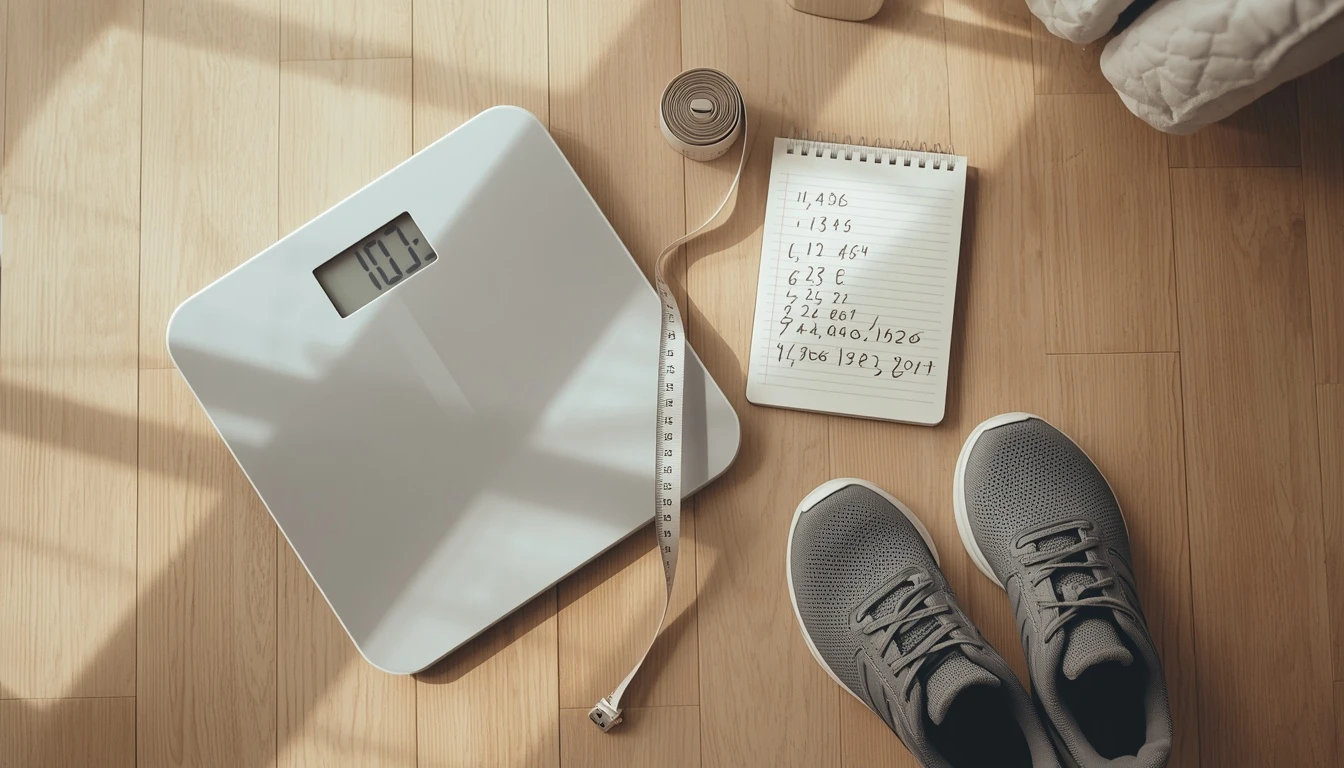
If you’re searching for how to calculate metabolic age, here’s the plain version. You estimate your basal metabolic rate (BMR), then find the age group whose average BMR is closest to yours. That age is your “metabolic age.” Simple in theory. In practice, the comparison chart is usually locked inside a smart scale or an app, and the number it spits out is a rough guide, not a medical result.
So this guide does two things. It walks you through the math behind how to calculate metabolic age yourself, and it tells you which parts of the result are worth caring about. Spoiler: body fat matters more than the age on the screen.
What Is Metabolic Age vs. Chronological Age?
Metabolic age is a number that compares how many calories you burn at rest with the average for people of a certain age. Chronological age is simply how many birthdays you’ve had. If your metabolic age comes out lower than your real age, your resting burn looks like a younger person’s. Higher, and it looks like an older one’s.
Picture two 45-year-olds who weigh exactly the same. One lifts three times a week and carries plenty of muscle. The other sits most of the day and carries more body fat. The scale can’t tell them apart. Their resting calorie burn can. The lifter would likely land a metabolic age below 45, and the other person likely above it.
Now the reality check. There’s no universal reference table. Each device maker builds its own comparison from its own data, so two different scales can hand you two different answers on the same morning. It isn’t a diagnostic tool either, and it shouldn’t scare you.
Here’s a finding worth knowing. A 2021 analysis in Science, led by Herman Pontzer, pulled together energy expenditure data from thousands of people across the whole lifespan. Once the researchers adjusted for body size and composition, metabolism stayed steady from about age 20 to 60 and only started sliding after that. So the idea that your metabolism falls off a cliff at 30 doesn’t hold up well. What changes for many people is muscle and activity, which is exactly what a metabolic age reading picks up.
We’d treat it as a trend line. Measure under the same conditions every few weeks and watch the direction. The absolute number is a weak signal, but knowing how to calculate metabolic age yourself at least shows you what’s inside the black box.
The Science: Connecting Basal Metabolic Rate and Body Fat Percentage
Muscle costs more to run than fat. That one fact drives most of what you’ll see in a metabolic age reading.
Basal metabolic rate is the energy your body needs at complete rest just to keep going: breathing, circulating blood, running your brain, repairing cells. Commonly cited reference values put resting muscle at roughly 13 calories per kilogram per day and fat tissue at roughly 4.5 (Wang and colleagues, 2010). Do the math on 10 extra kilograms of muscle instead of fat and you get about 85 more calories burned a day. Not magic. But it never clocks out.

This is why the link between basal metabolic rate and body fat matters so much. Two people can both weigh 70 kg (about 154 lb) and have very different amounts of lean mass. The Katch-McArdle formula uses lean body mass instead of total weight: BMR = 370 + (21.6 × lean mass in kg). Someone at 30% body fat carries 49 kg of lean mass, which works out to about 1,428 calories a day. Someone at 20% body fat carries 56 kg and lands near 1,580. Same scale weight, roughly 150 calories apart, every single day.
That gap is why weight alone tells you so little, and it’s why body fat percentage sits at the center of any honest attempt at how to calculate metabolic age. Age-and-weight formulas can’t see your composition. Formulas built on basal metabolic rate and body fat can.
One warning on measuring it. Most home scales use bioelectrical impedance: a tiny current passes through your body, and the scale guesses your composition from how easily it flows. Hydration, a recent meal, a hard workout, all of it shifts the reading. Weigh in first thing in the morning, before eating, the same way every time. Weekly is plenty. Daily is a mood-wrecker.
WITHINGS Body Smart Scale
Working with basal metabolic rate and body fat numbers is easier with a repeatable body fat reading for the Katch-McArdle math above. The WITHINGS Body Smart is listed as a scale for body weight, fat percentage, and body composition.
| Pros | Cons |
|---|---|
| Weight and body fat percentage in one weigh-in | Body fat is an estimate, and hydration or timing can shift it |
| Same-time weigh-ins make trends easy to spot | It tracks numbers. It doesn’t diagnose anything |
Think of basal metabolic rate body fat as a package deal. Change your composition and the resting burn follows, slowly, over weeks and months rather than days.
Honestly, we’d rather you track your waist measurement and your lifts alongside the scale. A number that moves for the wrong reasons teaches you nothing.
Active Metabolic Rate (AMR) Test vs. BMR Formulas
Here’s where the terminology gets slippery, and where many guides on how to calculate metabolic age lose people. BMR is what you burn lying still. Active metabolic rate (AMR) is what you burn across a whole real day, including walking, working out, and digesting food. Nutrition sites often call it total daily energy expenditure, or TDEE. Same idea, different label.
The active metabolic rate formula
The active metabolic rate formula is short: AMR = BMR × activity factor. The commonly used factors look like this:
- 1.2 for a desk job and little to no exercise
- 1.375 for light exercise, one to three days a week
- 1.55 for moderate exercise, three to five days a week
- 1.725 for hard exercise six or seven days a week
- 1.9 for very hard training, or a physical job on top of training
Take the woman in the diagram below: 35 years old, 165 cm, 70 kg, BMR about 1,395. Light exercise puts her AMR near 1,919 calories. At moderate activity (1.55), it’s about 2,163. See how much that one multiplier swings the result? It’s the weakest link in every active metabolic rate formula. You’re guessing your activity level, and most people guess high.

What an active metabolic rate test actually measures
An active metabolic rate test usually means one of two things. Some clinics and gyms offer indirect calorimetry: you breathe into a mask or hood, and a machine measures oxygen in and carbon dioxide out. That gives you a measured resting rate, so strictly speaking it’s a resting test, not a full-day one. The other option is doubly labeled water, a research method that tracks total daily expenditure over roughly one to two weeks. It’s the gold standard, and it’s not something you’ll find at the mall.
Before you book any active metabolic rate test, ask exactly what it measures and how you’ll be asked to prepare. Most resting tests want you fasted, rested, and caffeine-free, and skipping that prep can skew the result.
| Method | What it needs | Best for | Weak spot |
|---|---|---|---|
| Mifflin-St Jeor | Weight, height, age, sex | A quick estimate for most adults | Can’t see body composition |
| Katch-McArdle | Lean body mass | Lifters, or anyone who knows their body fat | Only as good as the body fat reading |
| Harris-Benedict | Weight, height, age, sex | A historical baseline | Built on data from 1918 |
| Indirect calorimetry test | Breath gas measurement | A measured resting rate | Cost, access, and it’s a one-day snapshot |
Do you need an active metabolic rate test? Probably not. If your weight has sat flat for two months while you eat what your formula says you should, a test can settle the argument. Otherwise the formulas plus a few weeks of honest tracking get you close enough.
Step-by-Step Guide: Calculating Your Metabolic Age
Grab a scale and a tape measure. Here’s how to calculate metabolic age with a formula and a reference chart, using the same example woman (35 years old, 165 cm, 70 kg, 30% body fat).
- Write down your weight in kilograms, height in centimeters, age, and sex. Pounds divided by 2.205 gives kilograms. Inches times 2.54 gives centimeters.
- Run the Mifflin-St Jeor equation. Men: (10 × kg) + (6.25 × cm) − (5 × age) + 5. Women: same thing, but subtract 161 at the end instead of adding 5. For our example: 700 + 1,031 − 175 − 161 = about 1,395 calories.
- If you know your body fat, run Katch-McArdle too: 370 + (21.6 × lean mass in kg). Our example carries 49 kg of lean mass, so 370 + 1,058 = about 1,428.
- Compare the two numbers. Within about 100 calories? Fine, use either. Further apart? Your body composition is doing something the basic formula misses, and Katch-McArdle is probably closer for you.
- Find a reference chart of average BMR by age and sex, ideally the one for the device or app you use. Look for the age group whose average sits closest to your number. That age is your metabolic age.
- Log the result with the date and how you measured. Repeat every two to four weeks under the same conditions. Our Free Fitness Habit Tracker is an easy place to keep that log.
Want a daily calorie target too? Multiply your BMR by an activity factor using the active metabolic rate formula from earlier. Ours came to about 1,919 calories a day. Then watch your real weight for two or three weeks, because that beats any active metabolic rate test you can run at home.
Yes, step five is the wobbly one. That’s the honest answer on how to calculate metabolic age: the BMR math is solid, and the age-matching depends on whoever built the chart. Use one chart consistently and you’ll still see your direction of travel.
4 Ways to Lower Your Metabolic Age Naturally
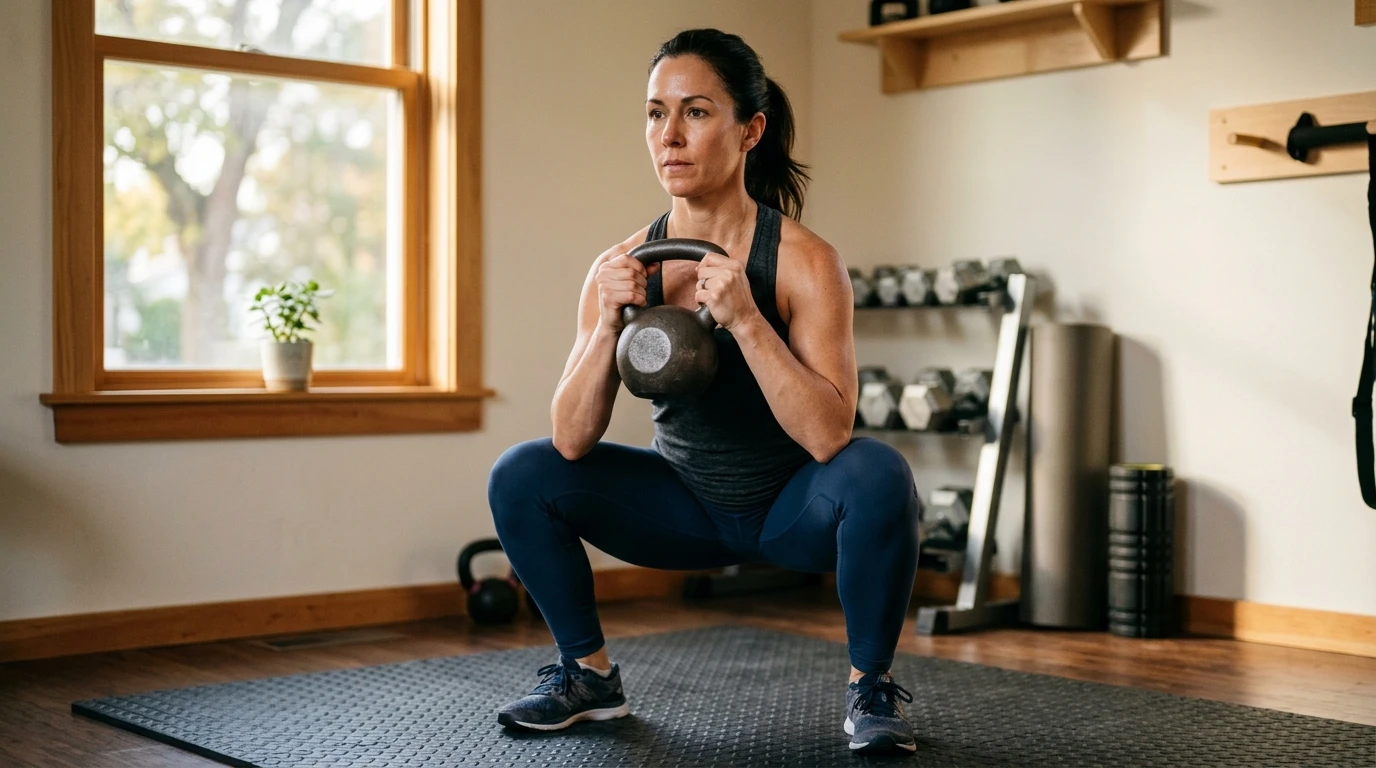
Nothing here is exotic. Once you know how to calculate metabolic age, this is how you move it. All four moves do the same job: protect or add lean mass, and keep your daily movement up so your active metabolic rate stays where you want it.
1. Lift weights two or three days a week
The Physical Activity Guidelines for Americans recommend at least two days of muscle-strengthening activity a week, alongside 150 minutes of moderate aerobic activity. Start with big movements: squats, rows, presses, hinges. Add a little weight or a rep when it gets easy. Our One Rep Max Calculator can help you set working weights, and the Plate Loader Calculator shows which plates go on the bar. Give it two to three months before you judge the scale. We’d pick lifting over extra cardio here, no contest.
2. Eat enough protein
A 2018 meta-analysis in the British Journal of Sports Medicine (Morton and colleagues) found that muscle gains from protein leveled off around 1.6 grams per kilogram of body weight per day in people doing resistance training. For a 70 kg person, that’s about 112 grams. Our Protein Calculator works out your own number. Spread it across meals and lean on regular food first. If you have kidney disease, talk to your doctor before raising your protein.
3. Move more outside the gym
Because AMR counts all movement, a walk after dinner counts. So do stairs, standing while you take calls, and carrying your own groceries. It’s easier to keep up than a fourth gym session, and it adds up.
4. Sleep well and skip the crash diet
Aggressive dieting tends to strip muscle along with fat, which drags your resting burn down. That’s the opposite of what you want. If you’re losing fat, keep the deficit modest, keep lifting, and keep protein up. Fiber helps meals feel bigger while you eat less, and our Fiber Calculator shows where your daily intake stands. Short sleep also tends to raise appetite and make training feel harder, and the standard adult recommendation is seven or more hours.
Supplement note
Listed on Amazon as “Life Extension AMPK Metabolic Activator, Hesperidin, 30 Tablets.” Included for reference only. Nothing in this article says it changes your metabolic age or BMR, and it isn’t one of the four ways above. Read the Supplement Facts panel for ingredients and doses, and check with your doctor first, especially if you’re pregnant, take medication, or have a medical condition.
View on AmazonQuick answers
How do I calculate metabolic age at home?
Estimate your BMR with the Mifflin-St Jeor formula, or Katch-McArdle if you know your body fat. Then compare the result with a reference chart of average BMR by age and sex. The age group whose average sits closest to your number is your metabolic age. Expect different devices to give different answers.
Is a lower metabolic age better?
Generally, a metabolic age below your real age suggests your resting burn is on the higher side for your age, often because you carry more muscle. But it’s a rough, device-specific estimate. Treat it as a trend to track, not a health grade.
How accurate is an active metabolic rate test?
Indirect calorimetry measures your resting burn directly, so it beats formulas for that number. Formula-based estimates depend on your guess of activity level and can be off for individuals. Check any estimate against your real weight changes over a few weeks.
Can I really change my metabolic age?
Often, yes, mostly through body composition. Adding muscle with regular strength training and enough protein raises your resting burn, while losing muscle through crash dieting lowers it. Results vary, and changes take weeks to months, not days.
What’s the difference between BMR and AMR?
BMR is the calories you burn at complete rest. AMR, or active metabolic rate, is BMR multiplied by an activity factor, so it covers a full day of moving, exercising, and digesting. BMR feeds your metabolic age. AMR is better for planning how much to eat.
What I’d actually do
I’d ignore the daily reading and run the two formulas on paper once, just to see the gap between them. Then I’d pick a single scale, weigh in every three or four weeks, and treat that as my only metabolic age number.
The real work happens elsewhere. Lift twice a week for twelve weeks. Hit a sensible protein target. Walk more. Track your waist and your strength alongside the scale, and if metabolic age drops, great. If it doesn’t but your lifts are climbing, you’re still winning. I’d only pay for a lab test if my weight stalled for a couple of months and the math said it shouldn’t have.
Once you know how to calculate metabolic age, the math takes five minutes. The habits take months. Here’s your challenge: write down your BMR today, and check again in twelve weeks.
If you’d rather follow a set plan than build your own, there’s our $27 30 Day Fitness Reset.
Disclaimer. This article is for general education and isn’t medical advice. Metabolic age is an estimate, not a diagnosis. Talk to a qualified professional before changing your diet or exercise routine, especially if you have a medical condition, are pregnant, or take medication. Results vary.
Sources
- Mifflin MD, St Jeor ST, et al. A new predictive equation for resting energy expenditure in healthy individuals. Am J Clin Nutr. 1990;51(2):241-247. PubMed [VERIFY]
- Katch FI, McArdle WD. Nutrition, Weight Control, and Exercise. [ADD URL]
- Harris JA, Benedict FG. A biometric study of human basal metabolism. Proc Natl Acad Sci. 1918;4(12):370-373. [ADD URL]
- Pontzer H, et al. Daily energy expenditure through the human life course. Science. 2021;373(6556):808-812. DOI [VERIFY]
- Wang Z, et al. Specific metabolic rates of major organs and tissues across adulthood. Am J Clin Nutr. 2010;92(6):1369-1377. [ADD URL] [VERIFY]
- Morton RW, et al. A systematic review, meta-analysis and meta-regression of the effect of protein supplementation on resistance training-induced gains in muscle mass and strength. Br J Sports Med. 2018;52(6):376-384. DOI [VERIFY]
- U.S. Department of Health and Human Services. Physical Activity Guidelines for Americans, 2nd edition. health.gov [VERIFY]
For more practical health and nutrition guides, visit bodylix.com
