
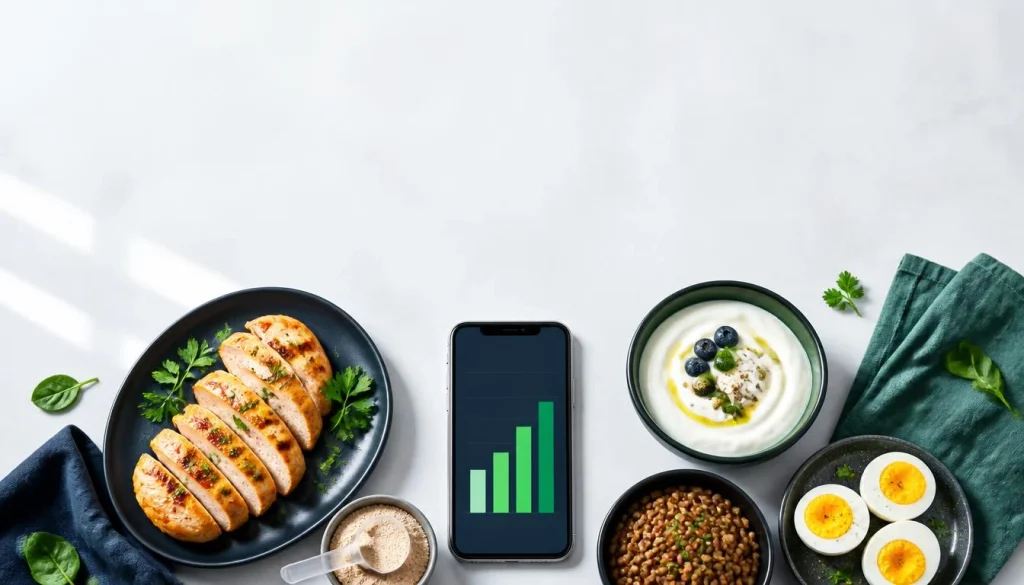
Most protein advice online is either “eat more” with no number attached, or a number pulled from nowhere in particular. This protein calculator gives you an actual daily target, based on your bodyweight and your specific goal — building muscle, losing fat, or general health — using the gram-per-pound ranges most sports nutrition research points to.
Nutrition, decoded — not dieted
How much protein do you actually need?
Enter your bodyweight and your goal to get a personal daily protein target, based on established sports-nutrition ranges — not a generic “eat more protein” guess.
Enter a bodyweight first.
Your daily protein target
0g / day
Also check your fiber target: Fiber Intake Calculator · High Fiber Diet Plan guide
How this number is calculated
Protein needs scale with bodyweight, not with a flat daily number that works for everyone. The ranges this calculator uses:
- Building muscle: 0.7–1.0g of protein per pound of bodyweight
- Losing fat: 0.8–1.2g per pound (the higher end helps protect muscle while you’re in a calorie deficit)
- General health: 0.5–0.7g per pound
If you’re also following a high fiber diet plan, pairing your protein target with enough fiber is where the real results tend to show up — check our full guide on building a high protein high fiber diet for weight loss.
FAQ
Do I need more protein if I’m losing weight? Yes. When you’re eating in a calorie deficit, your body is more likely to break down muscle for energy unless protein intake stays high enough to protect it. That’s why the fat-loss range on this calculator sits higher than the general health range.
Is too much protein bad for me? For most healthy adults, no — research hasn’t shown meaningful harm from higher protein intakes within these ranges. People with existing kidney conditions should check with a doctor before significantly raising protein intake.
Can I hit my protein target from food alone? Yes, for most people. Eggs, chicken, fish, Greek yogurt, lentils, and tofu all contribute meaningfully. A protein powder can help close the gap on busy days, but it’s a backup, not a requirement.
How is this different from a generic calorie calculator? A calorie calculator estimates total energy needs. This tool only calculates the protein portion of your intake, scaled to your specific goal — useful whether you’re tracking total calories or not.
How much protein do I need to build muscle?
Most research points to roughly 0.7 to 1.0 grams of protein per pound of bodyweight for building muscle. A protein calculator like this one turns that range into an exact number based on your actual weight, instead of leaving you to guess at a generic “eat more protein” target.
Is this protein calculator accurate for weight loss?
Yes — the fat-loss range here runs slightly higher (0.8 to 1.2g per pound) than the muscle-building range, because protein needs typically increase in a calorie deficit to help protect existing muscle while you lose fat.
What’s a good protein calculator formula to use?
The most reliable approach scales protein to bodyweight and goal, not to total calories alone. That’s exactly what this calculator does — enter your weight and goal, and it applies the same gram-per-pound ranges used in sports nutrition research.
Do I need a protein calculator if I already track calories?
It still helps. A calorie count tells you total energy, but not how much of that should come from protein specifically. Pairing this tool with your calorie target fills in the one number most tracking apps leave you to figure out on your own.
Final Thoughts
Most people don’t actually know their protein number. They know they should “eat more protein,” and that’s about where the advice stops. That vagueness is exactly why so many people either fall short without realizing it, or overcorrect and eat far more than they need.
A protein calculator fixes that in about ten seconds. Punch in your bodyweight, pick your goal, and you’ve got a real target instead of a guess — one grounded in actual sports nutrition ranges, not a number pulled from a magazine cover.
Here’s what we’d actually tell you to do with it: don’t treat the number as a ceiling you’re not allowed to cross, and don’t panic if you miss it by ten grams on a busy day. Use it as a rough compass. Hit it most days, pair it with real food — chicken, eggs, lentils, Greek yogurt — and let it work alongside your fiber intake, not instead of it. That combination is where people actually see results, not from either number in isolation.
If you haven’t already, run your fiber numbers too. Together, they’re the two most useful targets you can set for yourself this week — and neither one requires cutting out food you actually enjoy.
More Free Bodylix Tools
Nutrition and training numbers, calculated properly — not guessed.